
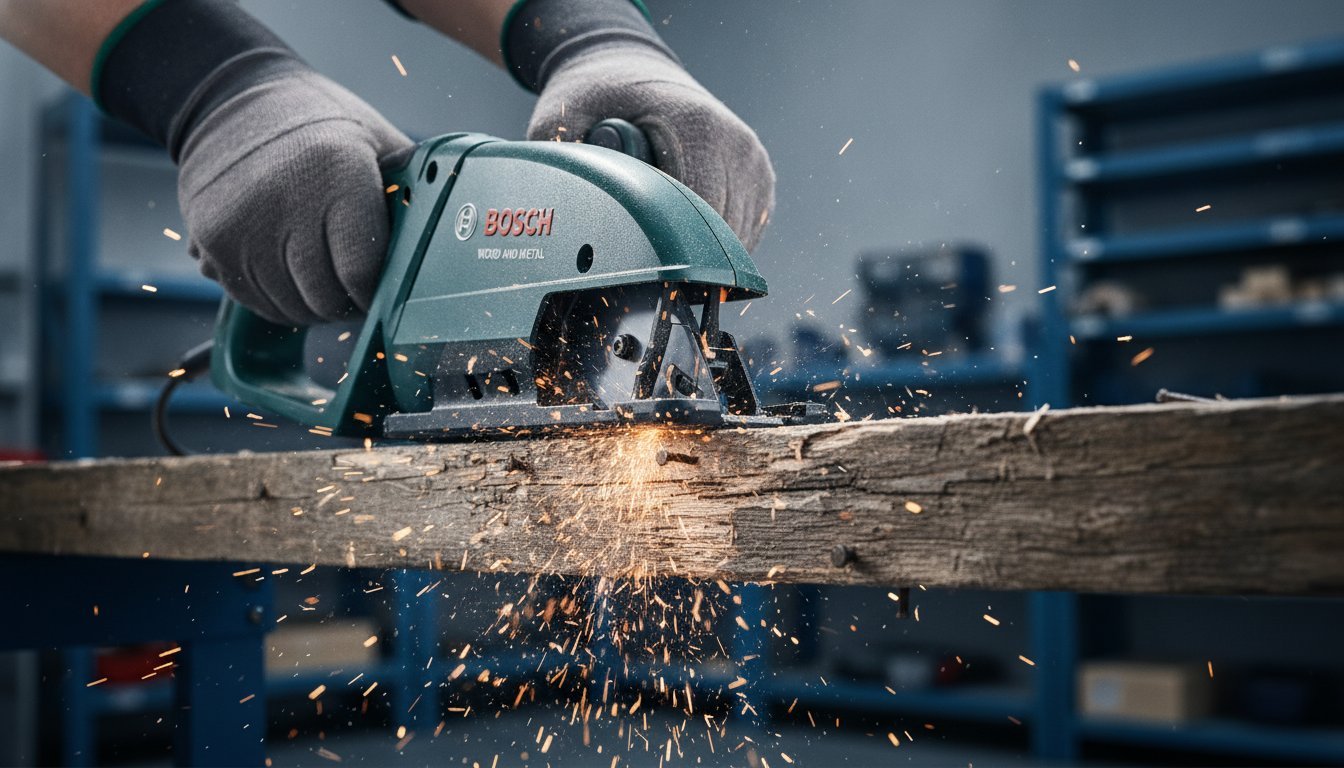
How much money are you throwing in the trash every time a “tough” material rounds over your saw teeth in under a minute? It’s a common site frustration. You’re mid-demo, the clock is ticking, and suddenly your progress stalls because your blade is smoking instead of cutting. We’ve all been there, and it’s usually because the blade wasn’t the right match for the job at hand.
Understanding specific bosch reciprocating saw blade applications is the fastest way to stop wasting your budget on replacements. You deserve tools that work as hard as you do, providing clean cuts and maximum uptime. Whether you’re slicing through thick stainless steel or ripping through nail-embedded timber, there’s a science to picking the right edge for the task.
In this guide, we’ll show you exactly how to match Bosch’s material science to your specific job site needs. You’ll learn the clear performance gaps between Carbide and Bi-metal options and get our professional tips for extending blade life. Let’s look at how to turn your reciprocating saw into a high-speed precision machine that delivers a better ROI on every single cut.
Key Takeaways
- Learn why the universal S-Shank interface makes Bosch blades compatible with almost every professional reciprocating saw on the market.
- Identify the best bosch reciprocating saw blade applications for every material, from demolition-grade wood to high-heat stainless steel.
- Discover when to use cost-effective Bi-Metal blades for standard tasks versus high-performance Carbide Technology for extreme heat resistance.
- Master the “Three Tooth Rule” and TPI selection to prevent tooth breakage and achieve faster, cleaner cuts on every pass.
- Optimize your tool’s performance by pairing the right blade with heavy-duty power cords to prevent voltage drop and motor strain.
Understanding Bosch Reciprocating Saw Blade Versatility
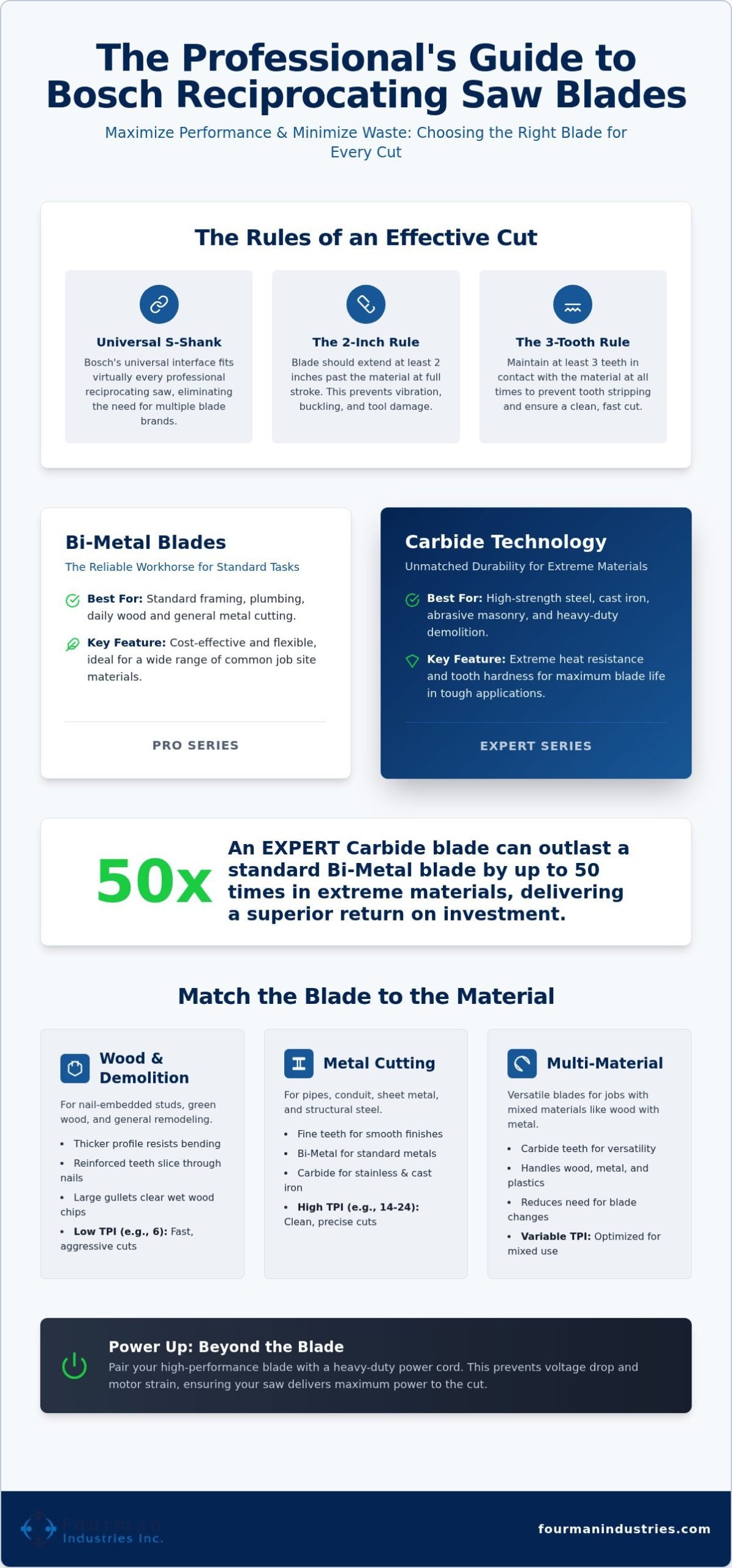
The foundation of any efficient demo or framing job starts with compatibility. Bosch has standardized their lineup using the S-Shank, a universal interface that ensures these blades fit into virtually any professional reciprocating saw on the market. This interchangeability means you don’t have to carry four different brands of blades just because you have a mix of tools in your gang box. Bosch Reciprocating Saw blades are the intersection of Swiss metallurgy and job site durability.
Choosing the right blade length is about more than just reaching through a wall. It’s about matching the blade to your tool’s stroke length. If your blade is too short, you risk the tip slamming into the material. This causes violent vibration and potential tool damage. If it’s too long, you lose stability and precision. For most bosch reciprocating saw blade applications, you want a blade that extends at least two inches past the material at the full extension of the stroke. This keeps the cut cool and prevents the blade from buckling under pressure.
Bosch remains a leader for 2026 because they focus on the specific physics of the job site. They don’t just make “metal” blades; they make blades for specific thicknesses and alloys. This precision ensures that you aren’t fighting the tool. Instead, the tool does the work for you.
The Anatomy of a Professional Saw Blade
The tang is where the work happens. Bosch designs their shanks to withstand the high-frequency vibration of modern 18V and high-amperage corded saws. A secure fit prevents chatter, which is the leading cause of premature blade failure. The blade body itself is a balance of physics. Thinner blades offer the flexibility needed for flush cuts against a floor or stud. Thicker, wider bodies provide the rigidity required for perfectly straight cuts through heavy pipe. In 2026, Bosch has upgraded their surface coatings to reduce friction. These blades run cooler than standard steel, preventing the heat buildup that softens teeth and kills your cutting speed.
Performance Tiers: PRO vs. EXPERT
Not every cut requires a premium price tag, but every cut requires the right tool. The Bosch PRO line is the reliable workhorse for standard framing, plumbing, and electrical tasks. These Bi-Metal blades are tough enough for daily wood and metal work. However, the EXPERT line is where Carbide Technology takes over. When you’re facing high-strength steel, cast iron, or abrasive masonry, Carbide is a non-negotiable requirement for bosch reciprocating saw blade applications.
A cost-per-cut analysis shows that while an EXPERT blade costs more upfront, it often outlasts standard Bi-Metal blades by up to 50 times in extreme materials. On industrial sites, this translates to fewer blade changes, less tool downtime, and a much better ROI on your consumables. It’s the difference between finishing a demo on one blade or stopping five times to dig a fresh one out of the truck.
Material-Specific Applications: From Wood to Heavy Metal
Matching your blade to the material isn’t just about making the cut; it’s about site safety and protecting your budget. Bosch categorizes their lineup into clear material groups: wood, metal, and multi-material. Selecting the wrong tooth profile leads to “stripping,” where the material shears the teeth right off the blade body. For most bosch reciprocating saw blade applications, the density of the material determines whether you need a flexible Bi-Metal blade or a rigid Carbide-tipped powerhouse.
Safety starts with blade length. If you’re cutting through a 2×4, a 6-inch blade is plenty. Using a 12-inch blade on thin material creates a dangerous “kick-back” effect. The excess blade length vibrates violently, which can jerk the saw out of your hands or snap the tip. Always aim for a blade that extends 2 to 3 inches beyond the material thickness. This provides enough clearance for debris removal without compromising your control over the tool.
Demolition and Woodworking Applications
Remodeling jobs rarely involve “clean” wood. You’re usually dealing with nail-embedded studs that destroy standard wood blades instantly. The Bosch Edge Demolition series is designed for this specific abuse. These blades feature a thicker profile to resist bending and reinforced teeth that can slice through a framing nail without losing their edge. For landscaping or tree work, look for blades with large gullets. These deep valleys between the teeth prevent “clogging” when cutting wet, green wood. If you’re doing finish work, a high-TPI wood blade provides the precision needed for clean edges without the splintering typical of demo blades.
Metal Cutting: HVAC, Plumbing, and Automotive
Metal cutting is where tooth geometry matters most. When working with thin conduit or sheet metal, you need a high tooth count, typically 18 to 24 TPI. If the teeth are too large, they’ll catch on the thin edge and rip the teeth out of the blade. For heavy structural steel or 1/2-inch plate, the physics change. You need fewer teeth per inch and much harder material. This is where bosch reciprocating saw blade applications excel by using Carbide Technology to handle the intense heat of metal-on-metal friction.
Cast iron and stainless steel are the true blade killers on the job site. Standard Bi-Metal blades will often dull before finishing a single cut on a 4-inch cast iron soil pipe. Bosch’s Carbide-tipped blades are specifically engineered to stay sharp through these abrasive materials. To get the most out of these high-torque cuts, ensure your tool isn’t starving for power. Pairing your saw with heavy-duty extension cords prevents the voltage drop that leads to motor overheating during difficult metal cuts.
Carbide Technology vs. Bi-Metal: The Science of Selection
Choosing between Bi-Metal and Carbide isn’t just a matter of price. It’s a strategic decision based on the physics of the material you’re facing. Bi-Metal (BIM) remains the industry workhorse for roughly 80% of standard construction tasks. It combines a high-carbon steel body for flexibility with high-speed steel teeth for cutting power. However, as job site materials become tougher in 2026, the performance gap between these two technologies has widened significantly. While Bi-Metal teeth begin to soften and lose their edge at approximately 600 degrees Celsius, Bosch Carbide Technology maintains its structural hardness even when facing friction-induced heat exceeding 1,000 degrees Celsius.
Bosch creates their Carbide blades by welding individual, high-grade carbide teeth to the blade body. This process is far more complex than stamping teeth out of a single strip of metal. The result is a blade that doesn’t just cut; it survives. In high-abrasive materials like fiber cement, plaster, or high-strength alloys, the durability of Carbide is often the only way to get through the day without a mountain of dull scrap metal. Understanding these bosch reciprocating saw blade applications allows you to spend less time at the tool crib and more time making progress.
When to Stick with Bi-Metal
Don’t assume Carbide is always better. Bi-Metal blades offer a level of flexibility that Carbide simply cannot match. If your task requires “flush cutting” where you need to bend the blade to cut a pipe or stud level with a floor, Bi-Metal is your best friend. Carbide teeth are extremely hard, but they are also brittle; aggressive bending can cause them to fracture. For standard lumber, soft metals like copper, or high-volume demolition where blades are frequently lost or pinched in shifting debris, the lower cost of Bi-Metal makes it the more practical choice for your bottom line.
The Carbide Advantage for Industrial Demolition
When the job involves high-strength bolts, hardened screws, or rebar, standard blades fail almost instantly. This is where Carbide Technology becomes a non-negotiable asset. The ROI of Carbide is found in “trigger time.” Every time you stop to change a dull blade, you’re losing money. For the most extreme bosch reciprocating saw blade applications, such as cutting through thick cast iron or stainless steel, the Bosch Nitros line is the professional standard. These blades are specifically engineered to handle the thermal shock and abrasion that would round over a Bi-Metal blade in seconds. Using the right Carbide blade ensures that the hardest materials on the site don’t slow your momentum.
Tooth Geometry and TPI: Optimizing for Speed and Precision
TPI is the fundamental metric for matching your tool to the task. It’s not just a number on the side of the blade; it dictates the entire physics of the cut. When we talk about bosch reciprocating saw blade applications, the TPI determines how much material is removed with every stroke of the saw. A common mistake on the job site is choosing a blade with teeth that are too large for the material thickness. This violates the “Three Tooth Rule.” For a safe and efficient cut, you must have at least three teeth in contact with the material at all times. If you have fewer, the teeth will catch on the edge, causing the saw to buck and potentially stripping the teeth right off the shank.
Bosch uses variable TPI designs to solve this problem for professionals. These blades feature a tighter tooth pitch near the shank for easy starts and a more aggressive pitch toward the tip for speed. This reduces the vibration that usually leads to user fatigue during long demolition shifts. Managing that vibration isn’t just about comfort; it’s about keeping the tool stable so the blade can do its job without wandering. By choosing the correct geometry, you ensure the motor’s energy goes into the cut rather than into your forearms.
Low TPI (3–8): The Speed Kings
When you’re ripping through soft lumber or green wood, speed is the priority. Low TPI blades feature large gullets, which are the deep valleys between the teeth. These are essential because they clear out sawdust and wood chips fast. Without large gullets, the debris would clog the blade, creating heat and slowing you down. These blades often have an aggressive “hook” angle. This means the teeth lean forward to bite deep into the wood, making them the go-to choice for heavy demolition and landscaping where a rough finish is acceptable.
High TPI (10–24): Precision and Hard Materials
High TPI blades are built for thin-walled materials like conduit, sheet metal, and PVC. The fine tooth pitch ensures that the blade glides through the material without snagging. If you’ve ever had a saw jerk violently while cutting a copper pipe, you likely had too few teeth per inch. These blades provide a burr-free finish, which is critical for electrical and plumbing installs where you don’t want to spend extra time filing down sharp edges. Accuracy is the goal here, and high TPI delivers the control you need.
Precision starts with the blade, but it ends with the power source. To keep your high-TPI blades from snagging during delicate cuts, you need consistent torque and zero power drops. You can browse our 12-gauge triple tap extension cords to ensure your saw receives the steady amperage required for professional-grade finishes and long-term tool health.
Professional Gear Management: Beyond the Blade
A premium blade is only half the equation for a successful cut. You can have the best carbide teeth in the world, but if your saw is starving for power, you won’t see the performance you paid for. Poor power delivery is a hidden bottleneck that ruins even the most precise bosch reciprocating saw blade applications. When a saw bogs down mid-cut, it’s often due to voltage drop from an undersized extension cord. This drop forces the motor to work harder, generating heat and causing the blade to chatter rather than cut. This chatter leads to tooth chipping and premature wear, especially in heavy metal or masonry. Before selecting any power lead for your saw, reviewing a comprehensive drop cord safety and selection checklist can help you avoid the hidden motor damage that comes from using the wrong cord gauge or jacket rating on the job site. If you’re running your saw from a portable generator on a remote job site, the same principle applies — using a proper heavy duty extension cord for generator power delivery is just as critical as the cord gauge you’d use from a wall outlet.
Ensuring your reciprocating saw receives full amperage is critical for high-torque tasks. When the motor maintains its designed RPMs, the blade teeth can engage the material at the correct speed, allowing the chips to clear the gullets efficiently. If the power dips, the blade slows, the friction increases, and you’ll find yourself replacing blades twice as often. To get the most out of your tools, check out our guide on 10 Gauge Heavy Duty Extension Cords to ensure peak tool performance on every job site.
Powering the Cut: 10 Gauge vs. 12 Gauge Cords
Heavy-duty reciprocating saws are power-hungry tools that require consistent current. Standard 14-gauge or even some 12-gauge cords can’t handle the draw over long distances. A 10-gauge cord is the professional standard for long runs because it minimizes resistance and prevents the “stalling” that kills blade life. Maintaining high RPMs is the best way to prevent tooth chipping in stainless steel or cast iron. Always look for UL certification on your power delivery gear. It’s a non-negotiable for industrial sites where safety and consistent amperage are the priorities for keeping your crew moving. If you need a deeper understanding of wire thickness, amperage ratings, and cord length limits, our complete guide to 12 gauge extension cords breaks down exactly how to match the right cord to your tool’s power demands.
Custom Branding for Crew Efficiency
Efficiency on a busy site isn’t just about the cut; it’s about keeping your gear in your hands. Tool theft and gear confusion can delay progress and eat into your profits. Using Custom Printed Extension Cords allows you to track your equipment at a glance. High-visibility colors like pink or purple serve two purposes: they prevent trip accidents and act as a massive theft deterrent because they’re too unique to “accidentally” end up in someone else’s truck.
Organizing your tool kit is the final step in professional gear management. Keep a dedicated blade index in your saw case so you aren’t digging through a pile of loose, dull metal to find the right bosch reciprocating saw blade applications. When your power is stable, your gear is branded, and your blades are organized, you’ll spend less time troubleshooting and more time finishing the job.
Master Every Cut on the Job Site
Mastering bosch reciprocating saw blade applications is about more than just buying a box of blades. It’s about the precision of the “Three Tooth Rule” and knowing when Carbide Technology is the only way to beat the heat of industrial materials. When you match the right tooth geometry to your specific material, you stop fighting the tool and start making progress. This leads to faster completions and a better ROI on every consumable you use.
Remember that even the best blade fails without reliable power. Eliminating voltage drop with heavy-duty cords ensures your saw maintains the torque needed for those high-stakes cuts. At Fourman Industries, we’ve been providing family-owned expertise since 1997. As an authorized Bosch retailer, we don’t just sell blades. We offer custom imprinting on our heavy-duty cords to prevent theft and keep your crew organized in the field.
Upgrade your job site with Bosch blades and custom heavy-duty cords at Fourman Industries today. You’ve got the skills to handle the toughest demos. Now, get the gear that’s built to keep up with you and your crew.
Frequently Asked Questions
What TPI Bosch blade should I use for cutting 4×4 pressure-treated lumber?
Use a low TPI blade, specifically between 3 and 6 teeth per inch, for thick pressure-treated 4x4s. These blades feature large gullets that clear out wet, heavy wood chips quickly. If you use a fine-tooth blade, the sawdust will pack into the teeth, causing the blade to overheat and stall mid-cut.
Can I use a Bosch metal-cutting blade to cut through wood with nails?
Avoid using a dedicated metal blade for wood with nails because the fine teeth will clog with wood fibers almost immediately. Instead, choose a Bosch demolition blade designed for “Wood with Nails.” These blades have a reinforced tooth geometry that can slice through framing nails without the clogging issues of a high-TPI metal blade.
How long do Bosch Carbide reciprocating saw blades typically last compared to Bi-Metal?
Bosch Carbide blades can last up to 50 times longer than standard Bi-Metal blades when cutting through high-strength materials. While Bi-Metal is the right choice for general framing, Carbide is essential for abrasive materials like cast iron or stainless steel. It maintains its structural hardness at temperatures that would melt the edge of a standard blade.
Why does my reciprocating saw blade keep bending or breaking during demolition?
Blade bending is usually caused by using a blade that is too long for the material or failing to keep the saw’s shoe tight against the workpiece. Breaking often happens when the blade gets pinched by shifting debris or a wall stud. Always match your blade length to the thickness of the material to maintain maximum rigidity and control.
Are Bosch reciprocating saw blades compatible with DeWALT or Milwaukee saws?
Yes, Bosch blades are fully compatible with DeWALT, Milwaukee, and other major tool brands. They use the universal 1/2-inch S-Shank, which is the industry standard for reciprocating saws. This universal fit makes them a versatile choice for various bosch reciprocating saw blade applications regardless of which saw brand you prefer.
What is the best Bosch blade for cutting cast iron soil pipe?
The Bosch Nitros Carbide-tipped blade is engineered specifically for the extreme abrasion of cast iron. Standard Bi-Metal blades will often dull before you finish a single cut on a 4-inch pipe. Carbide teeth are the only professional solution that can withstand the intense heat and friction of plumbing demolition.
How does the length of the blade affect the cutting performance of my saw?
Blade length affects both your reach and the amount of vibration you feel during the cut. A blade that is too long for the job will “whip” at high speeds, which ruins your accuracy and increases user fatigue. Aim for a blade that extends 2 to 3 inches past the material at the furthest point of the saw’s stroke.
Does using a longer extension cord affect the cutting speed of my reciprocating saw?
Yes, a long, undersized extension cord can cause a voltage drop that starves your saw of the power it needs for high-torque bosch reciprocating saw blade applications. When the voltage drops, the motor slows down, which causes the blade to drag rather than slice. Use a 10 or 12-gauge heavy-duty extension cord to ensure your saw maintains full RPMs during difficult cuts.




