
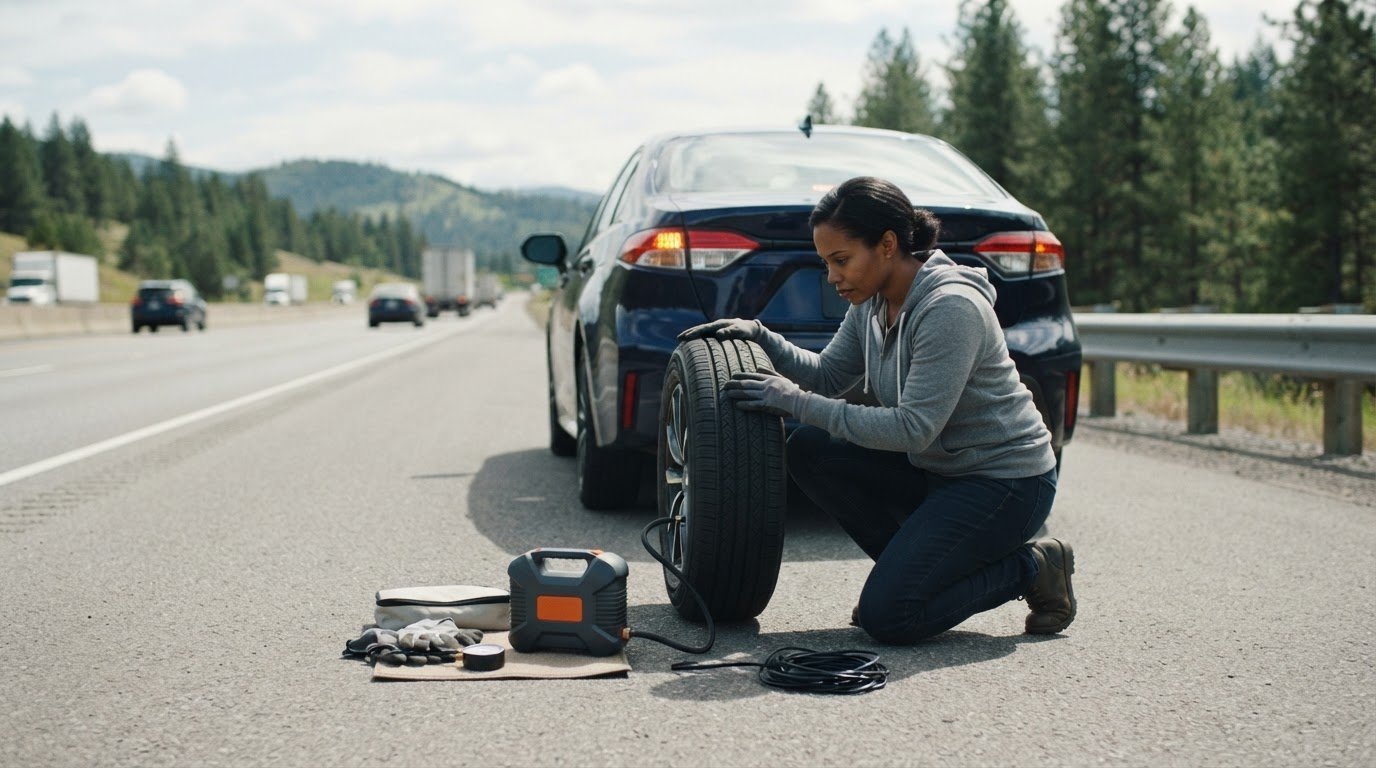
Can a portable inflator get you safely back on the road, or could adding air make a bad tire worse? Fixing a flat tire with a portable inflator starts with checking the tire, not switching on the pump. An inflator can restore pressure, but it can’t repair a puncture or make damaged rubber safe to drive on.
A flat is stressful, especially when you’re unsure whether the tire is simply low or seriously damaged. Stop somewhere safe and inspect the tire before deciding what to do. Don’t inflate or drive on it if you see obvious damage, such as a sidewall tear or a blowout.
This guide explains how to assess the tire, follow your vehicle and tire manufacturers’ instructions, and use a portable inflator cautiously when appropriate. You’ll also learn when to stop, avoid driving, and arrange professional repair instead. A portable 12V tire inflator kit can be a practical part of a roadside emergency setup, but it’s a temporary way to restore pressure, not a substitute for proper tire repair.
Key Takeaways
- Check the tire for visible damage before deciding whether adding air is appropriate.
- An inflator can restore pressure, but it can’t find or seal the cause of air loss.
- Compare an inflator, spare, sealant, and roadside assistance to choose a suitable next step.
- Follow the inflator instructions and your vehicle’s guidance when fixing a flat tire with a portable inflator.
- A portable 12V tire inflator kit can help with roadside preparation, but some tire problems need professional attention.
Flat tire or low pressure? Decide whether a portable inflator is appropriate
Finding a flat can turn a routine drive into a stressful roadside problem. Take it one decision at a time: get to a safe location, look for signs of damage, then decide whether adding air is appropriate. Fixing a flat tire with a portable inflator only makes sense when the tire is suitable for inflation. The device adds air; it doesn’t seal a puncture or repair damaged rubber.
A dashboard warning may indicate low pressure without showing why it dropped. A tire that looks compressed, sits unevenly on the wheel, or has a visible cut calls for caution. Don’t treat a warning light going off or pressure returning as proof that the tire is safe for continued driving.
What a portable inflator can, and cannot, do
An inflator pushes air into a tire to raise its pressure. If the tire is intact and has simply lost some air, adding air may restore pressure to the vehicle manufacturer’s recommended level. But the inflator can’t locate or close the source of a leak. If air escapes through a puncture, pressure may drop again after inflation.
Look for visible problems before connecting equipment. A nail or other object in the tread, a cut, a bulge, a damaged wheel, or a tire that has shifted out of position needs assessment, not just more air. Don’t pull out an embedded object. If you’re uncertain what you’re seeing, don’t treat inflation as a repair.
When to stop and seek roadside help
Don’t inflate or drive on a tire that’s visibly damaged, displaced, or unable to hold pressure. A bulge or sidewall cut is a clear reason to stop. The same applies if the tire quickly loses air after inflation. Arrange roadside assistance or professional inspection rather than repeatedly adding air and hoping the problem will hold.
Your safety comes first. If the vehicle is beside moving traffic, on an unstable shoulder, or in another unsafe position, don’t get out to inspect or connect an inflator. Move to a safer place only if the vehicle can be moved without worsening the situation. Otherwise, stay clear of traffic and call for help.
- Warning light, no visible damage: Check the tire and consult your vehicle manual before deciding whether inflation is suitable.
- Visible puncture, cut, bulge, or wheel damage: Stop and arrange professional assessment.
- Pressure drops again: Don’t rely on another top-up as a fix. Seek help.
- Unsafe roadside position: Don’t handle the tire there. Prioritize getting help safely.
For pressure guidance and vehicle-specific cautions, follow the vehicle and tire manufacturers’ instructions. If the tire’s condition isn’t clear, choose caution over a roadside guess.
How a portable tire inflator works, and why pressure can drop again
A portable tire inflator moves air into a tire. In basic terms, you connect it to its power source, attach its hose to the tire valve, and operate it according to the device instructions. As air enters, the tire’s pressure changes. The inflator doesn’t inspect the tire or determine why pressure was lost.
Inflation adds air; repair fixes the reason it escaped. That distinction matters when fixing a flat tire with a portable inflator. A tire may reach the recommended pressure and still have a puncture, a valve problem, or other damage that lets air leak out again. Treat the pressure reading as one piece of information, not a diagnosis.
What the pressure reading tells you
A gauge reading shows the tire pressure at that moment. It doesn’t reveal the tire’s internal condition or confirm that it can safely support the vehicle. Use the pressure specified in your vehicle’s manual or pressure label, not the maximum pressure molded on the tire sidewall. Follow the vehicle and tire manufacturers’ instructions if their guidance differs from a general rule.
If a tire pressure warning remains on or comes back after inflation, the tire may still be below the specified pressure or air may continue escaping. Don’t assume a warning will clear immediately, but don’t dismiss a returning warning either. Recheck according to the vehicle manual, and stop if you can’t maintain the specified pressure.
Why a tire may lose air after inflation
Air loss can have several causes, including a puncture, a problem at the valve, or damage to the tire or wheel. A roadside pressure reading can’t identify which one is responsible. If pressure drops again, repeated top-ups won’t address the underlying issue. Arrange an inspection rather than relying on the inflator as a continuing fix.
Inflation alone does not establish roadworthiness. A reading that looks right can’t rule out damage, and a tire that loses pressure again needs attention. Avoid driving if pressure won’t hold, the tire looks abnormal, or you’re unsure about its condition. Follow your vehicle manufacturer’s guidance and arrange professional help when needed.
For a suitable tire, use the inflator only as its instructions direct. Check that the connection is secure, monitor pressure as you add air, and stop at the vehicle-specified target. Don’t guess based on another vehicle or a generic number. A portable 12V tire inflator kit can be one practical part of a roadside emergency setup. It restores pressure when appropriate, but it doesn’t repair a leak. Fourman Industries offers a portable 12V tire inflator kit for drivers preparing for roadside situations.
Portable inflator, spare, sealant, or roadside assistance: compare your options
The right response depends on the tire’s condition, your location, and the equipment available in your vehicle. An inflator adds air, a spare replaces the damaged tire, sealant may temporarily address certain punctures, and roadside assistance brings help when handling the problem yourself isn’t safe. None is right for every flat.
Use this quick comparison to narrow down your next step:
- Portable inflator: Adds air when pressure is low and the tire appears suitable for inflation. It won’t seal a leak, so monitor pressure and stop if it won’t hold.
- Spare tire: Replaces the flat when your vehicle has a spare and the owner’s instructions support changing it. A spare may be temporary and have specific use limits, so follow the manual.
- Sealant: May be an option for certain punctures if the vehicle and tire manufacturers permit it. It isn’t suitable for every type of damage and may affect the tire pressure monitoring system (TPMS).
- Roadside assistance: A sensible choice when traffic, tire damage, limited equipment, or uncertainty makes a roadside DIY attempt unsafe.
When an inflator is the practical first tool
If the tire appears intact and the pressure is low, an inflator may be a reasonable first tool after you’ve reached a safe location and checked the vehicle’s instructions. Add air only as directed, using the vehicle’s specified pressure guidance. Then reassess: a pressure reading alone doesn’t establish that the tire is safe to drive on. If pressure falls again, stop and choose another response.
When another response makes more sense
Choose the spare only if your vehicle carries one and its manual explains how to use it safely. Consider sealant only when the instructions for your vehicle, tire, and sealant allow it; check any warnings about TPMS and later tire service. If the tire is visibly damaged, won’t hold pressure, or you’re in an unsafe spot or unsure how to proceed, arrange roadside assistance instead.
In short, fixing a flat tire with a portable inflator is an option for adding air, not a universal fix. Match the response to what you can safely observe, and don’t drive just because a tire has regained pressure. A portable 12V tire inflator kit can be one practical item to keep in a roadside emergency setup. Fourman Industries also offers a Truck & Car Battery Jump Starter as automotive emergency equipment.
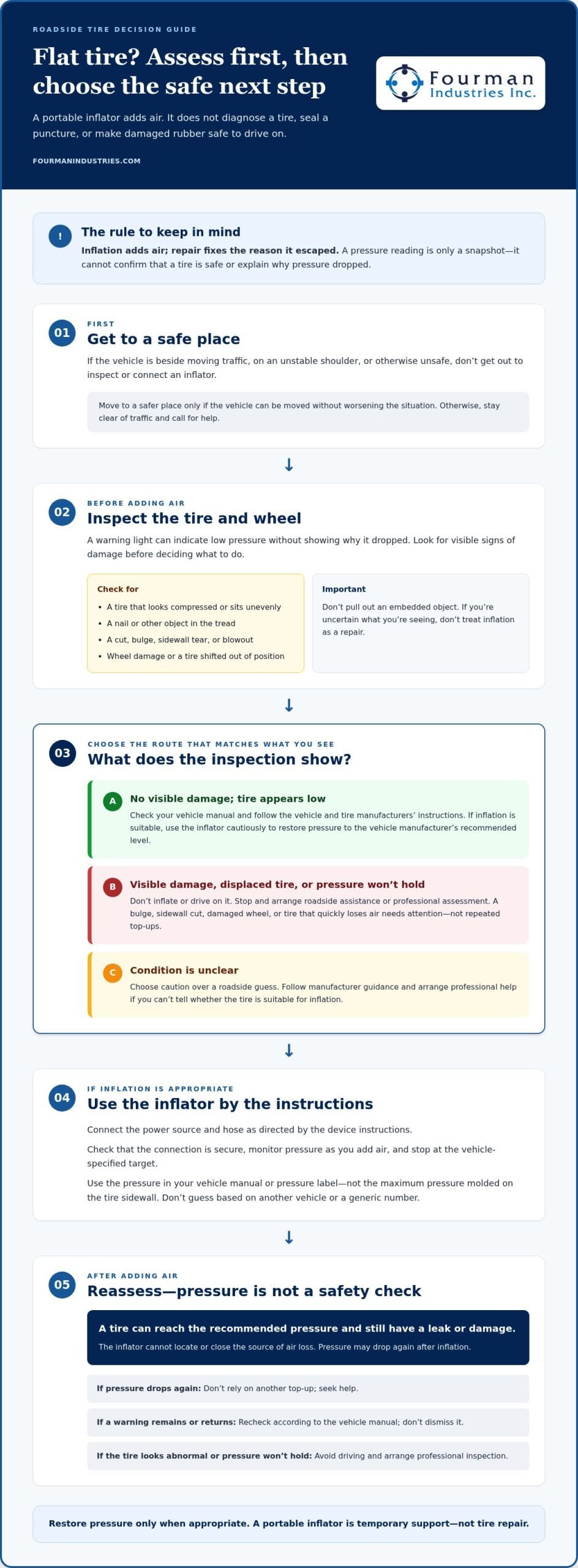
How to use a portable inflator on a flat tire, step by step
Only begin if the vehicle is in a safe place and the tire appears suitable for inflation. A portable inflator can add air, but the steps and connections vary by kit. Read its instructions and your vehicle manual before operating it. If traffic, damage, or uncertainty makes the task unsafe, stop and arrange roadside help.
Prepare the vehicle and inflator
Park away from moving traffic where possible, secure the vehicle as directed in the manual, and use hazard lights when appropriate. Don’t work beside traffic or reach into a dangerous position to inspect the tire. Check for obvious damage from a safe position, then review the kit’s operating instructions and the vehicle’s pressure guidance before connecting anything.
Inflate, recheck, and make the next decision
Follow the exact instructions for your inflator and vehicle. Don’t guess at the pressure or force a connector that doesn’t fit. Stop if the valve, tire, or unit behaves unexpectedly. Reaching the recommended pressure is only one check; it doesn’t prove the tire is sound or safe to drive on.
- Choose a safe stopping place. Move out of traffic if you can do so safely. Turn on hazard lights when appropriate. If the vehicle can’t be positioned safely, stay clear of traffic and call for help rather than setting up the inflator roadside.
- Secure the vehicle. Follow the vehicle manual for parking and securing it before approaching the tire. Keep passengers in a safe place, and don’t kneel or stand where passing vehicles could put you at risk.
- Look over the tire. From a safe position, check for a cut, bulge, visible puncture, displaced tire, or wheel damage. Don’t inflate a tire with concerning visible damage. If you can’t tell whether it’s suitable, stop and seek professional assistance.
- Check instructions and pressure guidance. Confirm how the inflator is powered and connected, and read any cautions in its instructions. Find the vehicle’s specified tire pressure in the owner’s manual or vehicle pressure label. Don’t use the tire sidewall’s maximum pressure as the target.
- Connect and add air as directed. Attach the inflator to its power source and the tire valve according to the kit instructions. Operate it only as specified, watching the pressure reading. Stop if pressure doesn’t rise, air continues escaping, or anything seems abnormal. Don’t force a connection or keep running a unit that isn’t working as directed.
- Recheck before deciding whether to move. Once the pressure reaches the vehicle’s specified guidance, stop and assess again. If pressure drops, the tire looks damaged, a warning persists, or you’re unsure, don’t drive on it. Arrange professional help. Even when fixing a flat tire with a portable inflator, correct pressure alone isn’t a roadworthiness check.
For roadside preparedness, choose a portable 12V tire inflator kit as one item in your emergency setup. Use it only in line with its instructions and your vehicle’s guidance.
Choose a portable 12V tire inflator kit for a better-prepared roadside setup
A portable 12V tire inflator kit can be useful roadside preparedness equipment. It gives you a way to add air when the tire and situation are suitable, but it isn’t a repair guarantee. A puncture, damaged tire, or pressure that won’t hold still calls for another response. Think of the kit as one tool in a plan, not the whole plan.
Fourman Industries offers a portable 12V tire inflator kit for drivers building an automotive emergency setup. Before relying on an inflator, check that its power connection is compatible with your vehicle and read the kit instructions. Learning how the equipment works before a roadside problem arises can make it easier to decide whether it’s appropriate to use.
What to consider before keeping an inflator in the vehicle
Check how the kit connects to power and whether that connection suits your vehicle. Consider where it will be stored so it’s accessible without interfering with normal vehicle use. Keep the instructions with the kit, and take time to understand its operating guidance and cautions. Don’t assume a 12V label alone means a unit is suitable for every vehicle.
Plan for other possibilities, too. Know whether your vehicle has a spare and what the owner’s manual says about using it. Understand how you would request roadside assistance if the tire is damaged or inflation doesn’t help. A truck and car battery jump starter guide can also help you think through another common roadside equipment need.
Build a roadside plan around more than one tool
Start your plan with a safe stopping routine. Decide how you’ll move away from traffic when possible, secure the vehicle, and get help if the location or tire condition makes a DIY attempt unsafe. Keep a phone available to request assistance, and don’t treat any tool as a reason to take risks beside traffic.
Review the vehicle manual alongside your inflator instructions. Know where to find the vehicle’s recommended tire pressure, how to check the tire, and what signs mean you should stop. If pressure falls again, the tire looks damaged, or you’re unsure whether it’s safe to move, arrange professional help. An emergency car kit essentials checklist can help you prepare beyond tire equipment.
Good preparation means knowing both what a tool can do and when it isn’t enough. Store the inflator where you can access it, learn its instructions before an emergency, and keep a backup plan for situations that call for a spare or roadside assistance. That’s a practical approach to fixing a flat tire with a portable inflator without mistaking added air for a lasting repair.
Explore Fourman Industries’ portable tire inflator kit as one option for your roadside emergency setup.
Make your roadside plan before you need it
A little preparation can make a roadside decision easier. Before your next drive, locate your vehicle’s tire-pressure guidance, review the inflator instructions, and decide how you’ll get help if the tire isn’t safe to inflate. Keep the equipment accessible and know its limits. That way, fixing a flat tire with a portable inflator won’t mean relying on guesswork when you’re under pressure.
Fourman Industries offers a portable 12V tire inflator kit as one option for a roadside emergency setup. Treat it as preparedness equipment, not a substitute for tire inspection or repair. Choose your next step based on the tire’s condition and your safety.
Explore Fourman Industries’ portable tire inflator kit and take a practical step toward being better prepared. A clear plan helps you respond with more confidence when the unexpected happens.
Frequently Asked Questions
Can a portable inflator fix a punctured tire?
No. An inflator adds air but can’t seal a puncture or repair a cut, bulge, or displaced bead. If you spot damage, don’t assume the tire is fixed because its pressure rises. When fixing a flat tire with a portable inflator, use the vehicle and tire manufacturers’ guidance to decide what to do next. If the tire keeps losing pressure or its condition is uncertain, arrange professional assessment or roadside assistance.
Can I drive immediately after using a tire inflator?
Not automatically. First compare the pressure with your vehicle’s specified guidance and look for signs the tire is damaged. A pressure reading can’t confirm that the tire is structurally sound or that air loss has stopped. If the tire looks misshapen or the pressure begins falling again, don’t drive on it. Follow the vehicle manual and arrange roadside help if you can’t tell whether moving the vehicle is safe.
What should I do if the inflator does not raise the tire pressure?
Stop and don’t keep running the unit or force its connection onto the valve. Check the inflator instructions for the correct setup, then consider whether the connection is secure and whether the tire may be damaged. Don’t put yourself in a dangerous position to troubleshoot. If the tire remains flat, visible damage is present, or the cause isn’t clear, get to a safe place if possible and request roadside assistance.
Can I use tire sealant with a portable inflator?
It depends on the sealant, tire, and vehicle instructions. Before using sealant, read its directions and check whether the vehicle or tire maker permits it. Sealant may affect later inspection or repair, so tell the repair professional it was used. Don’t use it to justify driving on a tire with visible damage or ongoing air loss. If the instructions don’t clearly support its use, choose another safe response.
Why does my tire pressure warning come back after inflation?
The pressure may still be below the vehicle’s recommended level, or air may still be escaping. A warning system reports a pressure condition; it doesn’t identify the cause. Recheck the tire using the vehicle’s instructions. If the warning returns after pressure has been corrected, or you notice the tire deflating, don’t keep topping it up as a routine fix. Arrange an inspection to find out why the pressure isn’t holding.
How often should I check my tire pressure?
Follow your vehicle manufacturer’s maintenance schedule and instructions for when to measure pressure. Use a reliable tire pressure gauge and check each tire, including the spare if your vehicle has one. Don’t rely only on the dashboard warning, since it may alert you after pressure has changed. Regular checks can help you catch a developing loss, but they don’t replace prompt attention to visible damage or a tire that repeatedly deflates.




