
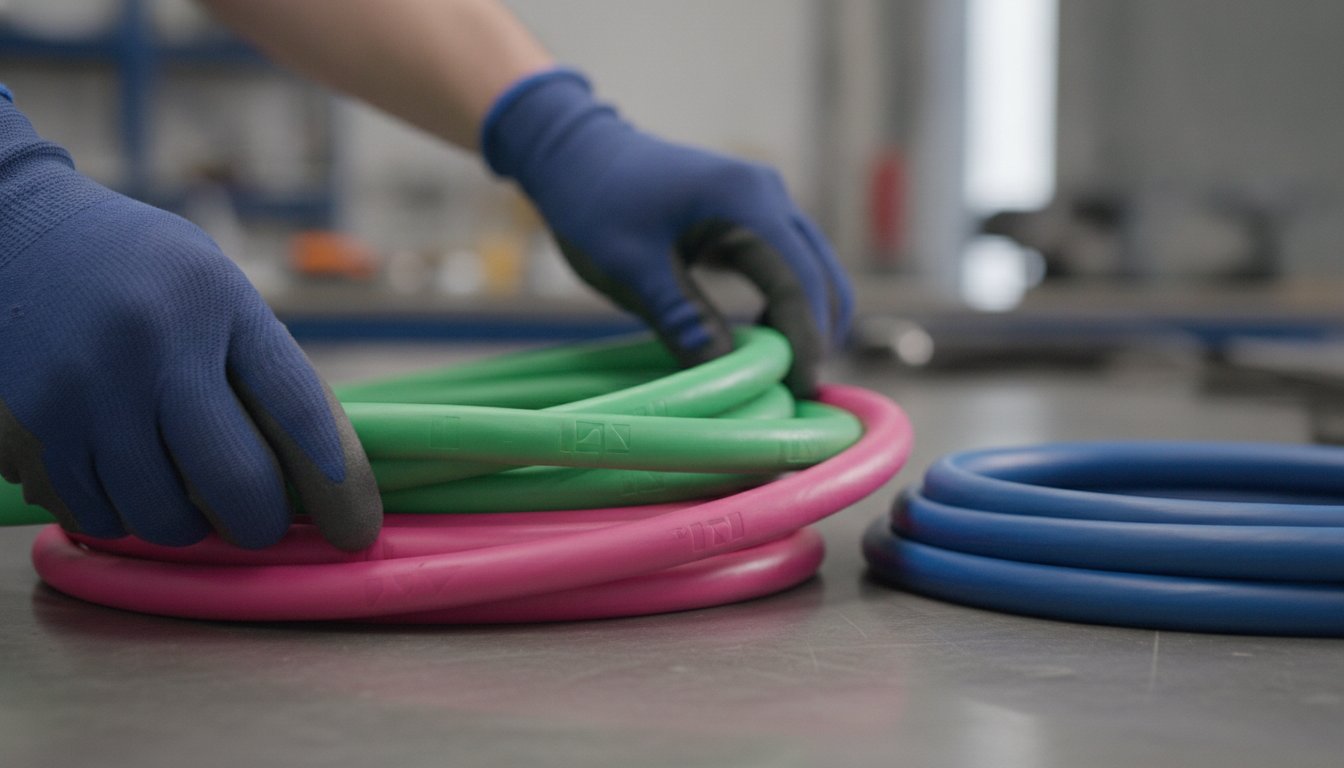
That twenty dollar price difference between two identical looking black power cords isn’t just a random markup. It’s the difference between a cord that survives a brutal winter and one that snaps like a dry twig the moment the temperature drops. Mastering the skill of understanding extension cord letter codes is the only way to know if you’re buying a professional tool or a potential fire hazard. You’ve likely stared at the alphabet soup of markings like SJTW or SOOW and wondered if those letters actually impact your daily work. It’s frustrating to buy gear that looks heavy duty only to watch it melt near an oil spill or fail an OSHA inspection on a busy jobsite.
We’re here to help you decode these markings so you can stop guessing and start buying with confidence. Choosing the right cord ensures your equipment stays powered and your crew stays safe. This guide breaks down exactly what every letter means, explains the 2026 OSHA requirements for construction sites, and shows you how to pick the most durable jacket for your specific environment. You’ll learn to read any cord like a professional and ensure your power solutions are built to last in the toughest conditions.
Key Takeaways
- Identify the embossed markings on any cord jacket to immediately determine its voltage capacity and insulation type.
- Mastering the system for understanding extension cord letter codes ensures you choose a tool that won’t melt near oils or snap in freezing temperatures.
- Compare common types like SJTW and SEOOW to find the exact balance of durability and flexibility for your specific environment.
- Ensure your gear meets 2026 OSHA standards for construction sites by selecting cords rated for hard or extra-hard usage.
- Learn how combining the right letter codes with custom printing can protect your investment and stop equipment from disappearing on the job.
The Basics of Extension Cord Letter Codes: Why the Jacket Matters
Every professional extension cord has a “birth certificate” printed right on its skin. These strings of letters and numbers aren’t just random factory jargon. They represent a rigorous, standardized system used to describe exactly how a cord is built and what it can handle. Organizations like Underwriters Laboratories (UL) and the National Electrical Code (NEC) set these standards to ensure that a cord sold in one state performs exactly like one sold in another. Manufacturers use these abbreviations because there isn’t enough room on a cable jacket to print “weather-resistant thermoplastic junior service cord” in plain English. It’s a shorthand that tells you everything you need to know at a glance.
To find these markings, look closely at the outer jacket of the cord. You’ll usually find the text embossed, which means it’s raised off the surface, or printed in a contrasting ink every foot or two. If you can’t find any markings at all, that’s a major red flag. It likely means the cord hasn’t been tested to meet safety standards or is a cheap knockoff. Understanding extension cord letter codes begins with identifying this string of text, which acts as a quick-reference guide for the cord’s durability and electrical limits.
The Anatomy of a Cable Marking
A typical marking looks like “12/3 SJTW.” It’s easy to get these mixed up, but they tell two different stories. The “12/3” refers to the wire gauge and the number of conductors inside. In this example, it’s 12-gauge wire with three conductors. The letters that follow, like SJTW, are the Portable Cord Letter Codes that describe the jacket material and its resistance to the elements. Don’t confuse these with a manufacturer’s SKU or part number. Safety codes are standardized across the industry, while SKUs are unique to the brand. Knowing the difference helps you quickly verify if a cord is truly rated for the job at hand.
Why Understanding Codes Saves Money and Lives
Using the wrong cord is an expensive mistake that can lead to equipment damage or dangerous fire hazards. If you use a cord without a “W” rating in a damp environment, the insulation can fail. This leads to short circuits or even shocks. Matching the voltage rating to your task is just as critical. For instance, a “Junior” service cord is only rated for 300 volts. That’s fine for most power tools, but it’s dangerous for high-draw industrial machinery. For professionals, following these codes is also about compliance. As of 2026, OSHA requires all cords on jobsites to be rated for hard or extra-hard usage. Investing in the right 12 Gauge SJTW Triple Tap Extension Cords or heavy-duty 10 Gauge ECONO options ensures you meet these safety standards while getting gear that actually lasts.
Decoding the Alphabet: What Every Letter Means
The foundation of understanding extension cord letter codes starts with the letter “S.” This stands for “Service.” An “S” cord is the heavyweight champion, built for extra-hard industrial use and rated for 600 volts. If you see a “J” following it, like in SJTW, that indicates “Junior Service.” These are rated for 300 volts. While 300 volts is more than enough for your drills and saws, it’s not designed for high-voltage industrial equipment. Staying aware of these limits is a key part of following OSHA Extension Cord Regulations, which mandate specific ratings to prevent workplace accidents in 2026 and beyond.
Material choice is just as vital. “T” stands for Thermoplastic, which is essentially a high-grade PVC. It’s the standard for most modern cords because it’s lightweight and cost-effective. However, if your job takes you into sub-zero temperatures, look for “E” for Elastomer. This thermoplastic polyester stays flexible in the cold. While a “T” cord might snap or become impossibly stiff in a winter storm, an “E” cord remains easy to coil and deploy, saving you from a lot of frustration on the job.
The Environmental Shield: W and V
The letter “W” is non-negotiable for anyone working outside. It stands for Weather and Water resistance. A “W” rating means the jacket is treated to survive constant UV exposure and moisture without breaking down. Without it, the sun will eventually turn your cord jacket brittle, leading to dangerous cracks. You might also see “V,” which stands for Vacuum. These are light-duty cords specifically built for portable cleaning tools. They lack the ruggedness needed for a construction zone. For outdoor reliability, sticking with “W” rated gear, like the 12 Gauge SJTW Triple Tap Extension Cords from Fourman Industries, ensures your power solution survives the elements.
Oil and Chemical Resistance (O, OO)
In automotive shops or factories, oil is a constant threat. Standard jackets will absorb oil, causing them to swell, soften, and eventually peel away from the wires. This chemical degradation creates a massive safety risk. To protect your equipment, you need to look for these specific ratings:
- O: Indicates that the outer jacket is oil-resistant.
- OO: Both the outer jacket and the individual insulation on the inner conductors are oil-resistant.
This dual “OO” protection is the gold standard for industrial environments. It prevents the internal shorts and fire hazards that occur when chemicals seep past a damaged outer layer. Choosing the right oil rating is a smart investment that prevents you from replacing ruined gear every few months. It keeps your workshop running safely and ensures your tools get the steady power they need without the risk of insulation failure.
Comparing Common Cord Types: SJTW vs. SEOOW
Choosing between SJTW and SEOOW is often a decision between the industry standard and a specialized heavy-hitter. When you are understanding extension cord letter codes, SJTW stands out as the “workhorse” for general use. It is a Junior Service cord (J) rated for 300 volts, featuring a Thermoplastic (T) jacket that is Weather resistant (W). It is the reliable choice for most outdoor jobs. On the other hand, SEOOW is the professional choice for extreme conditions. It is a full Service cord rated for 600 volts, using Elastomer (E) for the jacket with double Oil resistance (OO). It is built to survive environments that would destroy a standard cord in weeks.
The biggest safety difference is that “J” rating. A 300V cord is sufficient for standard drills, saws, and jobsite lighting. However, if you are powering heavy industrial machinery or running power over very long distances, that 600V rating becomes essential to prevent insulation breakdown. The Extension Cord Designations provided by the ESFI help clarify that these ratings aren’t just suggestions; they are safety limits. Upgrading to an “O” or “E” rated cord is a smart move if you work around automotive fluids or in climates where the mercury regularly drops below freezing.
Why Fourman Industries Specializes in SJTW
We focus on SJTW because it provides the best value for general construction and event staging. Our 12 gauge SJTW triple tap extension cords offer a reliable balance of durability and flexibility. This cord type is the gold standard for crews that need rugged, weather-resistant power without the high price tag of specialized industrial rubber. It handles the daily grind of a 2026 jobsite with ease while remaining easy to manage. If you need more technical details on how wire thickness impacts your tools, visit The Complete Guide to 12 Gauge Extension Cords.
The ‘E’ Factor: Cold Weather Performance
The material of your cord jacket determines if it stays a tool or becomes a frozen nightmare. Thermoplastic (T) is popular because it is cost-effective, but it has a major weakness: it gets stiff and brittle in the cold. If you have ever tried to uncoil a frozen PVC cord, you know the frustration of fighting a cable that wants to stay coiled. Elastomer (E) stays flexible down to -50 degrees Fahrenheit. This makes “E” rated cords the only real choice for winter projects or unheated workshops. They lay flat on the ground and coil up perfectly at the end of the day, which reduces trip hazards and keeps your workflow moving efficiently.

Matching Letter Codes to Your Specific Jobsite Needs
Choosing the right power solution is about more than just grabbing a cord off the shelf. Understanding extension cord letter codes allows you to build a setup that fits your specific workflow. On a standard construction site, “W” and “J” ratings are your baseline requirements. You need that moisture resistance and a 300V service rating to keep your saws and drills running safely. In contrast, an automotive shop is a hostile environment for standard plastics. Without an “O” rating for oil resistance, your cord jacket will swell and crack within months of touching garage floor fluids. For indoor events or AV setups, standard “T” cords are often preferred because they are flexible, lightweight, and easy to secure with tape.
Indoor vs. Outdoor: Don’t Make the ‘W’ Mistake
It’s a common mistake that leads to blown breakers and ruined equipment. Using a cord without a “W” rating in the rain or heavy dew allows moisture to penetrate the insulation. This creates a direct path for electricity to jump, causing dangerous shorts or even fire hazards. You can usually spot outdoor-rated gear by its high-visibility jacket. We provide specialized options like pink and purple extension cords to ensure your power lines are seen in low-light conditions, which helps prevent accidental trips. Before you plug in outside, run through this quick safety checklist:
- Verify the “W” rating is printed clearly on the cord jacket.
- Check for a 3-wire grounded plug to ensure proper safety.
- Inspect the entire length for nicks, cuts, or exposed copper.
- Ensure all connections are kept out of puddles or standing water.
Heavy Machinery and High-Draw Tools
When you’re running high-draw tools like table saws or air compressors, the letter code is only half the battle. You must match that code with the right wire gauge to prevent voltage drop. If you run power over 50 feet, standard cords often struggle to deliver enough juice, which can burn out your tool’s motor over time. This is where 10 Gauge ECONO Extension Cords become essential. A 10-gauge wire is significantly thicker than standard 12 or 14-gauge options, allowing it to carry more current over longer distances without losing power. Combining a thick 10-gauge wire with a rugged SJTW rating ensures your heavy machinery gets the steady, reliable power it needs to perform in 2026’s demanding jobsite environments.
Beyond the Code: Customizing Your High-Performance Cords
Understanding extension cord letter codes gives you the technical edge to pick the right tool, but on a busy jobsite, a high-quality cord is only useful if it stays in your possession. Specialized gear often has a habit of “walking off” when crews share a workspace. While the letters on the jacket tell you about the insulation and voltage, they don’t help you identify your equipment in a pile of identical black or yellow cables. Customization is the final step in building a professional power setup that is as secure as it is functional.
Personalized Security for Professional Gear
Jobsite confusion is a leading cause of equipment loss. Custom printing your company name or a specific crew ID directly onto the cord jacket solves this problem permanently. When you combine the right SJTW rating with permanent branding, you create a deterrent that’s much harder to ignore than a piece of electrical tape or a sharpie mark. This level of organization is the new standard for 2026 project management. To see how professionals are securing their assets, check out The Ultimate Guide to Custom Printed Extension Cords (2026). It’s a simple way to ensure your investment in heavy-duty gear actually pays off over the long haul.
Color Coding for Safety and Efficiency
Visual organization is a massive safety booster. Using pink extension cords or purple extension cords provides high visibility in low-light areas, such as parking garages or early-morning construction zones. These bright, non-standard colors are nearly impossible to miss, which significantly reduces trip hazards for your team and other trades. Beyond safety, color coding allows you to organize different voltage zones or specific crews at a glance. For example, you might use pink for all 120V tool lines and purple for temporary lighting. This creates a “clean” jobsite environment that looks professional and runs with much higher efficiency.
Before you roll out your gear for the day, understanding extension cord letter codes should lead into a final safety check. Use this five-point list to ensure your power solution is ready for the task:
- Check the Markings: Ensure the UL or ETL safety mark is present and legible.
- Verify the Rating: Confirm the letter code (like SJTW or SEOOW) matches your current environment.
- Inspect the Jacket: Look for any nicks or deep scratches that could expose the copper.
- Test the Ground: Ensure the third prong is solid and hasn’t been tampered with or removed.
- Match the Load: Double-check that your tool’s amperage doesn’t exceed the cord’s gauge rating.
Power Your Next Project with Confidence
You’ve moved past the “alphabet soup” and now have a firm grip on understanding extension cord letter codes. You know that a “W” rating is non-negotiable for outdoor work and that an “E” jacket is the only way to beat a freezing winter morning. Most importantly, you can now spot the difference between a cheap household cord and a professional-grade tool built for the long haul. These markings are your first line of defense against equipment failure and safety hazards.
At Fourman Industries, we’ve been a family-owned business since 1997. We’re heavy-duty 10 and 12 gauge specialists who understand that performance is only half the battle. Our custom branding options prevent jobsite theft by making it crystal clear who owns the gear. Whether you need high-visibility pink cords or a custom-printed fleet of SJTW triple taps, we’re here to help you get the job done right. Shop Custom Printed Heavy-Duty Extension Cords at Fourman Industries and secure your equipment for the 2026 season. Get the power you need and the security you deserve.
Frequently Asked Questions
What does SJTW stand for on an extension cord?
SJTW stands for Service (S), Junior Service (J), Thermoplastic (T), and Weather Resistant (W). This is the standard for general outdoor construction and event power. It handles 120V tools perfectly while resisting moisture and UV damage. When you’re understanding extension cord letter codes, this is the most common professional string you’ll see. It balances cost and durability for most jobsites where extra-heavy 600V insulation isn’t required for your daily equipment.
Is an SJT cord safe for outdoor use?
No, an SJT cord is not safe for outdoor use because it lacks the “W” rating. Without that final “W,” the jacket isn’t treated to survive moisture or sun exposure. Using it outside leads to brittle insulation and dangerous electrical shorts over time. For any project in the elements, stick to weather-rated gear like our 12 Gauge SJTW Triple Tap Extension Cords to ensure your crew stays safe and your equipment stays powered.
What is the difference between S and SJ ratings?
The difference lies in the voltage rating and insulation thickness. An “S” rating indicates a Hard Service cord rated for 600 volts, featuring thicker insulation for industrial environments. An “SJ” rating stands for Junior Hard Service, which is rated for 300 volts. While “SJ” is the standard for most jobsite tools, “S” cords are built for heavier industrial machinery that requires more robust electrical protection and increased physical durability in harsh settings.
Do I need an ‘O’ rated cord for my home garage?
You should use an “O” rated cord in your garage if you perform automotive work or store chemicals. The “O” signifies that the outer jacket is oil-resistant, preventing it from swelling, softening, or cracking when exposed to grease and fuel. Standard thermoplastic jackets degrade quickly in these conditions. Investing in oil-resistant gear ensures your power solution lasts for years without creating a fire hazard or insulation failure on your garage floor.
Why are some cords rated for 300V while others are 600V?
These ratings indicate the maximum voltage the insulation can safely handle. Cords rated for 300V (marked with a “J”) are designed for standard tools and household appliances. Cords rated for 600V have much thicker insulation and are meant for high-voltage industrial equipment or extra-heavy usage. Choosing the 600V option provides a higher safety margin and better durability for long-distance power runs where voltage drop and physical wear are major concerns for professionals.
What letter code should I look for in cold weather?
Look for the letter “E” in the code, which stands for Elastomer. While standard Thermoplastic (T) cords become stiff and brittle in freezing temperatures, Elastomer remains flexible down to -50 degrees Fahrenheit. This prevents the jacket from snapping and makes the cord much easier to coil and uncoil on a winter jobsite. If you work in unheated shops or outdoor winter projects, an “E” rated cord is essential for both safety and daily convenience.
Can a letter code tell me the gauge of the cord?
No, the letter code does not tell you the wire gauge. The gauge is a separate number, like 10/3 or 12/3, that indicates the thickness of the copper wire and the number of conductors. understanding extension cord letter codes tells you about the jacket’s material and environment ratings, while the gauge tells you the electrical capacity. You need to check both to ensure your cord can handle the amperage of your high-draw tools.
Does UL certification change the letter codes used?
UL certification doesn’t change the letter codes, but it verifies that the cord actually meets the standards those letters represent. The National Electrical Code (NEC) defines the letters, and testing labs like UL or ETL test the cord to prove it’s safe. Always look for the UL mark alongside the letter codes. It’s your guarantee that the “W” or “O” rating on that jacket has been independently tested and verified for professional use.




