
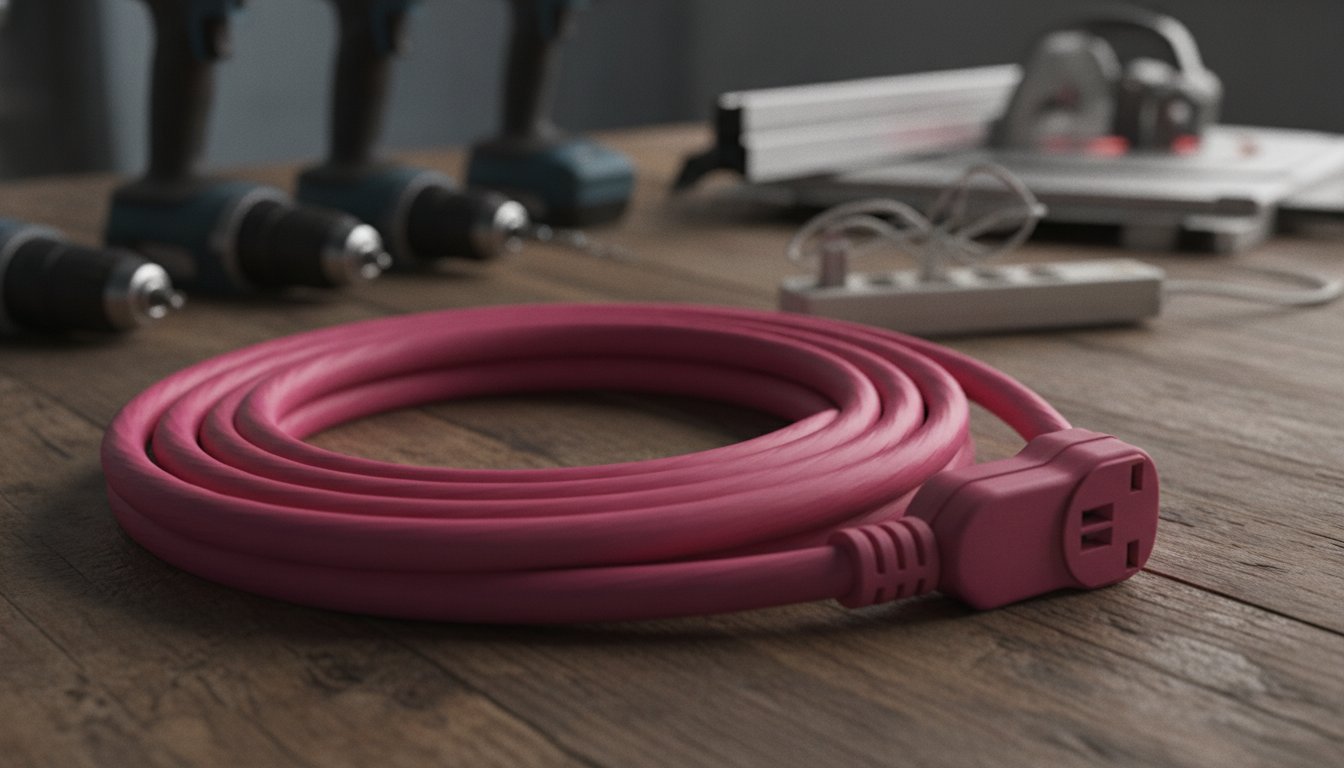
That standard power strip sitting in your garage might be the quickest way to kill your expensive miter saw. It’s a common mistake; you need more outlets, so you reach for the most convenient solution on the shelf. You’ve likely felt the frustration of a tool losing power mid-cut or a circuit breaker that won’t stop tripping when you’re on a tight deadline. We know that in a rugged workshop, a flimsy plastic strip isn’t just annoying; it’s a liability for your equipment.
In this guide, we’ll settle the triple tap extension cord vs power strip debate once and for all. You’ll discover the critical differences in safety, durability, and performance that determine which device can actually handle high amperage without melting down. We’ll explain the technical importance of SJTW ratings and show you how to prevent voltage drop from choking your motors. By the end, you’ll know exactly how to choose a heavy-duty solution that keeps your project moving safely through 2026. We’re breaking down the specs so you can protect your gear and your jobsite from avoidable failures.
Key Takeaways
- Learn why 12-gauge SJTW ratings are the industry standard for preventing voltage drop and protecting your tool’s motor.
- Compare the technical specs of a triple tap extension cord vs power strip to see which one actually handles high-amperage startup loads.
- Identify the hidden fire hazards of using plastic power strips in sawdust-heavy environments like workshops and garages.
- Understand the limitations of built-in circuit breakers on standard strips and why they often fail under professional use.
- Discover how personalized, high-visibility cords can slash equipment loss and prevent theft on busy jobsites.
Fundamental Differences Between Triple Taps and Power Strips
Choosing between a triple tap extension cord vs power strip isn’t just about how many things you can plug in. It’s about where you’re working and how much power your tools actually draw. A triple tap is essentially a heavy-duty extension cord that terminates in a reinforced, three-way block. It’s built for movement. You drag it across concrete, pull it through framing, and toss it into a truck bed at the end of the day. A power strip is a multi-outlet block designed to sit still. It lives under a desk or behind a TV, managing low-draw electronics like monitors and lamps.
Construction materials mark the biggest divide. Triple taps use impact-resistant molded rubber or heavy-duty PVC. They handle the vibration and impact of a busy shop with ease. Power strips use rigid plastic. While that’s fine for home use, it’s brittle. One dropped tool can crack the housing, exposing live wires and creating a serious safety risk. If your environment involves dust, moisture, or heavy foot traffic, the choice becomes clear very quickly.
The Role of the Integrated Cord
The jacket on your cord determines its life span. Triple taps typically feature a 12-gauge SJTW jacket. This rating ensures the cord remains flexible in cold temperatures and resists damage from moisture or oil. Standard power strips often use thinner 14 or 16-gauge wire with basic insulation. These thin cords overheat quickly under high loads and can’t stand up to the traffic of a jobsite. When you’re comparing a triple tap extension cord vs power strip, look at the thickness of the cable first. A beefy cord means better current flow and less heat buildup.
Outlet Configuration and Accessibility
Spacing is the final piece of the puzzle. Power strips line outlets up in a tight row. This often makes it impossible to plug in multiple large transformers or “wall warts.” Triple taps use a “fan” or “star” design. This layout provides ample room for large plugs without blocking adjacent outlets. It’s built for the reality of modern tools, where chargers and power packs come in all shapes and sizes. You can plug in three high-draw tools simultaneously without wrestling with cord tangles or cramped sockets.
Technical Specs: Gauges, SJTW Ratings, and Durability
The internal components of your power solution determine whether your tools run at full strength or burn out prematurely. When comparing a triple tap extension cord vs power strip, the most critical factor is the thickness of the copper wire inside. We measure this using the American Wire Gauge (AWG) system. AWG is the inverse measurement of wire diameter; a lower number indicates a thicker wire with a higher capacity for carrying electrical current. While a standard power strip often relies on thin 14 or 16-gauge wire, industrial-grade triple taps use 12-gauge or even 10-gauge copper to ensure safety and performance.
Wire Gauge and Power Delivery
Thicker wire is essential for maintaining consistent voltage over a distance. A high-quality 12 gauge extension cord prevents the voltage drop that causes circular saws to bog down or space heaters to underperform. Using a 16-gauge “household” power strip for high-draw equipment is a recipe for disaster. These thin wires act like a bottleneck, creating resistance that generates dangerous levels of heat. This heat doesn’t just waste energy; it can melt the insulation and lead to electrical fires. For extreme power requirements, such as heavy-duty compressors or large table saws, our 10 Gauge ECONO Extension Cords provide even more copper for maximum heat dissipation and reliability.
Jacket Ratings and Environmental Protection
The outer shell of the cord is your first line of defense against the elements. Most professional triple taps carry an SJTW rating, which is a specific code for durability. The “S” stands for Service, “J” for Junior (rated to 300 volts), “T” for Thermoplastic, and “W” for Weather and Water Resistance. This is a massive upgrade over the SPT-2 wire found on light-duty power strips, which is only intended for indoor, stationary use.
SJTW jackets provide vital UV resistance. This prevents the cord from becoming brittle and cracking after hours in the sun. On a busy jobsite, you also need reinforced molded plugs. These prevent the ground pin from pulling out when the cord is yanked or tripped over. If you’re tired of replacing flimsy equipment, you can upgrade to professional-grade power solutions that are built to survive the grind. High-quality materials ensure your power stays on and your gear stays protected, no matter how tough the environment gets.
Performance Comparison: Amperage Draw and Overload Protection
Understanding the difference between a triple tap extension cord vs power strip requires looking at how your tools pull power. Motors are hungry. When you pull the trigger on a 15-amp miter saw, the tool demands a massive “inrush” or peak current to get the blade spinning. This startup load can be double the tool’s running amperage. A triple tap is designed to handle this jolt because it’s a direct extension of your building’s wiring. Power strips, however, often rely on sensitive internal components that struggle with these sudden spikes.
Many users rely on the built-in circuit breaker of a power strip as a safety net. In reality, these breakers are often low-quality components designed for low-draw electronics. They might trip prematurely when a saw hits a knot in the wood; worse, they might fail to trip at all during a sustained overload. Triple taps prioritize an uninterrupted path. They don’t have a weak internal breaker that can fail. Instead, they rely on high-capacity copper and the actual building breaker to manage safety. This makes them significantly more reliable for heavy-duty work.
Heat management is where the physical build truly matters. If you pull 15 amps through a plastic power strip for an hour, the internal metal “bus bars” can get hot enough to soften the plastic housing. This creates a fire risk. A rubberized triple tap dissipates heat much more effectively. From an OSHA standpoint, using a single triple tap is often the only legal way to get multiple outlets at the end of a run. OSHA strictly forbids “daisy-chaining” power strips, which is a common but dangerous mistake on many jobsites.
Managing High-Draw Equipment
Consider the tools you use daily. A standard drill might pull 3 to 7 amps, but a table saw or compressor will sit right at the 15-amp limit. Cheap power strips use thin metal strips to connect their outlets. These strips have higher resistance than the solid copper wire found in a triple tap. High resistance equals heat. If you’re running high-draw equipment, that heat buildup in a strip can lead to equipment failure or a melted outlet before you even finish your first cut.
Safety Features: Surge vs. Overcurrent
People often ask if they need surge protection for a table saw. The answer is usually no. Surge protectors are built to shield sensitive circuit boards in computers from voltage spikes. Your power tools have rugged motors that don’t need that level of electronic filtering. They need raw, consistent amperage. Triple taps provide a clear, grounded path that ensures your tool’s casing doesn’t become “hot” if there’s a short. Always test your power source for proper grounding before you start your day; it’s the simplest way to prevent a shock on the job.

Choosing the Right Tool for Your Environment
The environment where you plug in dictates your safety. A living room setup has different needs than a framing site. When deciding on a triple tap extension cord vs power strip, start by looking at your floor. Is it carpeted and dry, or is it covered in sawdust and concrete dust? Your answer determines which solution won’t let you down mid-job.
In a home office, a power strip is often the right call. You need to plug in a computer, two monitors, and a printer. These devices draw very little current but are sensitive to voltage spikes. Surge protection is non-negotiable here. However, take that same plastic strip into a garage and you’re asking for trouble. Sawdust is highly flammable. It finds its way into the open slots of a power strip. If a high-draw tool causes the internal bus bars to heat up, that dust can ignite. This is a risk you simply don’t take on a professional site.
The Workshop and Construction Site Checklist
Jobsites are chaotic. You need gear that stands out and stays intact. Choosing pink extension cords or other high-visibility colors isn’t just about style; it’s about reducing trip hazards in low-light environments. Beyond visibility, consider the reach. A 100 foot 12 gauge extension cord provides the distance you need without the dangerous voltage drop of multiple daisy-chained strips. Before you set up, check these floor conditions:
- Moisture: Concrete floors often hold dampness that ruins plastic power strips.
- Abrasive Surfaces: Dragging a cord over rebar or gravel requires a ruggedized SJTW jacket.
- Debris: Metal shavings and wood chips shouldn’t be near open electrical contacts.
The Home Office and Entertainment Center
Power strips shine when it comes to cable management. They sit flat and keep your desk tidy. Smart strips can even cut power to peripherals when your main PC is off. This saves energy but won’t help you with a shop vac. These smart features rely on delicate components that can’t handle the motor kickback of industrial cleaning tools. Keep the strips for your TV and the triple taps for your heavy equipment. If you’re ready to secure your jobsite with professional gear, order your custom printed extension cords today to ensure your tools stay powered and your crew stays safe.
Why Custom Heavy-Duty Triple Taps Are the Professional Choice
Focusing on the business side of power is just as important as the electrical specs. In the triple tap extension cord vs power strip comparison, we’ve established that triple taps win on performance and safety. Now, consider your bottom line. Cheap power strips are disposable; they’re also easy to lose or have “walk off” the site. A professional setup requires gear that stays where you put it and reflects the quality of your work. If you’re running a crew, your equipment is an investment that needs protection.
One of the biggest hidden costs on a jobsite is theft. Standard black or yellow cords blend into the background. Custom extension cords with your company name printed directly on the jacket make it clear who owns the gear. It’s much harder for a subcontractor to accidentally pack your 12-gauge triple tap into their truck when your branding is staring them in the face. This level of personalization prevents disputes and keeps your inventory intact through the busiest phases of a project.
Think about the long-term ROI of your power solutions. You might go through four or five $15 power strips in a single year as they crack, clog with dust, or get stepped on by heavy boots. Investing in one heavy-duty triple tap with a reinforced SJTW jacket might cost more upfront, but it’s built to survive years of daily abuse. Beyond durability, using high-visibility colors like purple or pink creates a safer environment by clearly marking power runs in high-traffic areas, which helps you stay ahead of hazard awareness requirements.
Personalization and Gear Management
Identifying ownership on a crowded, multi-contractor jobsite saves you hours of frustration. Custom imprinting reduces “accidental” tool borrowing by making your gear unmistakable to everyone on the floor. When your name is on the cord, other crews are less likely to unplug your tools to power their own. Personalized cords streamline end-of-day pack-outs by allowing your crew to identify and grab your company assets from across the room without having to check every plug for a handwritten name tag.
The Fourman Industries Advantage
We specialize in 12 Gauge SJTW Triple Tap cords because we know what demanding users need to get the job done. Our high-visibility options ensure that your power runs are seen, preventing accidents and keeping your site looking sharp for clients. We don’t just stop at cords. Whether you need the portability of a truck & car battery jump starter or the raw capacity of a 10 Gauge ECONO cord for your largest equipment, we provide the gear that works as hard as you do. Making the right call in the triple tap extension cord vs power strip debate is the first step toward a more secure and efficient jobsite.
Secure Your Jobsite Power Today
Choosing between a triple tap extension cord vs power strip comes down to matching the tool to the environment. While a power strip handles your desk lamp, your miter saw needs the raw capacity of a 12-gauge SJTW triple tap. We’ve covered why thick copper and rugged jackets are non-negotiable for professional performance and safety. Don’t let voltage drop or brittle plastic slow down your progress or damage your expensive gear.
Fourman Industries has delivered family-owned expertise since 1997. We focus on heavy-duty 12 AWG and 10 AWG solutions that stand up to daily abuse. Our custom imprinting service is a proven way to prevent jobsite theft; it makes your ownership clear and permanent. It’s time to invest in power gear as hardworking as you are.
Shop Heavy-Duty 12 Gauge SJTW Triple Tap Extension Cords at Fourman Industries and take control of your equipment management. You’ll feel the difference in tool performance and the peace of mind that comes with reliable gear. Let’s build something great together.
Frequently Asked Questions
Is it safer to use a triple tap extension cord or a power strip for high-wattage appliances?
A triple tap is significantly safer for high-wattage tools because it uses thicker 12-gauge copper wire. Standard power strips often use 14 or 16-gauge wire, which can’t handle the continuous draw of a space heater or the startup kick of a table saw. In the triple tap extension cord vs power strip comparison, the heavy-duty SJTW jacket on a triple tap also resists heat much better than the thin plastic found on a standard power strip.
Can I plug a power strip into a triple tap extension cord?
You should avoid plugging a power strip into a triple tap extension cord whenever possible. This practice is known as “daisy-chaining” and is a major violation of OSHA safety standards on professional jobsites. It creates multiple points of resistance and increases the risk of an electrical fire. If you need more outlets at the end of your run, use a dedicated 12-gauge triple tap directly from the wall source to ensure a stable, safe power flow.
What does SJTW mean on an extension cord jacket?
SJTW is a standard industry code that describes the cord’s durability and environmental limits. The “S” stands for Hard Service, while the “J” indicates it’s a Junior service cord rated for 300 volts. The “T” tells you the jacket is made of thermoplastic insulation. Finally, the “W” is the most important for contractors; it confirms the cord is rated for weather and water resistance. This makes it ideal for outdoor projects and damp garage floors.
Why do circular saws and space heaters often melt power strips?
Circular saws and space heaters demand high amperage that standard power strips aren’t built to carry. These tools create a massive peak load when they start up, which generates intense heat across the thin metal strips inside a power strip. Because the plastic housing can’t dissipate this heat, it softens and eventually melts. A 12-gauge triple tap uses solid copper conductors that handle these surges without reaching dangerous temperatures or failing under pressure.
Does the length of the extension cord affect the power delivered to the triple tap?
The length of your cord directly impacts the voltage reaching your tools. As electricity travels through a longer wire, it encounters more resistance, which causes a “voltage drop.” This drop can starve your saw’s motor, causing it to run hot or lose torque. To combat this over long distances, you must use a thicker 10 or 12-gauge cord. For example, a 100-foot run requires a heavy-duty wire to prevent performance issues and equipment damage.
Are triple tap extension cords waterproof for outdoor use?
Triple tap cords with an SJTW rating are water-resistant and designed for outdoor use, but they aren’t fully waterproof or submersible. The jacket protects the wire from rain and moisture, but the actual plug connections remain vulnerable. Always keep your connections off the ground and away from standing water. For maximum safety during outdoor projects, ensure you’re plugged into a GFCI-protected outlet to prevent shocks if the cord ends get wet during a storm.
How do I know if my extension cord is 12-gauge or 14-gauge?
You can identify the gauge by looking at the technical text printed directly on the cord’s outer jacket. Look for a sequence like “12/3” or “14/3.” The first number tells you the wire gauge, while the second indicates the number of internal conductors. A 12-gauge cord has thicker copper than a 14-gauge cord, making it the better choice for industrial tools. If the printing is worn off, the physical thickness of a 12-gauge cord is usually much greater.
Will a custom-printed extension cord still be UL certified?
Yes, a custom-printed extension cord from Fourman Industries maintains its full UL certification. The imprinting process only adds your company name or logo to the outer jacket; it doesn’t alter the internal copper or the integrity of the insulation. You get the same professional-grade safety and performance while gaining a powerful tool for theft prevention. It’s a smart way to protect your assets on busy jobsites without compromising on strict electrical safety standards or OSHA compliance.




