
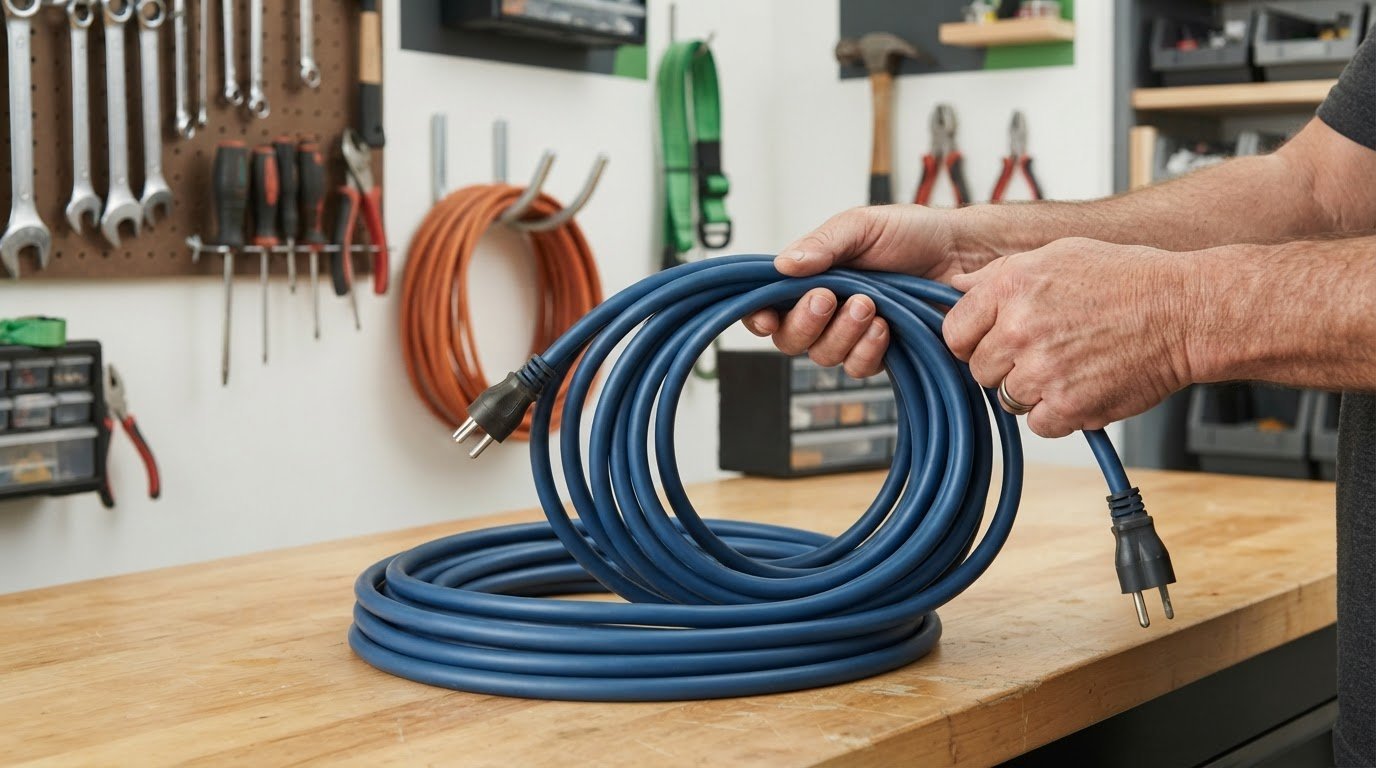
Wrapping a power cord tightly around your elbow is the fastest way to ruin it. Every tight loop forces a permanent twist into the cable, stretching continuous copper stranding until conductors snap beneath an intact jacket. Finding the best way to coil an extension cord comes down to working with the cable’s natural conductor memory rather than fighting against it.
We’ve all lost precious minutes on a jobsite or in the garage wrestling a bird’s nest of kinks just to power up a saw. Worse, that corkscrewed jacket often leads to intermittent power dropouts right when you need steady current most. You don’t have to keep replacing damaged lines or untangling stubborn knots. Master a few proven workshop techniques, and you’ll protect heavy-gauge conductors from internal tears while enjoying clean, instant throwouts every time you set up.
Here is your straightforward guide to professional coiling methods, compact storage habits, and simple techniques that keep your heavy-duty cords flexible and working like new across every season.
Key Takeaways
- Master the over-under roadie wrap as the best way to coil an extension cord, canceling internal rotational twists so lines drop flat without knots.
- Discover why traditional elbow wrapping inflicts severe torsional strain, snapping heavy copper stranding beneath seemingly intact jackets.
- Compare over-under coiling against daisy chains and mechanical reels to balance rapid deployment with long-term conductor protection.
- Upgrade your storage routines with wide cinch straps and curved hooks to eliminate jacket pinch points and fight cold-weather stiffness.
- Learn how matching proper winding habits with durable SJTW jackets and custom cord identification safeguards your gear against jobsite wear and theft.
Why Proper Cord Wrapping Matters: The Hidden Cost of the Elbow Wrap
Most folks learn to wrap cords the same way: anchoring one end in the palm and looping the line repeatedly between hand and elbow. It feels fast. It seems neat. Yet, this single habit destroys more power cables than rough jobsite abrasion ever will. The elbow wrap introduces a full 360-degree axial twist into the cable core with every pass. Forcing that twist repeatedly ruins conductor alignment, costs valuable crew time untangling bird-nest piles, and creates real jobsite hazards. Learning the best way to coil an extension cord starts with ditching this destructive shortcut.
The Mechanics of Cable Memory and Torsional Stress
Cable manufacturing uses continuous heat extrusion to form outer thermoplastic jackets around insulated conductors. This process sets a natural molecular lay. When you force a cable around your elbow, you run directly counter to that lay, creating intense torsional stress. Repeated twists stretch and kink the outer compound until it develops permanent spiral memory, often called hocking. Underneath that spiraled jacket, individual strands of continuous high-flex copper stretch, work-harden, and sever. Using the recognized over/under cable coiling method neutralizes this rotational force, allowing the jacket and internal conductors to rest without built-up tension.
Safety Hazards of Damaged Internal Wire Strands
Severed copper strands inside a power cord create hidden bottlenecks. When individual wires snap, the remaining strands must carry the entire electrical current. This sharp drop in cross-sectional area increases electrical resistance and generates dangerous thermal hot spots. Under heavy amperage draws from table saws, air compressors, or commercial heaters, damaged conductors can arc internally. According to data from the Electrical Safety Foundation International and the CPSC, extension cords cause an estimated 3,300 to 4,600 home structure fires every year, alongside roughly 4,000 non-fire emergency room injuries often tied to tangled tripping hazards.
Industrial lines face intense punishment on active sites. Knowing the physical limits of your gear, including standard 12 gauge extension cord durability factors, helps protect your investment. Choosing the best way to coil an extension cord prevents internal wire fatigue, keeps tough SJTW jackets laying flat across the floor, and ensures steady voltage to your heavy-duty tools.
The Over-Under Method: How to Roadie-Wrap Your Extension Cord
Broadcast road crews and live-audio stagehands handle thousands of feet of cable every night. They cannot afford snarls, delays, or damaged copper, which is why they rely exclusively on the over-under method. Also known as the roadie wrap, this technique stands as the best way to coil an extension cord. By alternating the direction of each consecutive loop, you cancel out rotational tension. A properly coiled cable unspools effortlessly across the floor without a single hitch.
Step-by-Step Instructions for the Over-Under Coil
Mastering this technique takes just a few minutes of focused practice. Follow these four steps to build the muscle memory:
- Step 1: Relieve baseline tension. Lay your cord out straight along the ground. Working out pre-existing twists before you start prevents stubborn loops.
- Step 2: Cast the overhand loop. Hold the male plug in your non-dominant hand. With your dominant hand, reach down the cord, pull a loop toward yourself, and place it naturally into your holding hand with a slight clockwise roll between your thumb and forefinger.
- Step 3: Roll the underhand loop. Reach down the line again, but this time rotate your wrist inward so your thumb points toward your body. Grab the cable, roll your wrist back outward, and bring the loop up behind the previous one. This creates an inverted loop that cancels out the axial twist from Step 2.
- Step 4: Alternate to the end. Repeat this over-and-under sequence down the full run. Secure the ends with a hook-and-loop strap once you reach the female connector.
Troubleshooting Common Over-Under Mistakes
Inconsistent loop diameters are common when first starting out. Keep loops between 12 and 18 inches across. Smaller circles put unnecessary strain on thick copper conductors, while oversized loops drag along dirty workshop floors. If you accidentally pass a connector through the center of your coils during storage, you will transform your loops into a series of half-hitch knots upon throwout. Always store the ends securely against the outer rim of the bundle.
Handling 50-foot or 100-foot heavy-gauge lines can also tire your wrist quickly. Let the weight of the coiled loops rest on the floor while you feed and alternate new loops into your hand. Regular visual checks during coiling ensure compliance with OSHA standard 1910.334 on flexible cord handling, which mandates inspecting cords for external damage and strain relief integrity before use. Equipping your crew with dependable professional-grade power accessories makes maintaining proper winding discipline second nature across every job.
Comparing Popular Coiling Techniques: Over-Under vs Daisy Chain vs Reel
Every tradesperson develops a favorite wrapping habit, but not all methods protect your tools equally. Deciding on the best way to coil an extension cord depends on how you balance quick storage against the physical lifespan of your conductors. Short utility runs might handle different wrapping styles than heavy 10 AWG or 12 AWG lines. For shorter drop cords under 25 feet, some workers prefer a simple butterfly wrap across an open hand. For primary jobsite feeds, the choice usually comes down to three main approaches.
| Method | Deployment Speed | Conductor Protection | Best Use Case |
|---|---|---|---|
| Over-Under | Instant (zero knots) | Maximum (cancels axial twist) | Heavy-duty 10/12 AWG commercial cords |
| Daisy Chain | Fast pull-through | Moderate to Low (tight bends) | Light utility cords, rapid pack-downs |
| Cord Reel | Moderate crank wind | High (storage) / Low (thermal risk under load) | Stationary workshop and garage storage |
The Contractor Daisy Chain: Fast Storage vs Jacket Wear
The contractor daisy chain, or chain sinnet, turns a cable into an interlocking series of loose crochet loops. You pull the free terminal end, and the entire braid unzips in seconds without manual unrolling. While convenient when packing up in mud or rain, this technique forces the cord through repeated tight radiuses. Dragging a braided line across rough concrete abrades the outer thermoplastic jacket at every bend point. Over time, that constant friction wears down protective vinyl compounds. Save the daisy chain for temporary, light-duty cords rather than your primary heavy-gauge power feeds.
Cord Reels and Spools: Convenient Storage with Thermal Cautions
Center-hub reels and hand-crank spools keep garage walls tidy, but they introduce a severe electrical hazard when operated incorrectly. Leaving a cable tightly bundled around a spool while powering high-wattage air compressors or table saws traps resistive and inductive heat within the inner wraps. Because the layered coils cannot dissipate heat into open air, the core temperature spikes quickly, risking melted insulation and jacket fusion. According to published ESFI extension cord safety guidelines, cords should never be used while coiled or covered by rugs and furniture. Always unwind the full length off a manual spool before running heavy tool loads. For true field portability without heat hazards, the over-under method remains the best way to coil an extension cord.

Pro Storage Habits: Securing, Hanging, and Cold-Weather Management
Mastering alternating loops is only half the battle. How you bundle, hang, and protect your lines between jobs determines whether that clean coil holds up or turns into an unmanageable mess. Even when you follow the best way to coil an extension cord, poor storage habits can quickly undo your hard work. Sharp hooks, gummy tape, and freezing temperatures all threaten the integrity of commercial cables.
Securing Coils: Choosing Straps, Cinchers, and Ties
Ditch the electrical tape and single-use plastic zip ties. Electrical tape leaves a sticky adhesive film that attracts jobsite grit, turning your cable into an abrasive mess that grinds into the vinyl jacket. Disposable wire ties create razor-sharp plastic edges that snag clothing and cut fingers during rapid tear-downs. Instead, secure your coils using wide hook-and-loop cinch straps or elastic ball bungees. These options distribute pressure evenly around the bundle without cutting into the jacket. Always leave both plug ends hanging loosely on the outside rim. This habit keeps terminals visible for quick prong inspections and rapid voltage testing without unbundling the entire line.
Hanging and Cold-Weather Handling Rules
Where you hang your cords matters just as much as how you wrap them. Avoid hanging heavy 10 AWG or 12 AWG coils from narrow drywall screws, thin nails, or raw wire hooks. The concentrated weight of a 50-foot or 100-foot run creates a localized pinch point, stretching outer jackets and warping internal copper conductors. Instead, install broad, curved saddle brackets, hose hooks, or heavy-duty grommeted hanging straps that support the full contour of the loop.
Winter conditions demand extra patience on active jobsites. Standard SJTW thermoplastic vinyl compounds begin to stiffen as temperatures approach 32°F (0°C). Forcing a frozen, stiff cord into tight bends can crack the vinyl jacket and split inner insulation. Before deploying or wrapping cords stored in an unheated truck, bring them into a heated workspace for twenty minutes to restore jacket suppleness. In dim winter conditions or cluttered shop spaces, deploying a high-visibility line like a pink extension cord ensures that cables remain easily spotted by workers and equipment operators, preventing trip hazards and run-over tears.
Clean storage preserves your tools and keeps your site running smoothly. When you’re ready to upgrade your jobsite gear, explore heavy-duty power cords and accessories built for tough demands.
Upgrading Your Power Setup: Selecting Cords Engineered for Easy Handling
High-grade wrapping discipline works best when paired with properly engineered gear. You can practice the best way to coil an extension cord every afternoon, but fighting a rigid, low-grade line will still slow your crew down. Cables built with high-flex continuous copper stranding and balanced jacket compounds respond smoothly to wrist rolls, settling into tidy loops without fighting your hands.
Jacket Ratings, Flexibility, and AWG Wire Gauges
A cord’s designated jacket code tells you how it behaves under daily physical stress. Standard outdoor cords feature an SJTW stamp: Junior Hard Service (300V rating), Thermoplastic vinyl, and Weather/water resistance. High-grade vinyl compounds protect conductors from oil, jobsite moisture, and rough ground abrasion while retaining practical flexibility across seasonal temperature shifts.
Wire thickness also dictates handling ease:
- 10 AWG Lines: Built for demanding equipment like large air compressors and table saws. A 10 Gauge ECONO cord delivers maximum voltage stability over long runs, though the thick copper bundle naturally adds weight during coiling.
- 12 AWG Lines: The universal workhorse for commercial jobsites. A 12-gauge cord balances 15-to-20-amp tool capacity with an agile, flexible profile that coils effortlessly.
- Copper Stranding: High-strand copper counts give conductors supple flexibility, preventing the stiff, stubborn memory that plagues bargain utility cords.
Jobsite Organization and Gear Identification
Tangled cords often start with cluttered drop points. Using 12 Gauge SJTW Triple Tap Extension Cords eliminates the need for bulky multi-outlet splitters, powering three separate tools from a single clean feed. Fewer lines on the ground mean fewer tripping hazards and faster pack-downs at quitting time.
Shared commercial sites also create ownership headaches. Standard yellow and orange lines blend together, leading to accidental mix-ups or outright tool theft. High-visibility options, including dedicated purple or pink extension cords, make your setup instantly recognizable across a crowded floor. Investing in permanently marked lines through custom extension cords allows you to print company names and phone numbers directly along the jacket, locking down your tool investment.
Pairing reliable gear with the best way to coil an extension cord protects your tools, prevents safety violations, and keeps projects moving efficiently. Ready to upgrade your power setup? Equip your crew with heavy-duty power cords from Fourman Industries to experience commercial-grade durability built for demanding trades.
Protect Your Gear with Smarter Cord Habits
Breaking the elbow-wrap habit is one of the easiest ways to safeguard your electrical tools. Adopting the over-under method as the best way to coil an extension cord neutralizes conductor twist, eliminates frustrating knot clusters, and extends the working life of your power lines. Combined with wide saddle hooks and proper cold-weather warmups, smart handling habits guarantee clean, instant deployments every single morning.
Reliable performance also demands tough equipment. Premium lines built with continuous 10 AWG and 12 AWG stranded copper flex naturally with proper winding techniques, resisting internal wire fatigue. Rugged, weather-resistant SJTW jackets shrug off jobsite punishment across every season, while personalized custom printed jackets keep your investment safe from mix-ups and tool theft on crowded commercial sites.
Take charge of your workflow and put an end to tangled downtime. When you need equipment you can rely on, find heavy-duty, tangle-resistant power cords at Fourman Industries and keep your crew running at full power.
Frequently Asked Questions
Why is wrapping an extension cord around your elbow bad for the wire?
Wrapping a cord around your elbow forces a full 360-degree axial twist into the cable core with every pass. This torsional force stresses the outer vinyl jacket, creating permanent corkscrews and kinks. Inside the insulation, fine copper strands stretch, bend, and eventually snap. Over time, these broken conductors cause intermittent electrical connections, reduced voltage capacity, and dangerous hot spots beneath what appears to be an intact outer jacket.
What is the roadie wrap technique for electrical cords?
The roadie wrap, or over-under method, is widely considered the best way to coil an extension cord. It alternates between a standard clockwise loop and an inverted counter-clockwise loop. Because each loop cancels out the rotational twist of the previous one, the cable holds zero resting torque. When you grab the terminal plug and cast the coil outward across the floor, it unrolls straight and flat without knots.
Can improper cord coiling create a fire hazard?
Yes, improper coiling directly contributes to electrical fires in two ways. Severed copper strands from aggressive winding reduce current capacity, creating high-resistance hot spots that can arc under heavy loads. Additionally, powering heavy-draw tools like heaters or compressors while a cord remains tightly wound on a storage reel traps heat. Without adequate open-air ventilation, the bundled jacket layers melt, leading to short circuits and ignition risks.
How do you coil a stiff extension cord in freezing winter temperatures?
Never force a freezing cord into tight loops, as cold temperatures cause standard thermoplastic PVC compounds to stiffen and crack. Bring the cable indoors or into a warm truck cab for fifteen to twenty minutes before packing up. Once the jacket warms up, gently wrap wider loops using the over-under method. Storing cords at ambient room temperature preserves jacket elasticity and stops cold-weather jacket fractures.
Is the daisy chain knot method safe for heavy-duty extension cords?
The daisy chain is convenient for rapid pack-downs, but it isn’t ideal for heavy-gauge power lines. The interlocking loops create tight, acute bends that place continuous mechanical strain on thick 10 AWG or 12 AWG copper stranding. Pulling the chain across rough concrete also abrades the jacket compound at every bend point. Reserve the daisy chain technique for lightweight utility cords or ropes.
What is the best way to hang coiled extension cords on a garage wall?
Hang coiled cables from wide, curved saddle hooks or heavy-duty grommeted hook-and-loop straps rather than thin nails or drywall screws. Hanging heavy 50-foot or 100-foot cords over a narrow point focuses the entire bundle’s weight onto a tiny section of jacket, causing localized compression and internal wire pinching. Curved brackets distribute weight evenly, preserving loop shape and preventing conductor fatigue during long-term seasonal storage.
How do you get permanent twist kinks out of an old extension cord?
Lay the cord completely flat on warm pavement or a sunny lawn for an hour. Solar heat relaxes the thermoplastic jacket and softens its resting memory. Once the vinyl is pliable, pull the cable straight and untwist it by rolling it between your fingers from plug to receptacle. Finish by using the over-under method, which remains the best way to coil an extension cord and train the jacket into smooth, neutral loops.




