
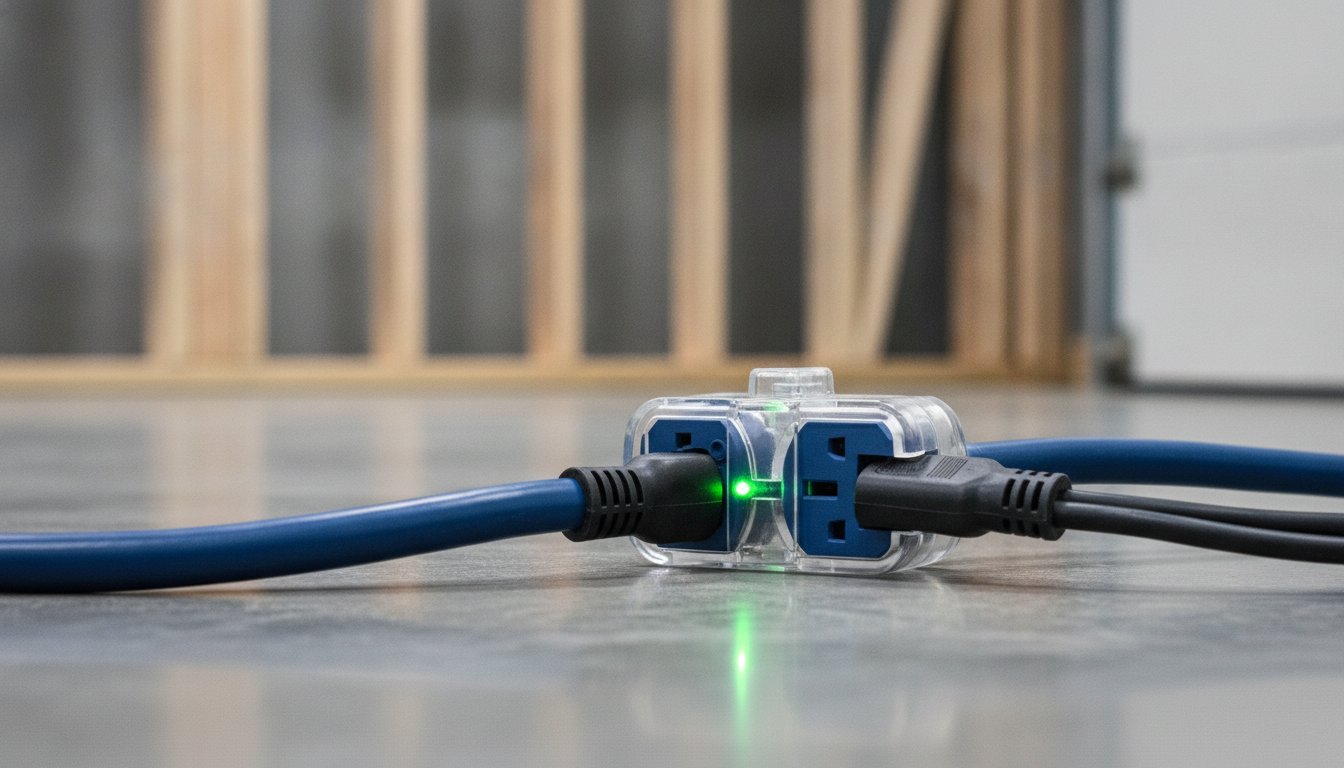
Would you hand over $16,550 just to keep a few extra tools running on your jobsite? In 2026, that’s the reality of OSHA’s maximum penalty for a single serious electrical violation. You’ve likely seen the “spiderweb” of tangled cords and cheap power strips that plague busy sites. It’s a mess that leads to tripping hazards, voltage drop, and ruined equipment. Understanding the benefits of a multi-outlet extension cord is the first step toward a safer, more efficient workflow that keeps your crew focused on the task at hand.
We know you value reliability and hard work. You need a setup that powers your heavy-duty tools without the voltage drop that burns out expensive motors. We promise to show you how a professional-grade 12 Gauge SJTW Triple Tap Extension Cord transforms your workspace from a cluttered hazard into a high-performance zone. We’ll explore why these cords are the smart alternative to dangerous daisy-chaining, how high-visibility colors like pink and purple improve safety, and why custom printing is the ultimate tool for preventing jobsite theft and gear loss.
Key Takeaways
- Stop risking heavy OSHA fines and fire hazards by replacing dangerous daisy-chains with a single, compliant power hub.
- Discover the top benefits of a multi-outlet extension cord for cutting down setup time and keeping your workspace free of tripping hazards.
- Learn why the “12-Gauge Rule” is non-negotiable for protecting your high-draw power tools from permanent motor damage.
- Protect your investment on busy jobsites by using custom-printed cords and high-visibility colors that deter theft.
What is a Multi-Outlet Extension Cord and Why It Matters
A multi-outlet extension cord is a high-capacity power line featuring multiple integrated receptacles. These outlets are either clustered at the terminal end or spaced evenly along the cord’s length. Modern workshops have moved away from single-point power sources. We now use distributed power hubs to keep workflows moving efficiently. This setup reduces the need for multiple long cable runs and keeps the floor clear of unnecessary bulk. Understanding the benefits of a multi-outlet extension cord starts with its design, which is built to handle the rigors of a professional environment.
By 2026, safety standards have tightened. They prioritize integrated multi-outlets over modular power strips for temporary power distribution. You’ll often hear these tools called triple taps, power blocks, or multi-outlet stringers. Integrated units are factory-molded for maximum durability. This design prevents the loose connections and moisture issues that lead to jobsite failures. It’s a professional solution that replaces the “spiderweb” of cheap cords often found on unorganized sites.
The Triple Tap Advantage
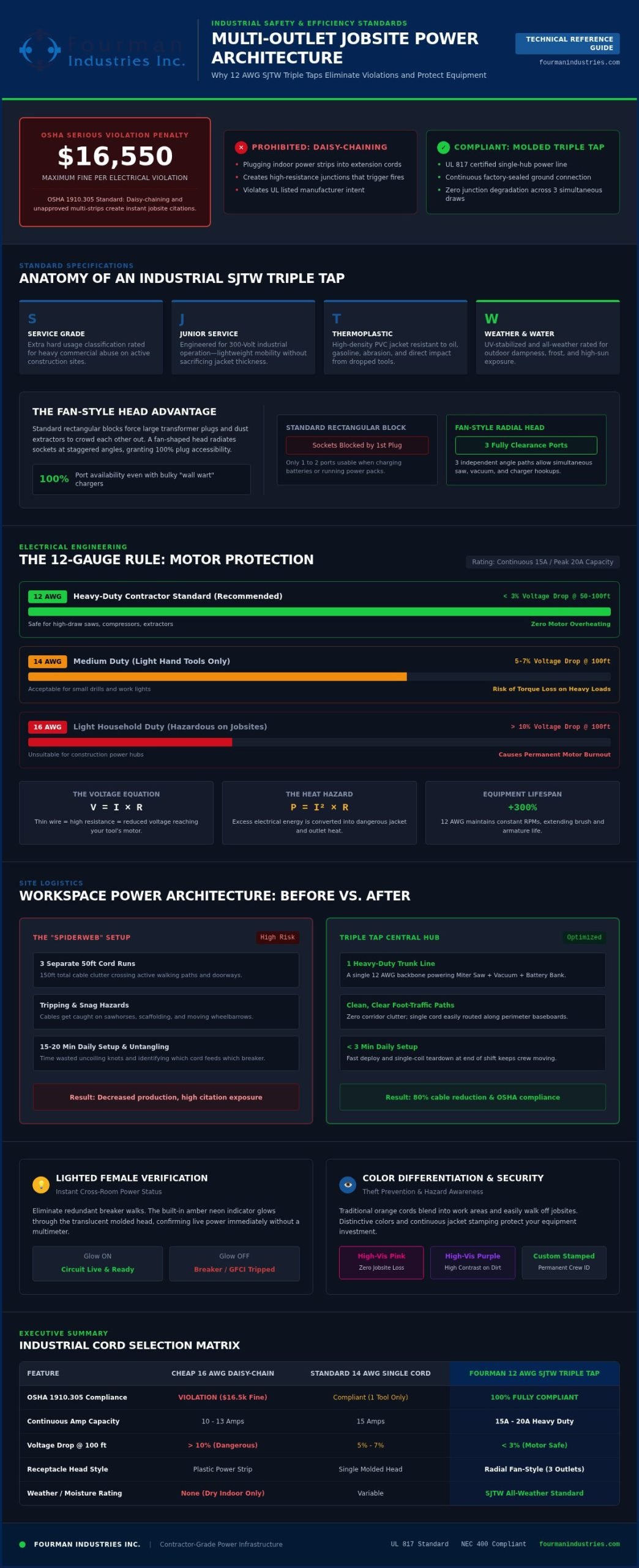
One of the key benefits of a multi-outlet extension cord is the ability to use a 12 Gauge SJTW Triple Tap Extension Cord as a central hub. It’s the ideal choice for a miter saw station. You can power the saw, a dust extractor, and a battery charging bank from one single line. The “fan-style” head is superior to a standard rectangular block. It provides the physical clearance needed for bulky transformer plugs. You won’t have to choose which tool to unplug just because a “wall wart” is blocking the next socket.
Industrial vs. Household Multi-Outlets
Never use indoor power strips in outdoor or high-moisture environments. They lack the protection needed for professional work. We recommend SJTW jackets because they are the gold standard for durability and weather resistance. When you examine extension cord specifications and design, the difference in insulation quality is clear. Industrial cords are built to handle the physical abuse of a jobsite, from being stepped on to being dragged across concrete.
Reliability is also about managing voltage drop. If you pull too much power through a thin wire, your tools will lose torque and heat up. Using a heavy-duty 12-gauge cord ensures your tools get the steady voltage they need to perform. This prevents motor burnout and keeps your expensive gear in the game longer. A solid connection is the backbone of any successful project.
Safety Benefits: Eliminating Hazards and OSHA Violations
Plugging one extension cord into another is a gamble you don’t want to take. It’s called daisy-chaining, and it’s a fast track to a fire or a costly OSHA citation. According to OSHA 1910.305 wiring standards, temporary power must be used exactly as intended by the manufacturer. Power strips are designed for direct wall outlet connection, not for other cords. One of the primary benefits of a multi-outlet extension cord is that it provides a factory-molded, safe way to run three tools from a single source without violating safety codes.
Consolidating your power lines also cleans up the jobsite floor. Instead of three separate cords snaking through a doorway, you have one heavy-duty line. This significantly reduces tripping hazards. A high-quality 12 gauge extension cord handles the heat generated by multiple tools much better than thinner 14 or 16-gauge options. It’s a safer way to distribute power without risking a circuit overload that could shut down your entire crew.
Verification is just as important as the connection itself. Lighted female ends allow you to see that you have power from across the room. You won’t waste time checking breakers if a tool stops; the glowing head tells you the feed is active. This simple feature prevents accidental disconnects and keeps your project moving. If you’re looking for a reliable setup, our 12 Gauge SJTW Triple Tap Extension Cord offers these safety features in one rugged package.
Preventing Electrical Fires and Surges
Integrated multi-outlets are built to maintain consistent amperage. This is vital for preventing motor burnout in expensive saws and drills. In 2026, UL 817 certification remains the gold standard. It ensures the cord set meets strict requirements for heat resistance and structural durability. Grounding integrity is another major win. A professional multi-tap maintains a solid path to ground for all three tools at once, protecting your crew from dangerous shocks and equipment surges.
Visibility and Accident Prevention
Standard black or orange cords often disappear into the shadows of a jobsite. Using high-visibility colors like pink or purple makes your power hub stand out instantly. This prevents “cord confusion” when multiple crews are sharing the same space. High-visibility cords drastically reduce “blind-spot” tripping accidents by remaining clearly visible in low-light conditions. When your power source is easy to see, it stays out from underfoot and away from heavy equipment tires.
Efficiency and Organization: Professional Cable Management
Time is money on any jobsite. One of the biggest organizational benefits of a multi-outlet extension cord is the drastic reduction in setup and teardown time. Rolling up one heavy-duty cord at the end of the day is much faster than untangling three separate lines. It keeps your workspace clean and prevents that “spaghetti” look in tight areas like crawlspaces or behind AV racks. When you aren’t fighting a mess of cables, you’re getting the actual work done. Efficiency isn’t just about speed; it’s about reducing the friction in your daily routine.
Think about your reach. By using a single 50ft or 100ft main line, you create a power hub that serves a 10ft radius of tools. This centralized approach means you aren’t constantly hunting for a new wall outlet every time you move a few feet. It also projects a professional appearance. Clients notice when a contractor has an organized setup. It builds trust because a clean workspace usually suggests clean, precise work. A professional setup tells the customer you respect their property and your own craft.
Maximizing Jobsite Flow
Creating “work zones” is a game-changer for larger crews. You can place a triple tap in a central location to power an entire team’s small tools or battery chargers. This reduces the demand on limited generator ports or single wall outlets. Using custom extension cords with integrated multi-outlets also simplifies gear inventory. You know exactly which hub belongs to which crew. You have fewer individual pieces to track, which means less gear gets left behind when the sun goes down.
Storage and Maintenance
Maintenance is simpler when you have fewer components to manage. Multi-outlet cords are easier to store using professional wraps, which prevents the internal wire damage caused by tight, messy kinking. You also reduce wear and tear on the terminal ends. Since you aren’t constantly plugging and unplugging from the main wall source to swap tools, the primary plug stays secure and functional longer. It’s a simple way to extend the life of your equipment.
Consider the long-term ROI of your gear. Investing in one 10-gauge multi-outlet cord is far smarter than buying several cheap 16-gauge alternatives that will likely fail under heavy load. Following ESFI extension cord safety guidelines ensures you pick a cord that matches your tool’s amperage. This prevents the overheating that kills light-duty cords. Spending more upfront on a professional-grade hub saves you from replacement costs and avoidable downtime later.
Choosing the Right Multi-Outlet Cord: Gauge and Specs
Picking the right cord isn’t just about how many plugs you get. It’s about how much power those plugs can actually deliver to your tools. One of the main benefits of a multi-outlet extension cord is its ability to centralize your gear, but that only works if the wire gauge is up to the task. Understanding the benefits of a multi-outlet extension cord means knowing that the wire inside must carry the cumulative load for everything plugged into it. If you’re running professional power tools, follow the 12-gauge rule. Never use a multi-tap cord thinner than 12AWG. Thinner 14 or 16-gauge cords can’t handle the combined amperage of three tools running at once. They’ll overheat, trip breakers, or even damage your tool’s motor.
Amperage ratings are cumulative. If you plug in a miter saw and a shop vac, you’re pulling a lot of juice through that one main line. You have to ensure the cord is rated for the total draw of your setup. Length also plays a huge role in performance. On a 100ft run, voltage drop becomes a real threat to your equipment. A thicker gauge helps maintain steady voltage over those long distances. This ensures your saws don’t bog down halfway through a critical cut. A solid connection keeps your tools running at peak torque all day long.
The 10-Gauge vs. 12-Gauge Debate
For most daily tasks, a 12 Gauge SJTW Triple Tap Extension Cord is the industry standard. However, if you’re running high-draw equipment like large air compressors or table saws, it’s time to upgrade. Our 10 Gauge ECONO Extension Cords are built for these heavy-duty scenarios. Calculate the total wattage of your three most-used tools. If that number exceeds the continuous rating of a 12-gauge wire, the 10-gauge option is your best insurance policy. These “Triple Tap” heads also feature extra-thick insulation at the junction point. This handles the physical stress of multiple heavy cables pulling in different directions without fraying the internal wiring.
Environmental Ratings
The jacket material determines where your cord can survive. SJTW stands for Junior hard service, Thermoplastic, and Weather-resistant. This is the gold standard for jobsite durability. These jackets offer excellent cold-weather flexibility. They won’t turn into stiff, unmanageable plastic when the temperature drops on a winter morning. If you’re managing event power for festivals or weddings, water resistance is non-negotiable. Look for cords with integrated dust-caps for unused receptacles. They keep moisture and debris out of the circuit, preventing shorts before they happen. Ready to upgrade your power distribution? Check out our full range of heavy-duty extension cords to find the perfect match for your next project.
The Fourman Advantage: Customization Meets Durability
At Fourman Industries, we don’t just sell gear; we provide solutions for the real-world problems you face every morning on the jobsite. While we’ve covered the technical benefits of a multi-outlet extension cord, the real “Fourman Advantage” lies in how we combine that performance with unmatched customization. Our 12 Gauge SJTW Triple Tap Extension Cords are built for the grind. They are the perfect partner for high-performance accessories like the DeWALT FLEXTORQ Bit Set. When your tools and your power hubs are both industrial-grade, you spend less time troubleshooting and more time billing hours. We understand that blue-collar reliability means gear that works as hard as you do.
Rugged construction is our baseline. Our cords feature molded lighted ends that verify power at a glance, and the SJTW jackets remain flexible even when the temperature drops. This level of durability ensures that your power distribution doesn’t become the weak link in your workflow. We’ve seen how cheap, generic cords fail under the pressure of professional use. That’s why we focus on heavy-duty specifications that exceed standard expectations. Investing in quality gear isn’t just about the cord; it’s about the functional success of your entire project.
Theft Prevention and Branding
Theft is a silent profit killer on busy jobsites. The “Name on the Cord” strategy is one of the most effective ways to make your gear “un-stealable” for other crews. By using our free continuous indelible hot-stamp jacket printing, we stamp your company name and phone number every 12 inches. It’s hard for someone to walk off with a cord that is clearly marked as yours. This customization also promotes your business brand every time you roll out your gear. The cost of loss includes not just the price of the cord but also the lost labor and project delays that happen when your team can’t plug in; personalized cords pay for themselves the first time they don’t go missing.
Ordering for the Whole Crew
Managing gear for a large team requires organization. We offer unique colors like pink extension cords and purple extension cords for instant identification across the site. You can assign specific colors to different crews or trades. This eliminates arguments over who owns which hub and keeps your inventory organized. Whether you are in construction, AV, or event management, having a high-vis, personalized power hub for every team member is a mandatory management tool. We offer bulk solutions that ensure your entire company is equipped with the best power distribution tools available.
Ready to protect your investment and professionalize your setup? Build your custom multi-outlet cord at Fourman Industries today and experience the difference that professional-grade customization makes on your next job.
Upgrade Your Workspace with Professional Power Solutions
Mastering your power distribution is about more than just finding an extra plug. It’s about protecting your tools, your team, and your bottom line. We’ve explored how the benefits of a multi-outlet extension cord extend from OSHA compliance to streamlined cable management. By choosing the right gauge and environmental rating, you ensure your equipment runs at peak performance without the risk of voltage drop or fire hazards. A clean, organized jobsite isn’t just safer; it projects the professional image your clients expect.
Since 1997, Fourman Industries has focused on providing the rugged gear that professionals need to get the job done right. Our specialized 12 Gauge SJTW Triple Tap Extension Cords offer the durability of industrial-grade jackets combined with the security of custom printing to prevent jobsite theft. Don’t settle for a “spiderweb” of cheap cords when you can have a centralized, high-visibility power hub tailored to your crew’s needs. Shop Heavy-Duty 12 Gauge Triple Tap Cords at Fourman Industries and build a safer, more efficient jobsite today. We’re here to help you power through every project with confidence and reliability.
Frequently Asked Questions
Is it safe to plug a heater into a multi-outlet extension cord?
No, it’s generally unsafe to plug a space heater into any extension cord. Heaters draw a high, continuous amperage that can easily overheat a multi-outlet head or the cord itself. Most manufacturers and safety experts require plugging heaters directly into a wall outlet. Using a cord for high-draw heating appliances risks melting the insulation and starting an electrical fire on your jobsite.
What is the difference between a triple tap and a power strip?
A triple tap is a heavy-duty, factory-molded extension cord designed for the rigors of a construction site. It features a rugged jacket and is rated for hard usage with power tools. Power strips are typically intended for indoor office use with low-draw electronics like computers. Triple taps provide the durability and weather resistance that indoor power strips simply can’t match in professional environments.
Can I use a multi-outlet extension cord outdoors in the rain?
You can use cords with an “SJTW” rating in damp conditions, but you must protect the actual plug connections from direct rain and standing water. While the benefits of a multi-outlet extension cord include a weather-resistant jacket, the receptacles themselves aren’t waterproof. Use a protective cord cover or keep the connection points elevated to prevent moisture from causing a dangerous short circuit.
Does using multiple outlets on one cord reduce the power to each tool?
Using multiple outlets doesn’t inherently reduce power, but it does increase the total amperage flowing through the main wire. If the combined draw of your tools exceeds the cord’s capacity, you’ll experience a voltage drop. This makes your tools run slower and can cause motor damage over time. One of the benefits of a multi-outlet extension cord is centralized power, but only if the gauge is thick enough.
What gauge extension cord do I need for three power tools?
You should use at least a 12-gauge cord when powering three professional tools simultaneously. A 12 Gauge SJTW Triple Tap Extension Cord is the industry standard for handling the load of saws and drills. If you’re running high-draw equipment like air compressors or working over 100 feet from the power source, upgrading to a 10 Gauge ECONO Extension Cord is the best way to ensure reliable performance.
How do I prevent my multi-outlet cord from overheating?
Prevent overheating by fully uncoiling the cord before use and matching the wire gauge to your tool’s power requirements. Coiled cords trap heat, which can lead to insulation failure and fires. Regularly check the plug ends for warmth during operation. Understanding the benefits of a multi-outlet extension cord means knowing that a thicker 12-gauge or 10-gauge wire manages heat much more effectively than a cheap, thin alternative.
What does SJTW stand for on a multi-outlet cord?
SJTW is a technical rating that describes the cord’s construction and durability. “SJ” stands for Junior Hard Service, meaning it’s rated for 300 volts. The “T” indicates the jacket is made of durable thermoplastic, and the “W” confirms it is weather and sunlight resistant. This specific rating is essential for any cord used in professional outdoor environments or on active construction jobsites across the country.
Can I plug one multi-outlet cord into another?
No, you should never plug multi-outlet cords into each other. This practice is called daisy-chaining and is a major violation of OSHA safety standards. It creates excessive electrical resistance and heat buildup, which significantly increases the risk of a fire. Always use a single cord of the correct length and gauge to reach your power source instead of connecting multiple cords together.




