
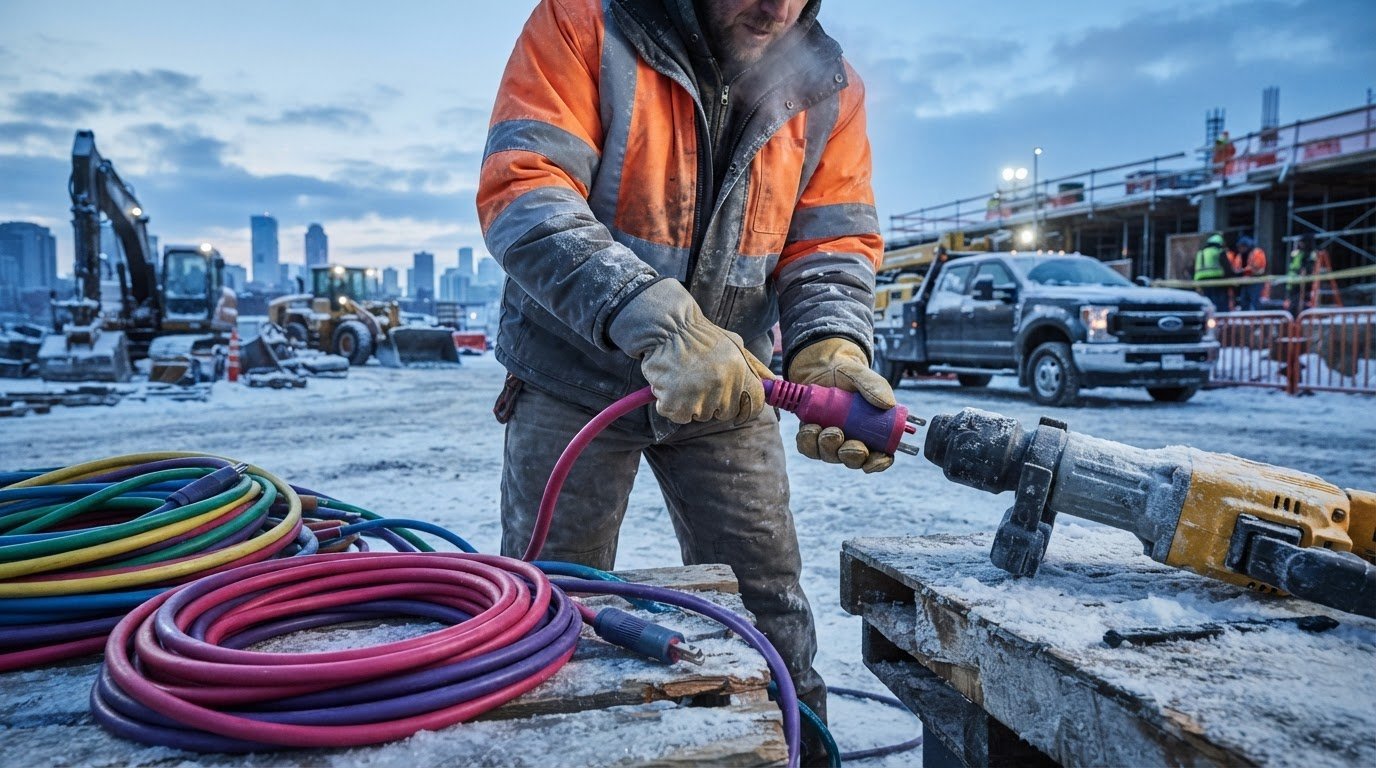
Fewer than 7% of stolen tools and small equipment are ever recovered once they disappear from a job site. It’s a harsh reality that hits even harder when you’re already battling a brutal winter morning. You know the drill. You reach for your power supply, only to find a standard cord that’s frozen into a rigid, uncooperative mess or, even worse, has simply vanished into the snow. It’s frustrating to deal with equipment that fails just because the temperature dropped.
Selecting a professional-grade all-weather extension cord for cold temperatures is about more than just electricity. It’s about reliability and asset protection. You need a cord that stays pliable at -40°F and stands out enough that it won’t get “accidentally” picked up by another crew. This 2026 guide covers everything you need to know to stay powered up. We’ll compare the durability of 10-gauge and 12-gauge options, explain the performance of specialized SJTW jackets in the frost, and show how custom printing turns a basic utility into a theft-proof asset.
Key Takeaways
- Learn why SJEOW elastomer jackets are the gold standard for maintaining flexibility in sub-zero conditions compared to standard thermoplastic.
- Understand how to select the right gauge for an all-weather extension cord for cold temperatures to avoid power loss when running heavy winter tools.
- Discover how high-visibility pink and purple cords prevent equipment from getting lost in deep snow or buried on active sites.
- See how custom printing provides a permanent solution to job site theft, ensuring your high-value winter gear stays in your truck.
- Compare the performance of 10-gauge and 12-gauge SJTW cords to find the most reliable workhorse for your specific winter projects.
What Makes an Extension Cord ‘Cold-Weather Rated’?
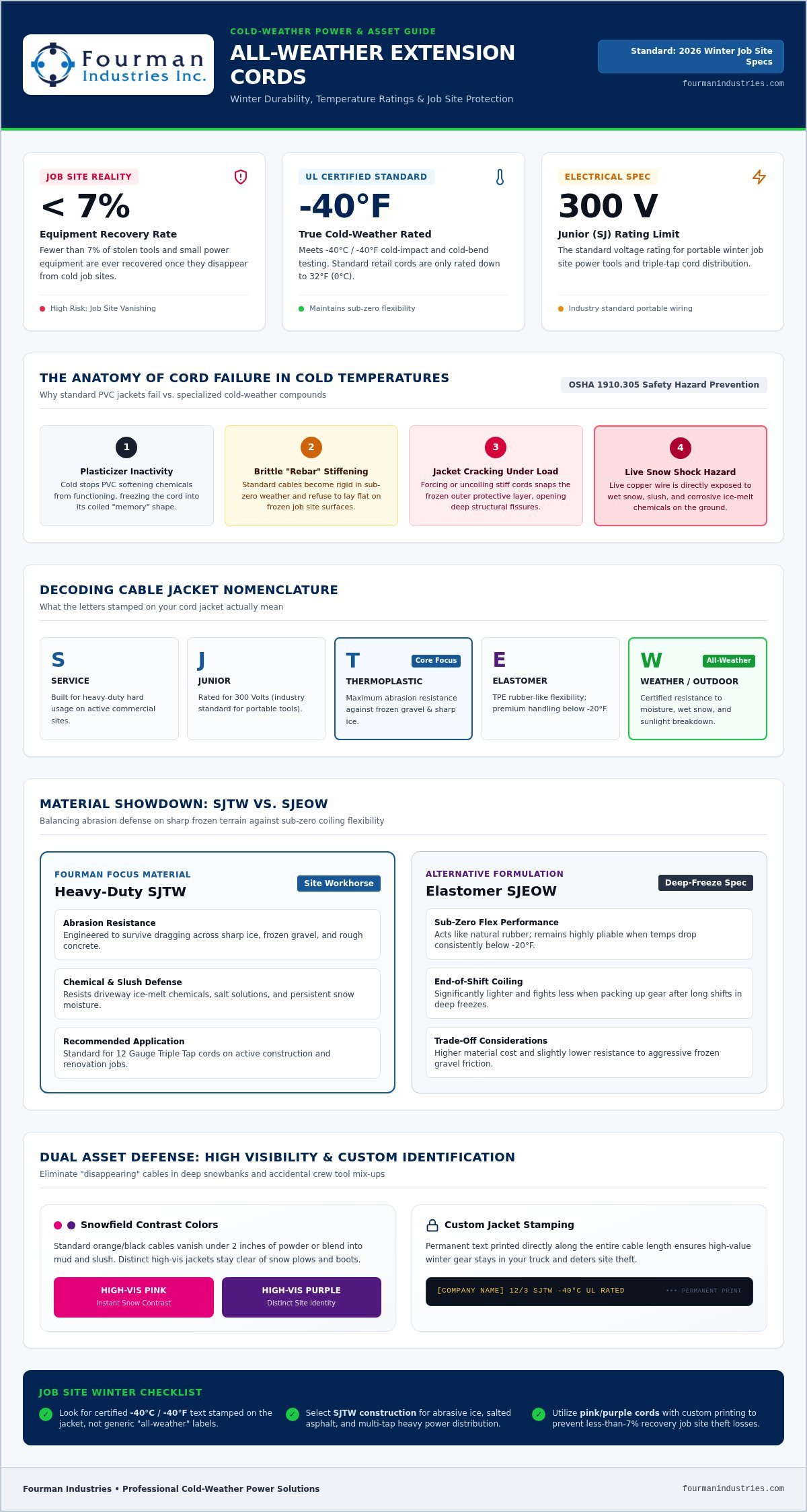
An extension cord designed for winter isn’t just a standard orange cable with a different label. It’s a specialized power cable engineered to maintain flexibility well below the freezing point. While standard cords become stiff as rebar in January, a high-quality all-weather extension cord for cold temperatures stays pliable and easy to handle. Technically, a cold-weather cord is a cable rated for at least -40°F flexibility.
Standard cords suffer from a frustrating “memory” effect in winter. This happens when the jacket material hardens in its coiled shape. If you’ve ever fought with a cord that refuses to lay flat on a frozen driveway, you’ve seen this in action. Forcing these stiff cords to move often causes the outer jacket to crack. These cracks aren’t just a nuisance; they expose live copper wires to wet snow and slush. This creates an immediate shock hazard for you and your crew.
The Science of Jacket Flexibility
Standard PVC jackets stay soft because of chemicals called plasticizers. When temperatures drop, these chemicals stop working effectively. The result is a brittle, fragile jacket that snaps under pressure. Professional winter cables, such as the 12 Gauge SJTW Triple Tap, use advanced thermoplastic blends designed for thermal stability. High-end options often utilize Thermoplastic Elastomer (TPE). This material behaves more like rubber than plastic, allowing the cord to bend freely without snapping. You’ll find that “all-weather” is often just a marketing term used by big-box brands, whereas “cold-weather rated” is the technical specification you need for job site performance.
Identifying the UL Temperature Rating
Don’t guess about a cord’s limits. Look at the fine print stamped directly into the jacket material. This text tells you exactly what the cable can handle. A standard outdoor cord might only be rated for 32°F (0°C). In a 2026 winter environment, that simply isn’t enough. You need to look for the -40°C/-40°F mark. This indicates the cord has passed rigorous UL (Underwriters Laboratories) testing for cold-impact and cold-bend resistance. UL certification is non-negotiable for professional use. It proves the manufacturer didn’t cut corners on the jacket chemistry. Using an unrated cord in sub-zero weather is a gamble that rarely pays off.
SJTW vs. SJEOW: Decoding Winter Jacket Materials
If you look closely at the jacket of a professional cable, you’ll see a string of letters stamped into the material. These aren’t just random characters. They tell you exactly how the cord will behave when the wind starts howling. SJTW stands for Service, Junior, Thermoplastic, and Weather-resistant. “Service” means it is built for hard usage. “Junior” indicates it’s rated for 300 volts, which is the industry standard for portable power tools. The “T” represents the thermoplastic jacket, while the “W” confirms it is rated for outdoor moisture and sunlight resistance. For most contractors, a high-quality all-weather extension cord for cold temperatures uses this SJTW construction to balance cost and durability.
SJEOW takes things a step further by adding an “E” for Elastomer. This material is a thermoplastic elastomer that acts more like natural rubber. It offers superior flexibility in extreme conditions compared to standard thermoplastic. While SJEOW is often considered the gold standard for sub-zero flexibility, Fourman Industries focuses on heavy-duty SJTW for its superior abrasion resistance. These cords are built to survive being dragged across frozen gravel and sharp ice. Safety is the priority here. Adhering to OSHA temporary wiring regulations requires using cords that can withstand the physical abuse of a job site without the jacket failing.
When to Choose SJTW for Winter
For most 2026 winter projects, the 12 Gauge SJTW Triple Tap is the ideal workhorse. It handles snow, slush, and the corrosive ice-melt chemicals used on driveways without breaking down. The thermoplastic jacket is tough. It resists the nicks and cuts that often happen when equipment is moved in a hurry. If your local winter involves plenty of moisture and fluctuating temperatures around the freezing mark, the “W” rating in SJTW ensures your power supply stays dry and safe. You can find these rugged options in the high-visibility collection for better site safety.
The Elastomer Advantage (SJEOW)
When the temperature stays consistently below -20°F, the elastomer in SJEOW becomes a major benefit. These jackets are typically lighter and easier to coil at the end of a long shift. They don’t fight you as much in deep freezes. However, this extra flexibility comes with a higher price tag. You have to decide if the easier handling is worth the added cost for your specific climate. For many pros, the ruggedness of a thick SJTW jacket provides better long-term value, as it stands up better to the daily grind of a busy site.
10 Gauge vs. 12 Gauge: Powering Through the Cold
Wire thickness, or gauge, becomes a critical safety factor when the mercury drops. As temperatures plummet, your equipment often works harder to overcome frozen lubricants and cold-start friction. This is known as the “space heater factor.” Winter equipment like industrial heaters and engine block heaters pull a high, continuous amperage that can easily melt a thin, consumer-grade cord. An all-weather extension cord for cold temperatures needs thick copper to handle these loads without overheating. 10 gauge cords are essential for high-draw equipment like truck & car battery jump starters that require a massive burst of energy to turn over a frozen engine.
Voltage drop is another silent killer in winter. When you combine sub-zero temps with long cable runs, the electrical resistance increases. This starves your tools of the voltage they need to run efficiently. If your circular saw sounds sluggish or your compressor struggles to kick on, you’re likely losing power through an undersized cord. Thicker wire ensures that the energy leaving the outlet actually reaches your tool.
The 12 Gauge SJTW: The Professional Standard
For most daily tasks, 12 gauge extension cords are the professional minimum. They provide enough copper to power standard drills, saws, and lights without significant heat buildup. The 12 Gauge SJTW Triple Tap is particularly useful in winter workshops where you might need to run a small heater and a work light simultaneously. It hits the sweet spot between easy portability and reliable power delivery for a crew on the move. It’s heavy enough to be rugged but light enough to coil quickly when the sun goes down.
The 10 Gauge ECONO: Maximum Winter Power
When the job demands everything you’ve got, you reach for the 10 Gauge ECONO. This heavy-duty cord is designed for high-draw equipment and long-distance runs of 100 feet or more. Using a 10-gauge cord for these distances prevents the voltage drop that leads to tool burnout. It’s the ideal choice for powering portable generators, large air compressors, and industrial-grade heaters that run all day. If you’re working in a remote corner of the site far from the power source, this thick wire ensures your gear gets the full 120 volts it needs to stay productive. It’s a small investment that protects your most expensive tools from electrical damage.
Winter Safety: Visibility and Asset Management
Standard safety colors like orange and yellow serve their purpose in the summer months. They pop against green grass and brown dirt. However, winter changes the rules of visibility. Once a snowstorm hits, those common colors often vanish under a thin layer of white or gray slush. This “Lost in the Snow” problem creates a significant safety hazard for any crew. An all-weather extension cord for cold temperatures that you can’t see is a cord that gets tripped over or, even worse, sliced by a snowplow or blower.
High-Visibility Colors for Safety
Pink and purple aren’t just about standing out from the crowd. These colors provide the highest possible contrast against white snow and dark winter mud. Using pink extension cords or purple options makes your job site safer from day one. It helps reduce trip hazards because the cable is always clearly defined against the ground. There is a psychological benefit to these unique colors too. Heavy equipment operators are trained to look for bright safety gear. A vibrant, unusual color like neon pink is much harder to miss than a standard orange cord that has faded and blended into the background. It keeps your gear from being accidentally run over or buried under site debris.
Lighted Ends and Locking Connectors
Winter mornings are often dark and frigid. Troubleshooting a dead power tool at 6:00 AM in the freezing wind is a waste of your time. Lighted ends are a non-negotiable feature for professional winter gear. If the transparent plug glows, you know you have power reaching the end of the line. If it’s dark, you know the issue is at the outlet or the breaker. This simple indicator saves you from repeated trips back and forth through deep snow to check connections.
Locking connectors are just as vital when working in ice. As you drag an all-weather extension cord for cold temperatures across a site, standard plugs can easily slip out of their sockets. Locking mechanisms ensure the connection stays tight even when the cable is under tension or snagged on a frozen rut. This prevents “ghost” unplugging, which can be dangerous if you’re relying on a cord to power safety lights or critical heaters.
Proper coiling at the end of the shift is the final piece of the safety puzzle. Use the “over-under” method to prevent internal wire twisting. This technique avoids putting unnecessary stress on the jacket, ensuring your investment lasts for multiple seasons. Browse our collection of heavy-duty cords to find the right visibility and safety features for your crew.
Custom Printing: The Ultimate Winter Asset Protection
High-performance cords are significant investments for any pro. Because an all-weather extension cord for cold temperatures performs so much better than a standard PVC version, it becomes a high-value target for theft on busy job sites. It’s easy for a quality cord to get “borrowed” and never returned, especially when every crew is using similar looking gear. The Fourman Industries solution is simple and effective: custom printed extension cords. By branding the jacket itself, you create a permanent mark of ownership that can’t be rubbed off, scraped away, or ignored. This isn’t like using a piece of colored tape or a Sharpie that fades after a week in the slush.
This permanent branding prevents those “accidental” crew swaps in the back of a truck. When your company name or phone number is printed every 12 inches along the length of the cable, there’s no confusion about who it belongs to. It’s the professional way to manage your winter gear and keep your inventory organized through the toughest months of the year. You’ll spend less time arguing over equipment and more time getting the job done.
Stopping Job Site Theft
The return on investment for custom printing is immediate. Think about the cost of replacing a single heavy-duty 10-gauge cord after it disappears. The small fee for custom printing pays for itself the first time a cord doesn’t get stolen. You’re making your gear “too hot to handle” for thieves. Most people won’t steal something that clearly belongs to a specific business, as it’s too difficult to resell or use openly on other sites. Beyond security, branded gear boosts your professionalism. It shows clients you’re an established expert who cares about your equipment and pays attention to the small details. It builds trust before you even pull a tool out of the truck.
Ordering Your Custom Winter Setup
Building your ideal winter power solution is straightforward. Start by choosing the right gauge for your needs. A 12-gauge cord works for most tools, but you’ll want 10-gauge for your highest-draw equipment. Next, select a high-visibility color like pink or purple to ensure your all-weather extension cord for cold temperatures doesn’t get buried in a snowbank. Once you’ve picked your specs, decide on the custom text for the jacket. Most pros use their company name, a specific truck number, or a contact phone number. Build your custom cold-weather cord at Fourman Industries today!
Power Up Your Winter Projects with Confidence
Don’t let a brittle, frozen cable slow down your progress this season. Choosing the right all-weather extension cord for cold temperatures means prioritizing a jacket that stays flexible and a gauge that handles your equipment’s draw. We’ve seen how SJTW construction provides the ruggedness needed for heavy site use, while 10 and 12 gauge options ensure your power tools never starve for voltage. Securing your investment with high-visibility pink or purple jackets and custom printing is the smartest way to keep your gear in your own truck.
Fourman Industries has been providing family-owned expertise since 1997. We understand that your tools are your livelihood. That’s why we offer custom printing on all our heavy-duty cords to prevent theft and mix-ups. Whether you’re running industrial heaters or standard saws, we have the industrial-strength solutions to keep you working through the deep freeze. It’s time to upgrade your winter setup with equipment that’s as hardworking as you are. Shop Heavy-Duty Cold Weather Extension Cords at Fourman Industries today and stay powered until the spring thaw.
Frequently Asked Questions
What is the best jacket material for an extension cord in freezing temperatures?
SJEOW jackets are the superior choice for extreme sub-zero environments because they utilize thermoplastic elastomer. This material mimics natural rubber, staying flexible down to -58°F. For most professional job sites, a heavy-duty SJTW jacket provides a rugged balance of abrasion resistance and cold-weather performance. It handles ice and snow chemicals without becoming brittle, ensuring your power supply remains safe and reliable throughout the winter season.
Can I use a regular orange extension cord in the winter?
You shouldn’t use a standard orange PVC cord in freezing weather. These jackets are designed for mild temperatures and will quickly become rigid when the mercury drops. Forcing a frozen cord to uncoil often leads to jacket cracking, which exposes live wires to wet snow. Instead, invest in a dedicated all-weather extension cord for cold temperatures that is rated for at least -40°F to ensure safety and longevity.
How do I keep my extension cord from getting stiff in the cold?
The best way to prevent stiffness is to start with a cord rated for sub-zero use, like an SJEOW or high-quality SJTW model. These materials are engineered to resist the “memory” effect that makes cheap cords stay coiled. Additionally, always use the over-under coiling technique when packing up. This prevents internal wire twisting and stress on the jacket, making it much easier to deploy the cord on your next cold morning.
Is a 12 gauge cord enough for a space heater in winter?
A 12-gauge cord is generally sufficient for a standard 1,500-watt space heater, provided the run is 50 feet or less. However, heaters pull a continuous heavy load, which generates heat. If you’re running a cord longer than 50 feet, you should upgrade to a 10 Gauge ECONO cord. The thicker wire reduces voltage drop and prevents the plug from overheating, which is a common fire hazard in winter workshops.
How does cold weather affect the amp rating of an extension cord?
Cold weather doesn’t technically lower the amp rating of the copper, but it changes how your equipment behaves. Frozen lubricants in saws and compressors cause motors to pull more current during startup. This increased draw can trip breakers or overheat undersized cords. Using a thick all-weather extension cord for cold temperatures ensures there is enough capacity to handle these winter surges without damaging your expensive professional tools.
What do the letters SJTW and SJEOW stand for on a cord?
These letters are a technical code for the cord’s construction. “S” stands for Service, “J” for Junior Service (300V), and “T” for Thermoplastic. The “W” confirms it is Weather-resistant. In SJEOW cords, the “E” stands for Elastomer, which provides that rubber-like flexibility in the deep freeze. The “O” indicates the jacket is Oil-resistant. Understanding these markings helps you verify that a cord meets the specific demands of your outdoor winter job site.
How can I prevent my cold-weather cord from being stolen on a job site?
Preventing theft requires making your gear easy to identify and hard to resell. Fourman Industries offers custom printed extension cords that feature your company name or phone number directly on the jacket. This permanent branding acts as a powerful deterrent. Pairing this with unique high-visibility colors like pink or purple makes it obvious if someone else is using your gear. It’s much harder for a thief to walk off with a personalized cord.
Are lighted ends necessary for outdoor winter use?
Lighted ends are highly recommended for any professional working in winter. Winter mornings are dark, and freezing wind makes troubleshooting power issues a miserable task. A lighted plug gives you instant visual confirmation that power is reaching the end of the line. If your tool isn’t working but the plug is glowing, you know the problem is the tool itself, not the power source. This simple feature saves significant time and frustration.




