
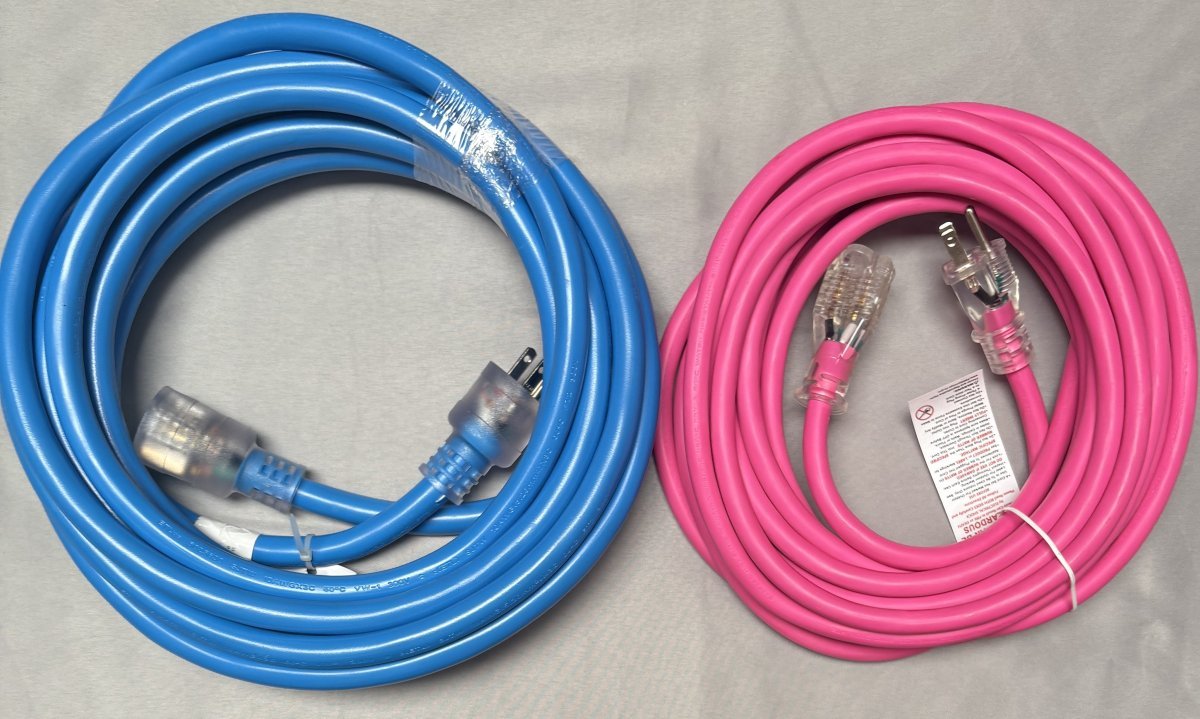
That bargain-bin extension cord isn’t just a trip hazard; it’s a slow-motion wrecking ball for your expensive power tools. You know the frustration when your table saw bogs down or your compressor struggles to kick over on a cold morning. It’s painful to watch high-performance gear lose its bite just because the wire feeding it is too thin. Most pros realize that the 10 gauge vs 12 gauge extension cord decision is the difference between a productive day and a burnt-out motor.
We’re going to settle this debate so you can stop guessing and start protecting your equipment. You’ll discover exactly when to invest in the extra copper of a 10-gauge cord and when a professional-grade 12-gauge is the smarter, more portable choice. We’ll break down voltage drop, 2026 NEC ampacity ratings, and the security benefits of custom-printed cords that stay on your job site instead of walking away in a competitor’s truck. It’s time to ensure your power delivery is as reliable as your reputation.
Key Takeaways
- Stop the guesswork by understanding why lower AWG numbers mean thicker copper and more power for your high-draw tools.
- Learn how to choose between a 10 gauge vs 12 gauge extension cord to prevent voltage drop from damaging your motors over long distances.
- Identify the right jacket ratings, like SJTW for general outdoor use or industrial-grade ECONO for the most demanding job sites.
- Discover how custom printing and high-visibility colors like pink or purple act as a permanent deterrent against job-site theft.
- Get a clear breakdown of when to stick with a versatile 12-gauge cord and when a 10-gauge is mandatory for heavy equipment like generators.
Understanding AWG: Why Gauge Numbers Matter for Heavy Duty Extension Cords
Understanding the American Wire Gauge (AWG) system is the first step toward keeping your tools alive. It’s famously backward; the smaller the number, the thicker the wire. This matters because a thicker wire has a higher volume of copper to carry electrical current. When you’re debating a 10 gauge vs 12 gauge extension cord, you’re really choosing how much resistance you’re willing to tolerate. High resistance turns electricity into heat. That heat doesn’t just waste energy; it degrades the cord’s insulation and starves your tool’s motor of the voltage it needs to work properly.
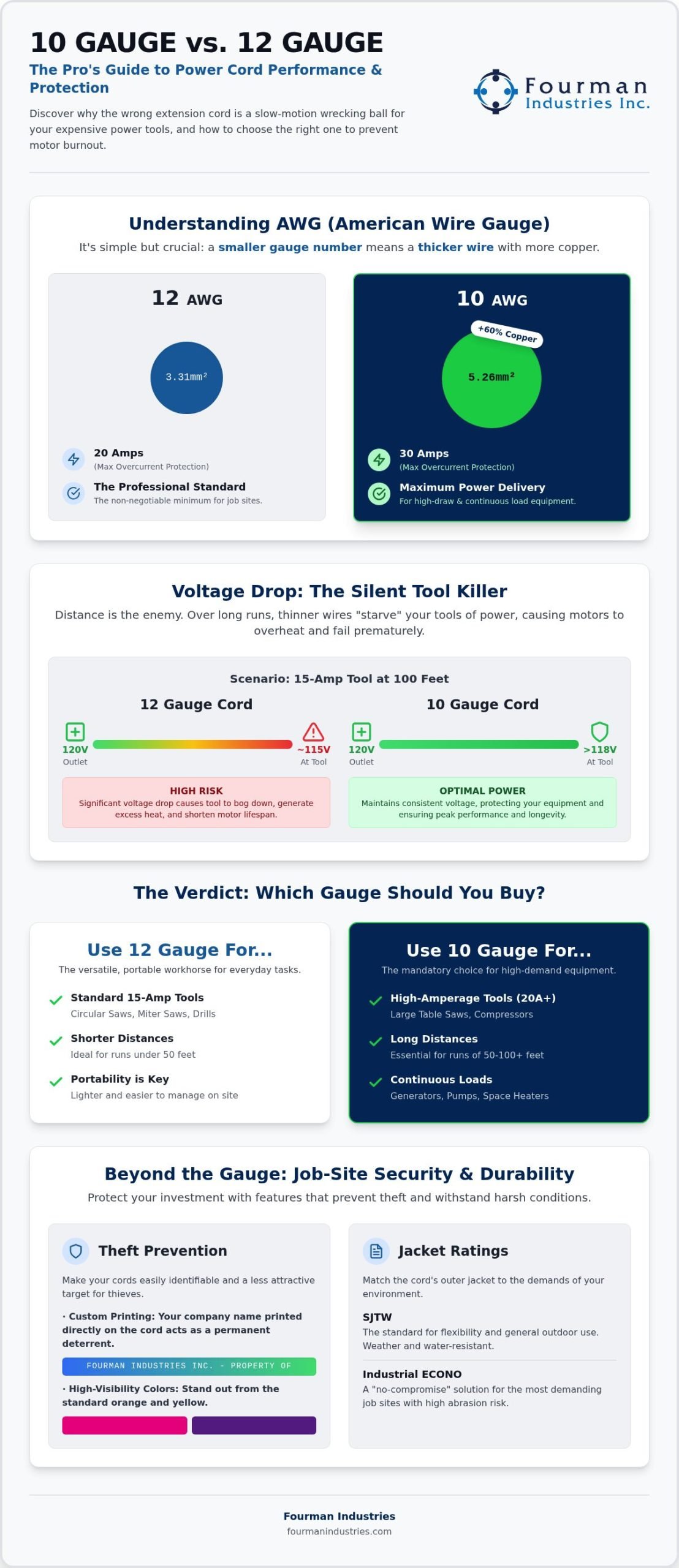
Don’t get distracted by “heavy duty” labels on retail packaging. In the electrical world, “heavy duty” is often just a marketing term with no legal weight. The technical standard is the AWG rating. A 12-gauge wire has a cross-sectional area of about 3.31 mm², while a 10-gauge wire jumps up to 5.26 mm². That’s nearly 60% more copper. According to 2026 NEC standards, 12 AWG copper is limited to 20 amps of overcurrent protection, while 10 AWG can handle up to 30 amps. Choosing the right one ensures you aren’t pushing a cord past its physical limits.
The 12 Gauge Standard: The Workhorse of the Jobsite
For most professional crews, 12 gauge is the non-negotiable minimum. It’s designed to handle the 15-amp draw typical of circular saws, table saws, and miter saws. Our 12 Gauge SJTW Triple Tap Extension Cords are built for this exact purpose, providing the flexibility you need without sacrificing power delivery. If you’re running standard tools on a typical job site, this gauge offers the best balance of portability and performance. For a deeper dive into these specifications, check out The Complete Guide to 12 Gauge Extension Cords.
The 10 Gauge Advantage: When Extra Copper is Mandatory
Sometimes, standard isn’t enough. When you’re dealing with 20-amp circuits or continuous-load equipment like space heaters, large pumps, or air compressors, the 10 gauge vs 12 gauge extension cord choice becomes clear. Continuous loads generate sustained heat, and the extra copper in a 10-gauge cord dissipates that heat much more effectively. Our 10 Gauge ECONO cords are the “no-compromise” solution for industrial environments and high-amperage needs. They ensure that even your hungriest equipment gets full power without the risk of melting a connector or tripping a breaker prematurely.
Performance Comparison: Voltage Drop and Distance
Voltage drop is the loss of electrical potential due to friction in the wire. Think of it as a tax you pay for every foot of cord you run. When you choose between a 10 gauge vs 12 gauge extension cord, you’re deciding how much of that power actually reaches your tool. If the voltage drops too low, your motor will struggle to spin, generating internal heat that slowly melts the windings. It’s a silent killer for expensive saws and compressors that most DIYers overlook until it’s too late.
Distance is the primary multiplier for this power loss. At 25 feet, a quality 12-gauge cord handles most pro tools with ease. By 50 feet, you’ll start to see a slight dip under heavy loads. Once you hit 100 feet, the physics change significantly. This is where the ‘100-foot rule’ comes in: as your distance from the outlet increases, your wire gauge must get thicker to compensate for the added resistance. Following extension cord safety guidelines ensures you don’t accidentally create a fire hazard by starving your equipment of necessary voltage.
Managing Long Runs: 12 Gauge vs 10 Gauge at 100 Feet
Running a 12-gauge cord at 100 feet isn’t always a mistake, but it’s risky for high-draw equipment. A 100-foot, 12-gauge extension cord with a 10-amp load will have a voltage drop of approximately 3.2 volts, delivering about 116.8V to your tool. While that sounds minor, a 15-amp circular saw will experience a much sharper drop, causing it to bog down mid-cut. This forces the motor to work harder, shortening its lifespan.
A 10-gauge cord maintains much higher consistency for compressors and table saws that need that initial surge of power to start. If you must use a lighter cord for long reaches, make sure to follow the safety protocols for 12 gauge cords at 100 feet to prevent equipment damage. For most heavy-duty job sites, upgrading to a 10-gauge cord is a small price to pay to protect your tool investment.
Calculating Your Power Needs
Don’t guess which cord to pull from the truck. Follow these three steps to ensure you’re using the right 10 gauge vs 12 gauge extension cord for the task at hand:
- Step 1: Identify the total amperage. Look at the data plate on your tool. If you’re running multiple items on a triple tap, add their amps together.
- Step 2: Measure the distance. Be realistic about how far you are from the power source. If you’re over 50 feet away, your gauge requirements usually jump.
- Step 3: Factor in the continuous use multiplier. If you’ll be running the tool for 3 hours or more, the National Electrical Code requires you to size your conductors to 125% of the load.
If you’re tired of tools underperforming on the job, it might be time to upgrade to a professional-grade cord designed for the real world.
Jacket Durability: SJTW vs Industrial ECONO Materials
The copper inside your cord is only half the story. If the outer jacket fails, the cord is trash. When comparing a 10 gauge vs 12 gauge extension cord, the jacket material often dictates where you can actually use it. Most pro-grade 12-gauge cords use an SJTW jacket. This acronym stands for Service, Junior (300V), Thermoplastic, and Weather-resistant. It’s a reliable standard that provides the right balance of protection and weight for daily use. The “Junior” designation simply means it’s rated for 300 volts rather than the 600-volt rating of full-service cords, which is more than enough for standard job-site power tools.
Our 12 Gauge SJTW Triple Tap Extension Cords are the industry sweet spot. They offer enough weather protection for rain or shine while staying light enough to coil up easily at the end of the day. However, if you’re dragging cords across jagged gravel or oily shop floors, you need to step up. The 10 Gauge ECONO series uses a more ruggedized thermoplastic blend designed to survive high-traffic environments. These industrial jackets offer better UV protection to prevent cracking in the sun and improved resistance to common job-site chemicals and oils that can melt through cheaper residential cords.
The Triple Tap Advantage
Efficiency is everything on a busy site. Triple tap connectors allow you to power a saw, a work light, and a battery charger simultaneously from a single run. This reduces the number of cords cluttering the floor, which is a major safety win for any crew. Just remember that the total amperage of all three tools combined shouldn’t exceed the cord’s rating. If you’re running three high-draw tools at once, that’s when the 10 gauge vs 12 gauge extension cord debate shifts heavily toward the thicker wire. For a full breakdown of these technical jacket specs, read our Understanding SJTW Extension Cords guide.
Extreme Conditions: When ECONO Jackets Win
Standard jackets can turn into stiff, unmanageable snakes when the temperature drops. Our 10 Gauge ECONO cords are engineered to maintain flexibility even in sub-zero conditions. This makes them the clear winner for winter construction projects or outdoor events where you can’t afford to fight with a frozen cord. They also feature superior abrasion resistance. While a 12-gauge cord might suffice for a clean workshop, the 10-gauge industrial option is built for the abuse of concrete and gravel. Choosing the right cord isn’t just about the electricity; it’s about making sure the jacket survives the terrain.
Theft Prevention and Visibility: Beyond the Technical Specs
Technical specs like ampacity and voltage drop are vital, but they don’t matter if your cord isn’t there when you show up for work. On a busy, multi-crew jobsite, extension cords are treated like common property. Whether it’s a genuine mistake or intentional theft, “disappearing” gear is a massive hidden cost for contractors. When you invest in a high-quality 10 gauge vs 12 gauge extension cord, you’re buying a tool. You need to ensure that tool stays in your inventory for more than one season.
Standard yellow or orange cords blend into the background. They’re easy to “borrow” because they look exactly like everyone else’s equipment. Customization changes the psychology of the jobsite. A cord that clearly belongs to your company is much harder to walk away with. It establishes a sense of ownership and professionalism that generic gear simply can’t match. By branding your power solutions, you’re not just buying a cord; you’re securing an asset.
Personalized Power Solutions
Custom imprinting your company name and phone number directly onto the jacket is the most effective way to stop theft. This isn’t just a label that peels off; it’s a permanent mark. These custom extension cords serve as a constant marketing tool for your business while acting as a visual deterrent. If a cord is found in another crew’s truck, there’s no “I thought it was mine” excuse.
Organization also improves with customization. Many of our clients use color-coding to prevent accidental unplugging. For example, you might use 10-gauge purple cords for critical compressors and 12-gauge pink cords for hand tools. This system tells your crew exactly what each line is powering, reducing downtime caused by someone pulling the wrong plug during a critical cut.
High-Visibility Safety
Safety is about visibility. Standard colors can easily get lost in the shadows of a low-light crawlspace or a cluttered workshop. High-visibility pink extension cords and vibrant purple options stand out against concrete, dirt, and plywood. This contrast is a simple but effective way to reduce trip hazards and comply with site safety protocols. It makes electrical pathways obvious to everyone walking the site.
Using high-contrast colors also reduces liability. When a cord is clearly visible, there’s less risk of someone running over it with a lift or catching it with a blade. Whether you choose a 10 gauge vs 12 gauge extension cord, opting for a unique color ensures your power run is respected by other trades. It’s a practical expert’s way of maintaining a clean, safe, and organized workspace.
Ready to stop losing money on stolen gear? Order your custom printed extension cords today and put your name on your power.
The Verdict: Which Gauge Should You Buy?
Choosing between a 10 gauge vs 12 gauge extension cord comes down to a simple rule: match the wire to the workload. If you’re running standard pro-grade power tools on short to medium runs, 12 gauge is your best friend. It’s lighter, more flexible, and handles the 15-amp draw of most saws without breaking a sweat. However, the moment you move to high-draw equipment or need to reach across a massive jobsite, the extra copper in a 10-gauge cord becomes mandatory. It’s the only way to ensure your gear gets the full voltage it needs to perform safely.
We believe in the “Buy Once, Cry Once” philosophy. A 10-gauge cord is a heavier investment upfront, both in cost and weight, but it’s a long-term insurance policy for your tools. It won’t overheat under continuous loads, and it won’t starve your motors of power. If you’re a professional who relies on your equipment to put food on the table, having at least one 10-gauge “no-compromise” cord in your truck is a smart move for those demanding industrial tasks.
Quick Decision Matrix
Use this quick guide to pull the right cord for the task:
- Table saw or miter saw? Use a 12-gauge cord for runs up to 50 feet. If you’re going further, step up to 10 gauge.
- Portable generator or EV charging? Always choose 10 gauge. These are continuous, high-amperage loads that require maximum copper volume.
- General workshop use? Stick with 12 Gauge SJTW Triple Tap cords. They offer the best versatility for drills, chargers, and lights.
- Air compressors? These have high startup surges. A 10-gauge cord is the best way to prevent the motor from stalling or tripping the breaker.
Next Steps: Equipping Your Crew
Efficiency starts with organization. When you’re ready to upgrade your inventory, consider how length impacts your power. Shorter is always better; don’t use a 100-foot cord when a 25-foot cord will reach. This keeps resistance low and your workspace clear of unnecessary coils. For professional crews, ordering bulk personalized cords is the final step in securing your assets and ensuring your name stays on your gear.
Before you plug in your next heavy-duty tool, run through this final safety check. Inspect the jacket for any nicks, ensure the grounding pin is intact, and always feel the connectors for excess heat after a few minutes of use. If the cord feels hot, you’ve picked the wrong gauge. Ready to power up? Browse our full selection of 10 and 12 gauge cords at Fourman Industries to find the perfect match for your jobsite.
Power Your Success with the Right Connection
Choosing the right 10 gauge vs 12 gauge extension cord is about more than just electricity; it’s about respecting your tools and your time. You’ve learned that 12-gauge cords are the jobsite standard for a reason, while 10-gauge ECONO cords provide the no-compromise power needed for high-draw compressors and long-distance runs. Don’t let your equipment suffer from heat buildup or voltage drop when a simple gauge upgrade can extend its lifespan by years.
Since 1997, we’ve helped professionals secure their gear and maintain peak performance. Whether you need the versatility of SJTW jackets or the industrial toughness of our ECONO series, we have the heavy-duty stock to keep you moving. Every cord we sell can be customized with your branding, ensuring your assets stay on your site and off the competitor’s truck. It’s a practical investment that pays for itself in reliability and theft prevention.
Stop settling for generic power solutions that fail when you need them most. Shop Heavy-Duty Custom Extension Cords at Fourman Industries and get the reliable connection your work deserves. You’ve got the skills; we’ve got the power to back them up.
Frequently Asked Questions
Can I plug a 12 gauge extension cord into a 10 gauge cord?
You can, but the entire power run is only as strong as its weakest link. Plugging a 12-gauge cord into a 10-gauge cord limits your total capacity to the 12-gauge rating. When debating a 10 gauge vs 12 gauge extension cord setup, it’s always better to put the thicker 10-gauge cord closest to the outlet. This minimizes initial voltage drop. Avoid “daisy-chaining” whenever possible to prevent heat buildup at the connections.
Is a 10 gauge extension cord overkill for a refrigerator?
For a standard kitchen refrigerator, a 10-gauge cord is generally more than you need. A high-quality 12-gauge cord is usually sufficient for the typical 15-amp draw of most residential units. However, if you’re running the cord over 50 feet to reach a garage fridge, the extra copper in a 10-gauge cord prevents voltage sag. This protects the compressor motor from wearing out prematurely during hot summer months.
What happens if I use a 14 gauge cord for a heavy-duty tool?
Using a 14-gauge cord for high-draw tools like table saws or compressors causes significant voltage drop. The thinner wire struggles to carry the current, leading to friction that generates dangerous levels of heat. Your tool’s motor will likely bog down, run slower, and eventually burn out its internal windings. To protect your investment, always stick to the 10 gauge vs 12 gauge extension cord recommendations for any professional-grade equipment.
How do I know if my extension cord is 10 or 12 gauge?
Look for the technical specifications embossed or printed directly on the outer jacket of the cord. You’ll typically see a code like “12/3” or “10/3” stamped into the material. The first number indicates the AWG gauge, and the second number shows how many conductors are inside. If the printing has worn off, 10-gauge cords are visibly thicker and much heavier than 12-gauge alternatives due to the increased copper volume.
Does a 10 gauge cord stay cooler than a 12 gauge cord?
Yes, a 10-gauge cord stays cooler because it has less electrical resistance. Electricity flows more easily through the thicker copper conductors, generating less friction and heat during operation. This is especially important for continuous loads like space heaters or large pumps. While a 12-gauge cord might get warm to the touch under a heavy load, a 10-gauge cord handles that same current with much higher efficiency and safety.
Is a 10 gauge cord better for charging an electric vehicle (EV)?
A 10-gauge cord is the superior choice for EV charging on a standard 120V outlet. Charging an electric vehicle is considered a continuous load, meaning it draws high amperage for many hours at a time. This sustained current generates significant heat. The extra copper in a 10-gauge cord dissipates that heat better than a 12-gauge cord, reducing the risk of melted plugs and ensuring a more efficient charge for your vehicle.
What does SJTW stand for on an extension cord jacket?
SJTW is a standard industry code that describes the cord’s construction and intended environment. “S” stands for Service, “J” means Junior Service rated for 300V, “T” indicates a Thermoplastic jacket, and “W” signifies that it’s Weather-resistant for outdoor use. Most professional-grade 12-gauge cords use this rating because it provides excellent durability and moisture protection while remaining flexible enough for daily movement on a busy jobsite.
Can I use a 12 gauge extension cord for a portable generator?
You can use a 12-gauge cord for individual tools plugged into a generator, but it’s not ideal for the main power output. Generators often power high-draw equipment or multiple items simultaneously, which can easily exceed the capacity of a 12-gauge wire. For the most reliable connection between your generator and your gear, a 10-gauge cord is recommended to handle startup surges and maintain consistent voltage without overheating.




