
Why does your high-end impact driver keep snapping expensive bits like they’re made of toothpick wood? You spent good money on a tool with massive torque, only to have it shear off a fastener or shatter a bit right when you’re under a deadline. Finding the best drill bits for impact driver use is the only way to stop this cycle. We’ve all dealt with the frustration of cam-out stripping a screw head because a standard bit couldn’t handle the rotational force.
You’re going to learn how to identify high-performing impact-rated bits that maximize your driver’s power without snapping under pressure. We will show you exactly what to look for so you can achieve zero bit breakage on your next heavy fastening job. It’s about finding the right balance of strength and flexibility in your gear. You don’t need harder steel; you need smarter engineering.
We’ll dive deep into torsion zone technology and why it acts as a vital fuse for your tool. You’ll also see why the DeWALT FLEXTORQ Bit Set remains a top choice for durability in 2026. Finally, we’ll cover a simple system to keep your bits organized so you stop losing your most-used sizes in a messy toolbox. Let’s get your gear sorted.
Key Takeaways
- Learn why torsion zone technology acts as a mechanical fuse to prevent your driver from snapping high-torque fasteners.
- Identify the best drill bits for impact driver applications by prioritizing S2 tool steel and impact-rated ratings over standard jobber bits.
- Select the right gear for your trade, whether you need high-flex Torx bits for framing or magnetic nut drivers for HVAC work.
- Protect your investment using a drill bit index to maintain sharp edges and ensure every size is accounted for after every shift.
- Improve job site efficiency and reduce tool loss by organizing your bit sets into a professional, easy-to-scan management system.
Why Impact Drivers Require Specialized Bits: The Torsion Zone Secret
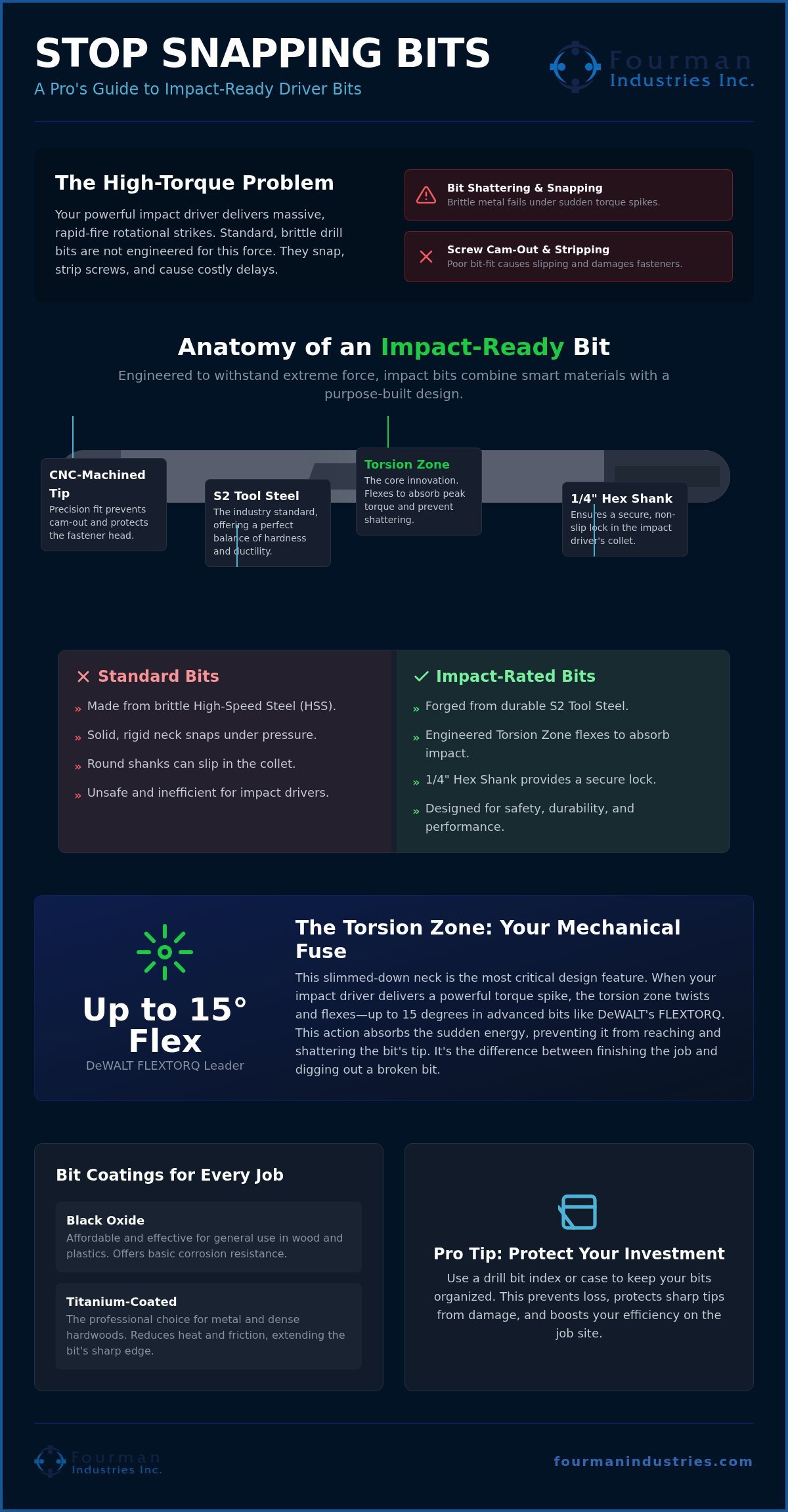
Impact drivers aren’t just high-speed drills. They use a rapid-fire internal anvil system to deliver massive rotational strikes that would snap a standard bit in seconds. Standard bits are built for constant, steady pressure. Impact-rated bits are different; they’re engineered to survive the violent “hammering” action of a modern driver. If you want to stop wasting money on broken tools, you need to understand that the best drill bits for impact driver use are built with a specific kind of internal “give.”
The secret starts with the metallurgy. Most professional-grade impact bits are forged from S2 tool steel. This material is the industry standard because it strikes a perfect balance between hardness and ductility. While standard steel is often too brittle, S2 steel can withstand high-torque applications without deforming or cracking. It’s the foundation of any bit that claims to be job-site ready.
Beyond the steel, the most critical design feature is the torsion zone. If you look at the neck of a high-performance bit, you’ll see a section that’s been slimmed down. This isn’t for aesthetics. This area is designed to flex and twist when the driver hits peak torque, acting as a mechanical fuse. By absorbing that sudden spike in energy, the torsion zone prevents the bit tip from shattering under the heavy load of the impact anvil.
Impact-Rated vs. Standard Drill Bits
Standard bits are often made from high-speed steel (HSS) or lower-grade alloys that are far too brittle for impact work. When the hammer mechanism kicks in, these bits often snap instantly, leaving a broken shard stuck in your fastener. You also need a 1/4-inch hex shank to fit into the impact driver’s quick-release collet. Standard round shanks will simply slip or fail to lock. Using non-rated bits isn’t just a recipe for frustration; it’s a safety hazard, as shattered metal can fly off at high speeds.
The Role of Precision Fit Geometry
A bit is only as good as its connection to the screw. Modern impact bits feature CNC-machined tips designed to seat perfectly inside the fastener head. This precision fit is what stops “cam-out,” that annoying moment where the bit slips and strips the screw head bare. When you’re working overhead or in tight corners, magnetic tips become essential for one-handed fastening. A tighter fit doesn’t just save your hardware; it actually extends the life of the bit by distributing the force evenly across the contact points. Investing in the best drill bits for impact driver performance means you’ll spend less time digging out stripped screws and more time finishing the job.
The Best Drill Bits for Impact Driver Performance in 2026
Choosing the best drill bits for impact driver tasks in 2026 comes down to three main factors: durability, tip grip, and torsion flex range. While Milwaukee Shockwave and Makita ImpactX remain strong contenders, the DeWALT FLEXTORQ bit set has emerged as a professional favorite for high-torque environments. Performance metrics show that the right bit doesn’t just last longer; it protects your fasteners from damage. You aren’t just buying metal; you’re buying insurance against project delays. We evaluate bits based on three specific performance metrics:
- Durability: How many driving cycles the bit can handle before the tip deforms.
- Tip Grip: The precision of the CNC machining used to prevent slipping and cam-out.
- Torsion Flex: The degree of bend the neck allows before the steel reaches its breaking point.
When selecting bits, you also need to consider the coating. Black oxide bits are affordable and work well for general wood and plastic applications. However, if you’re drilling into metal or dense hardwoods, titanium-coated bits are the better investment. They reduce friction and heat, which keeps the cutting edge sharp for much longer. If you’re building a professional kit, having a mix of both ensures you’re ready for any job site challenge.
DeWALT FLEXTORQ: The Torsion Leader
The FLEXTORQ design is a masterclass in engineering. Its optimized torsion zone allows the bit to flex up to 15 degrees, which significantly reduces the risk of breakage during extreme torque spikes. It’s fully compatible with the DeWALT Magnetic Screw Lock system, which uses a floating magnetic ring to hold screws securely. This setup is a lifesaver for heavy-duty framing and decking where you need a free hand. For a complete breakdown of CNC-machined tolerances, sizing options, and real-world applications, the DeWALT FlexTorq bit set guide covering performance, sizing, and pro applications is an essential resource for any serious tradesperson. If you’re looking to upgrade your current gear, you can check out our professional-grade bit selections to find the right fit for your driver.
Specialty Bits: Torx, Square, and Nut Setters
We’re seeing a massive shift in the industry as Torx (star) bits replace the traditional Phillips head. Pros prefer Torx because the six points of contact virtually eliminate cam-out. For HVAC and automotive technicians, impact-rated nut setters are now non-negotiable for driving hex-head fasteners quickly. These bits are built to handle the constant vibration of an impact tool without rounding off the fastener corners.
Bit length is another critical factor for your workflow. A 2-inch bit is great for general stability, but 6-inch bits are necessary when you need to reach deep into a cabinet or behind a bracket. Longer bits actually provide more torsion flex, which can be an advantage when driving long lag bolts into tough lumber. Just remember that longer bits require a steadier hand to prevent wobbling and ensure a clean drive every time.
How to Choose the Right Bit Set for Your Trade
Your daily workload dictates which gear you carry. A framer driving three-inch deck screws has different needs than a technician opening electrical panels. Finding the best drill bits for impact driver use starts with matching the bit metallurgy to your specific trade materials. If you pick a bit designed for drywall and use it on heavy timber, it’s going to fail. You need a kit that matches your environment.
Carpenters and framers should prioritize bulk sets of Phillips and Torx bits. Since you’re driving thousands of fasteners, you need bits with high flex to survive the constant hammering. For electrical and HVAC pros, the focus shifts to impact-rated step bits and magnetic nut drivers. These tools allow you to punch through junction boxes and secure ductwork without switching back to a standard drill. If you work in metal fabrication, standard bits won’t cut it. You need cobalt-tipped impact bits to bite into stainless steel and heavy plate without burning out the cutting edge.
Evaluating kit sizes is your next step. A 30-piece portable set fits perfectly in a tool vest for quick repairs or finish work. However, a 100-piece master kit is better for the truck. It ensures you never stall a job because you’re missing a specific square drive or a rare security bit. Having the right range of sizes saves you a trip to the hardware store in the middle of a shift.
Hex Shank Drill Bits for Hole Making
We’ve seen a massive shift from round-shank to hex-shank drill bits. This change allows you to swap between drilling and driving in seconds using the same impact collet. When you’re drilling into thick metal, you must use bits specifically rated for impact. Standard bits will often spin in the chuck or snap at the base under the driver’s percussion. To round out your professional gear, pairing these with Bosch reciprocating saw blades gives you a complete system for both heavy cutting and precision fastening.
Buying for Durability vs. Price
The hidden cost of cheap bits is staggering. You might save a few dollars at the register, but you’ll lose hours to “cam-out” and ruined workpieces. Look for genuine impact-rated markings stamped directly onto the shank. These markings guarantee the steel has been heat-treated to handle the internal anvil’s strikes. Professional-grade sets from Fourman Industries provide a much better long-term ROI. They stay sharp longer and resist the rounding that plagues budget alternatives. Don’t settle for gear that fails when the pressure is on.
Organizing Your Gear: The Role of the Drill Bit Index
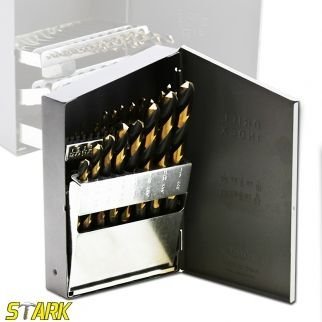
Buying the best drill bits for impact driver use is only half the battle. If those bits are rolling around at the bottom of a greasy five-gallon bucket, they’re going to get lost or damaged. A professional drill bit index is more than just a box. It’s a dedicated system for size identification and edge protection. Impact-rated bits require a different storage approach than traditional jobber bits because of their 1/4-inch hex shanks. You need a case that clicks them into place so they don’t bounce against each other during transport. This keeps the precision-machined tips sharp and ready for the next fastener.
Organizing your bits by size and frequency of use is a simple way to boost your daily speed. Place your most-used drivers, like the T25 or the standard #2 Phillips, in the easiest-to-reach rows. Group the rest by drive type so you aren’t hunting through a mix of square and star drives. This methodical approach reduces the “tool drift” that happens when a crew is moving fast. Every bit has a home, and every home has a label.
Empty slots are your best friend on the job site. The “Missing Bit” indicator is a visual alarm that keeps your kit whole. When you see a hole in the row at the end of a shift, you know a bit is still stuck in a workpiece or left on the floor. It prevents that frustrating moment the next morning when you realize your essential gear is ten miles away at yesterday’s location. Protect your investment by ensuring every slot is filled before you lock the truck.
Metal vs. Polymer Bit Indexes
Traditional steel indexes are the gold standard for stationary shop use. They offer superior heat resistance and can last for decades on a workbench. However, if you’re on the move, impact-resistant polymer cases are the better choice. These rugged cases are built to withstand the vibrations of a moving van and the accidental drops that happen on a busy site. Choose a case that integrates with your existing tool chest system to keep your workflow seamless and your gear accessible.
Maintaining Your Bit Index
Keep your gear clean to ensure it performs when you need it. Wiping your bits down with a rag before storage prevents the buildup of metal shavings and moisture. Rust is the enemy of precision. Ensure your index has clear, embossed markings so you aren’t squinting at tiny numbers in a dark attic or basement. A clean, well-marked index is the sign of a true pro. You can take your organization even further by matching your bit storage with custom extension cords to keep your power and your tools clearly identified on a crowded site.
Ready to get your workshop in order? Shop our durable bit indexes and impact-rated sets at Fourman Industries to keep your crew running at peak efficiency.
Maximizing Efficiency and Preventing Theft on the Job Site
Efficiency on a job site is about more than just fast driving. It’s about keeping your gear in your hands. When you have multiple crews working in the same space, “tool drift” is inevitable. A bit left on a window sill or a driver set down near a different team’s bag often disappears. This confusion costs money and time. Even the best drill bits for impact driver performance are useless if they aren’t in your toolbox when you need them. Professional gear management ensures your investment stays where it belongs.
A clean, organized index provides a significant psychological edge. You can move from task to task without the mental friction of searching for a specific size. It allows for faster transitions and keeps your focus on the quality of the build. Beyond speed, organization is your first line of defense against theft. Using high-visibility gear, like pink extension cords or bright, uniquely marked cases, makes it obvious whose gear is whose. Thieves and “borrowers” rarely grab tools that stand out from across the room.
Customizing Your Tool Kit
Personalize your bit cases with permanent markings or unique colors to identify your gear instantly. In multi-crew environments, your equipment needs to be identifiable at a glance. Fourman Industries focuses on providing gear that stands out and stays secure. High-visibility tools aren’t just about safety; they’re about ownership and accountability. A master craftsman is defined by the state of their tools. A well-maintained, secure kit shows you take your trade seriously and respect your equipment.
The Future of Impact Accessories
As we move through 2026, expect to see smart storage solutions that help you track inventory via mobile apps. Manufacturers are also leaning into even more resilient alloys that push the limits of torsion flex. Sustainable manufacturing is becoming a priority, with recycled steel and lower-impact production methods entering the market. My closing advice is simple. Invest in the best drill bits for impact driver use, but spend just as much energy on the index that keeps them safe. A tool is an investment; treat it like one.
Equip Your Driver for Peak Performance
You now understand that the best drill bits for impact driver use aren’t just hard; they’re flexible. By choosing bits with advanced torsion zone technology and keeping them organized in a professional index, you’ll eliminate the frustration of snapped fasteners and lost tools. A well-managed kit is the mark of a pro who respects their time and their equipment. It’s about working smarter, not just harder, to ensure every drive is clean and every bit lasts.
As an authorized DeWALT and Bosch retailer, Fourman Industries has provided heavy-duty industrial equipment since 1997. We specialize in gear that survives the most rugged job site environments. We offer national shipping on all professional power tool accessories to ensure you have the right gear, no matter where the job takes you. Don’t let a broken bit or a messy toolbox stall your progress another day.
Upgrade your impact driver with professional-grade DeWALT FLEXTORQ bit sets from Fourman Industries. Stop settling for brittle bits that fail when the pressure is on. Build a kit that works as hard as you do and enjoy the satisfaction of a job done right every single time.
Frequently Asked Questions
Can I use regular drill bits in an impact driver?
No, you should avoid using standard bits in an impact tool. Regular drill bits are made from brittle high-speed steel that cannot handle the rapid-fire internal hammering of an impact driver. These bits often shatter or snap at the shank, which can lead to tool damage or personal injury. Always look for bits specifically labeled “impact-rated” to ensure they have the necessary flex to survive high-torque applications.
What is the best brand of impact bits for professionals in 2026?
DeWALT FLEXTORQ remains the industry leader for professionals who prioritize durability and torsion flex. While brands like Milwaukee and Makita offer excellent alternatives, the FLEXTORQ system provides a consistent balance of tip precision and neck strength. Finding the best drill bits for impact driver use often comes down to which brand’s magnetic locking system integrates best with your existing cordless tool platform.
Why do my impact bits keep breaking even though they are rated for it?
Heat buildup and improper driving angles are the most common reasons rated bits fail. If you’re driving long fasteners into dense material at max speed, the friction can ruin the steel’s temper and make it brittle. Additionally, applying lateral pressure or driving at an off-angle puts uneven stress on the torsion zone. Keep your driver straight and use steady pressure to let the tool’s internal anvil do the work.
Do I need a drill bit index for hex-shank bits?
Yes, a drill bit index is vital for maintaining the sharp edges of your hex-shank gear. When bits are tossed loosely into a bag, they collide and cause micro-chipping on the drive tips. An index keeps them separated and organized by size, saving you time during busy shifts. It also provides a quick visual check at the end of the day to ensure no essential sizes were left behind on the site.
What is the difference between DeWALT MaxFit and FLEXTORQ?
MaxFit bits are designed for a high-precision fit to reduce cam-out in standard drills, while FLEXTORQ bits feature a slimmed-down torsion zone specifically for impact drivers. FLEXTORQ is the more durable choice for heavy-duty fastening because it can flex under the driver’s percussion. If you’re using a high-torque impact tool, FLEXTORQ is the superior option to prevent the bit from snapping under peak loads.
Are magnetic bit holders better than magnetic tips?
Magnetic bit holders are generally better for professional use because they offer a much stronger grip on the fastener. They also allow you to use shorter, less expensive 1-inch bits while still providing the reach you need. While magnetic tips are convenient for light tasks, they often lose their magnetism over time. A dedicated magnetic holder or a sleeve system like DeWALT’s screw lock provides more reliable one-handed operation.
How long should a professional impact bit last?
A high-quality impact bit should last for several hundred driving cycles depending on the material density and fastener type. Driving into softwoods will naturally preserve a bit longer than driving self-tapping screws into heavy-gauge steel. You’ll know a bit is reaching its end when the tip begins to show visible rounding or if it starts slipping out of the screw head more frequently. Replace them early to avoid stripping fasteners.
What size drill bit index is best for a standard impact set?
A 30-piece to 45-piece index is the ideal size for most trade professionals. This range typically includes a full run of Phillips, Torx, and Square drives along with a few nut setters and a magnetic holder. It’s large enough to cover 90% of common job site tasks but small enough to fit in a side pocket or a compact tool bag. Save the 100-piece master kits for your truck or shop storage.




