
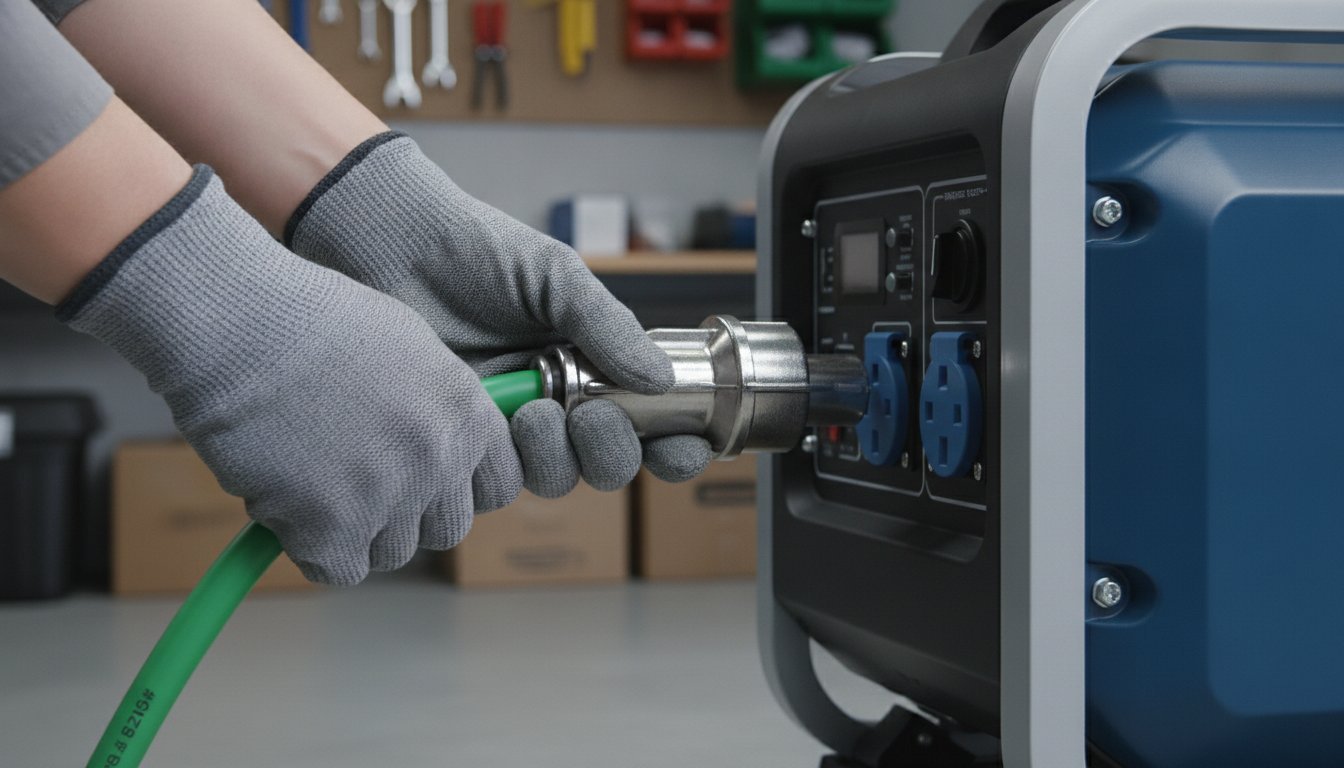
What if the most expensive part of your emergency backup plan isn’t the generator itself, but the cable you just melted because it couldn’t handle the load? That mistake leads to fried appliances and dangerous electrical fires. When you’re staring at a row of NEMA plugs and different wire gauges, it’s easy to feel overwhelmed. You need a heavy duty extension cord for generator use that actually stands up to the task without failing when you need it most.
We know you’ve worked hard to secure your power source. You shouldn’t have to worry about voltage drop or equipment damage. This guide will show you how to safely power your home or job site by matching the right cord gauge and length to your generator’s output. We’ll break down the technical math into simple steps, explain how to identify the right plugs, and even share a pro tip on how custom printing can stop cord theft on busy sites. Let’s get your gear connected the right way.
Key Takeaways
- Learn why standard household cords fail and how thick-gauge wiring prevents dangerous heat buildup during high-draw generator use.
- Discover how to select the perfect heavy duty extension cord for generator setups by matching amperage ratings to your machine’s peak wattage.
- Decode industry markings like SJTW and identify specific NEMA plug types to ensure a secure, weather-resistant connection.
- Master the math behind wire gauge and distance to prevent voltage drop from damaging your sensitive electronics.
- Protect your investment on busy sites by using custom-printed or high-visibility cords that discourage “borrowing” and theft.
Why Your Standard Extension Cord is Dangerous for Generator Use
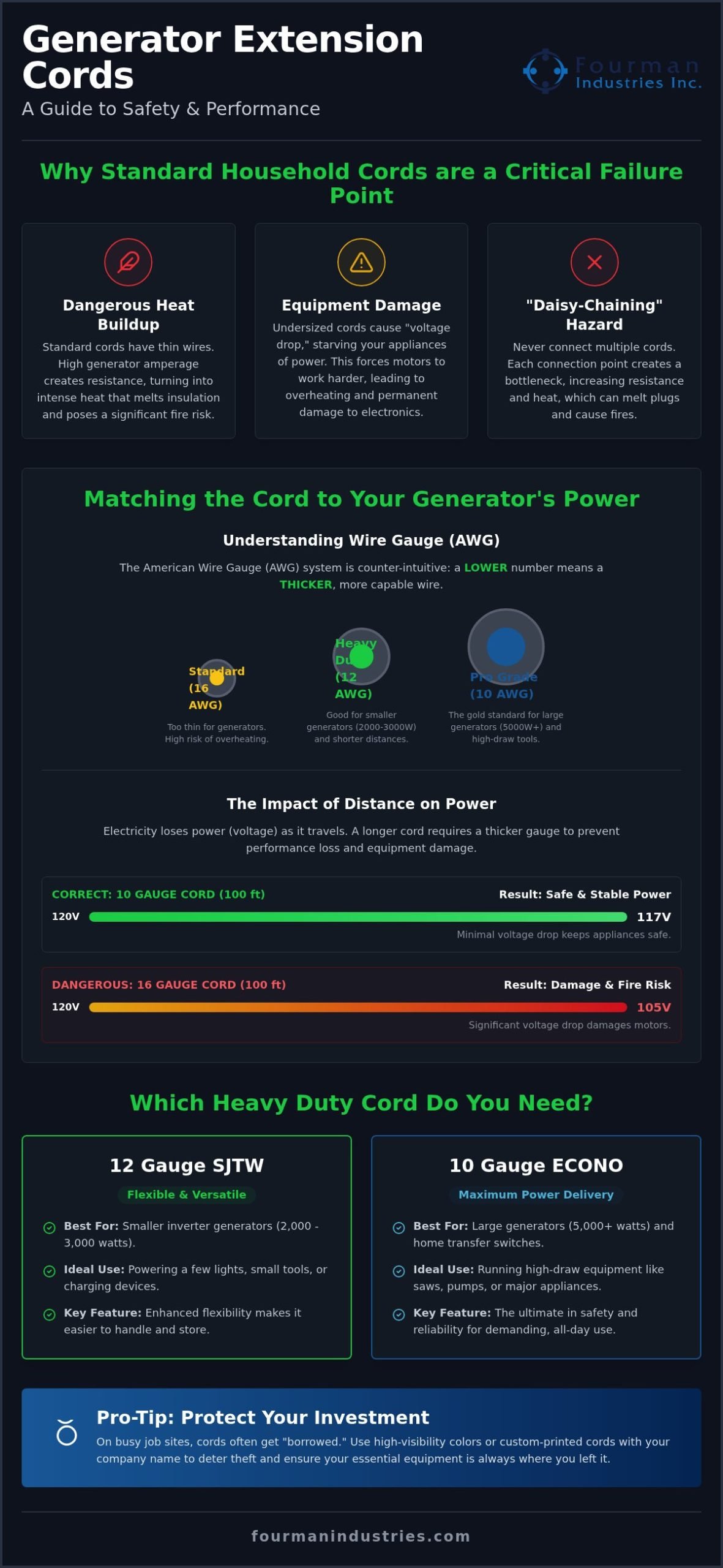
Don’t reach for that light-duty orange cord when the power goes out. Your generator produces a massive amount of energy that household cords simply aren’t built to carry. Standard cords are fine for a lamp or a fan, but a generator is a different beast. It pushes high amperage through the wire constantly. If the wire is too thin, you encounter resistance. Think of it like trying to force a river through a drinking straw. That resistance turns into heat, and heat is the enemy of your home’s safety.
To meet modern safety expectations and National Electrical Code standards, a heavy duty extension cord for generator use must have a thick enough copper core to handle the load without glowing red. Using an undersized cord is a gamble. You risk melting the insulation, causing a short circuit, or starting a structure fire. A true heavy duty cord uses 12-gauge or 10-gauge wire to ensure the electricity flows freely and stays cool while your generator is running at peak capacity.
The Fire Hazard of ‘Daisy-Chaining’ Cords
Never plug two extension cords together to reach your generator. This practice, known as daisy-chaining, creates a dangerous bottleneck. Every connection point acts as a “hot spot” where resistance increases exponentially. These plugs can melt or even fuse together under heavy loads, especially during extended outages. A single, continuous heavy duty extension cord for generator use is the only way to maintain a safe power bridge. If you don’t have enough length to reach your house safely, you need to buy a longer, properly rated cord rather than stacking shorter ones.
Equipment Damage: The Hidden Cost of Cheap Cords
Heat isn’t the only danger. When electricity travels through a cord that’s too thin or too long, the voltage actually drops before it reaches your appliance. Your refrigerator or power saw needs a full 120 volts to run efficiently. When it only gets 105 volts because of a weak cord, the motor works twice as hard and generates its own internal heat. This “brownout” effect can fry sensitive circuit boards in modern appliances or burn out compressor motors. Investing in a 10 gauge heavy duty extension cord ensures your equipment gets the clean, consistent power it needs to survive the outage. It’s much cheaper to buy a professional cord once than to replace a refrigerator compressor or a high-end power tool motor.
Calculating Your Power Needs: Gauge, Wattage, and Distance
Understanding wire gauge is the first step toward a safe connection. The American Wire Gauge (AWG) system works backward compared to most measurements. A 10 AWG wire is significantly thicker than a 14 AWG wire. For a heavy duty extension cord for generator use, you generally want to stay between 10 and 12 gauge. Thicker wire carries more current with less resistance. When calculating your power needs, you must look at your generator’s amperage rating. Most portable units provide a specific running wattage and a higher starting wattage.
Motors in refrigerators, sump pumps, and table saws require a massive burst of energy to kick on. This is the starting load. If your cord is too thin, it won’t deliver enough juice to get that motor turning. This causes the motor to stall or overheat. Once the tool is running, it settles into a continuous load, which is lower but still requires steady delivery. Always size your cord based on the peak wattage of the equipment you plan to run simultaneously to avoid tripping breakers or damaging components.
12 Gauge vs. 10 Gauge: Which One Do You Need?
Our 12 Gauge SJTW Triple Tap Extension Cords are great for smaller 2,000 to 3,000-watt inverter generators. They’re flexible and perfect for running a few lights or a small power tool. However, if you’re powering a home transfer switch or running a large 5,000+ watt generator, you need the 10 Gauge ECONO. It’s the gold standard for high-draw applications. It handles more amps without breaking a sweat. For professional job sites where equipment runs all day, spending the extra money on a 10 AWG cord is an investment in reliability and long-term safety. If you’re managing power across a demanding worksite, understanding the full specifications of a professional industrial extension cord will help you make the most informed purchasing decision. Understanding proper drop cord safety and selection is equally critical when you’re running power leads across a busy work site.
The Impact of Length on Power Delivery
Distance is a silent killer of electrical performance. As electricity travels through copper, it loses energy. This is called voltage drop. A 25-foot cord might deliver full power, but a 100-foot cord of the same gauge will struggle to keep up. For every 50 feet, you should consider moving up one gauge size to maintain 120V. If you need to reach a generator 75 feet away, a 12-gauge cord might drop too much voltage; switching to a 10-gauge heavy duty extension cord for generator use ensures your tools get the full power they expect. If you’re unsure which setup fits your site, check out our range of professional-grade extension cords to find the right match.
Weatherproofing Your Generator Connections
Finding the right heavy duty extension cord for generator use requires more than just looking at the length. You have to look at the jacket and the plugs. On the side of every professional cord, you’ll see a string of letters like “SJTW”. This isn’t just alphabet soup. It’s a code that tells you exactly what the cord can handle. If you ignore these markings, you might end up with a cord that cracks in the cold or melts under pressure.
S stands for Hard Service. J stands for Junior Service, which means the cord is rated for up to 300 volts. T indicates the jacket is made of Thermoplastic. Finally, W tells you it’s rated for weather and water resistance. If your cord doesn’t have that “W” rating, don’t use it outside. In 2026, safety standards are stricter than ever. Make sure any cord you buy carries a UL (Underwriters Laboratories) certification. This seal ensures the cord has passed rigorous testing for heat resistance and insulation integrity.
Rain and snow don’t stop for a power outage. Since your generator must stay outdoors, your heavy duty extension cord for generator must be ready for the elements. Fourman Industries utilizes SJTW materials because they remain flexible in sub-zero temperatures. Cheap plastic jackets get brittle and crack in the cold, exposing live wires. While the jacket is weather-resistant, the plug interface is not. Always use a protective cord cover or a “dry box” where the cord meets your equipment. Keeping those metal prongs dry is the only way to prevent a short circuit.
Selecting the Right Connector for Your Generator Outlet
Next, look at your connectors. NEMA (National Electrical Manufacturers Association) codes identify the plug shape. A NEMA 5-15 is the standard 3-prong plug you find in your kitchen. However, many generators use an L14-30 twist-lock outlet. The “L” means it locks. You plug it in and twist it to secure the connection. This prevents the cord from vibrating loose while the generator is running. If you’re powering an entire house via a transfer switch, you’ll likely need a larger NEMA 14-50 connection.
Before you head to the store, take a photo of your generator’s control panel. You need to see if the outlets are standard 3-prong or twist-lock. Twist-lock connectors are generally safer for heavy use because they can’t be accidentally pulled out. If you need to run several items at once, our 12 Gauge SJTW Triple Tap Extension Cords are the perfect solution. They allow you to spread the electrical load across three separate outlets at the end of the cord. This is much safer than using a flimsy power strip that isn’t rated for outdoor or high-amperage use.
How to Safely Set Up Your Generator Power Connection
Having the right equipment is only half the battle. How you deploy your gear determines whether your setup is a reliable power bridge or a safety hazard. Even the best heavy duty extension cord for generator use can fail if it’s handled poorly. Follow this sequence every time you power up to protect your home and your equipment.
- Position the generator: Place it at least 20 feet from the house. Point the exhaust away from doors and windows.
- Conduct a visual inspection: Check the entire length of the cord for damage.
- Start the engine: Let the generator warm up for a few minutes before connecting any load.
- Plug in the cord: Connect the cord to the generator first, then to your appliances.
- Add loads gradually: Start with the largest appliance first, then add smaller items one by one.
The “Load First” rule is a critical safety step. Never start your generator with appliances already plugged in. When a generator engine cranks, the voltage can fluctuate wildly before it stabilizes. These spikes can fry sensitive circuit boards in your microwave or furnace controller. By starting the generator first and letting it reach a steady RPM, you ensure your heavy duty extension cord for generator delivers clean, stable power from the moment you flip the switch.
Pre-Flight Check: Inspecting for Wear and Tear
Before you plug anything in, look for signs of trouble. Check for frayed jackets, exposed copper, or bent prongs. Pay close attention to the plug ends. If you see any discoloration or “browning” on the plastic, that’s a sign of previous overheating. A loose fit is just as dangerous as a thin wire. If the plug doesn’t feel snug when you push it into the outlet, it creates resistance and heat. Clear the area around your outdoor generator site to keep the cord from getting snagged or buried. Many pros use Bosch reciprocating saw blades to quickly trim back overhanging brush or debris that might interfere with the generator’s airflow or the cord path.
Managing the Cord Path
Where you lay your cord matters. Never run a generator cord under a rug or through a pile of leaves. Cords generate heat as they carry current. If you trap that heat under a rug, the insulation can melt and start a fire. You also shouldn’t run cords through windows or doors that need to be closed. This can pinch the wire, damaging the internal copper. On busy job sites, use cord ramps to protect the cable from being crushed by vehicles or equipment. Always ensure there is plenty of airflow around the cord to keep it cool during long-term use. If your current setup feels like a tangled mess, it might be time to upgrade to a professional-grade heavy duty extension cord that’s built for the rigors of real-world use.
Preventing Cord Theft and Ensuring Long-Term Reliability
A professional-grade heavy duty extension cord for generator use is a significant investment. You don’t want to replace a high-end cable because someone “borrowed” it from the job site or because you snapped the internal copper during storage. Protecting your gear is just as important as choosing the right gauge. When you’re dealing with 10-gauge copper, the replacement costs add up quickly. Reliability starts with how you mark your property and ends with how you coil it at the end of the shift. Reviewing a comprehensive drop cord safety checklist can help you build habits that protect both your equipment and your crew on every job.
The Power of High-Visibility Colors
Standard orange cords are everywhere. They blend into the background and disappear into the back of other people’s trucks. Choosing pink extension cords or purple options provides an immediate advantage. These high-visibility colors stand out clearly in mud, snow, and construction debris. This visibility isn’t just about style; it’s a safety feature that reduces trip accidents on busy sites. There is also a psychological element to theft prevention. Thieves prefer generic gear that is hard to identify. A unique, high-contrast cable is a “hot” item that stays on your truck because it’s too recognizable to walk away with unnoticed.
Custom Printing: The Ultimate Job Site Organization
Stop relying on rolls of colored electrical tape or permanent markers to identify your equipment. Markers eventually fade and tape leaves a sticky residue that attracts dirt. Custom extension cords offer a permanent solution by imprinting your company name or phone number directly onto the cord jacket. Permanent imprinting is superior to tape or markers for long-term ownership. This level of customization streamlines gear management for crews and ensures your heavy duty extension cord for generator makes it back to the shop every time. It projects a professional image to your clients while protecting your bottom line.
To ensure your cord lasts for decades, master the art of the “over-under” coil. Never wrap a heavy-duty cord around your elbow. This creates twists in the internal copper strands that lead to permanent kinks and “pigtailing.” Over time, these twists cause the wire to overheat and fail. By coiling the cord naturally with its own loop, you keep the internal structure relaxed. Store your cords in a dry area away from direct sunlight when they aren’t in use. UV rays can eventually degrade thermoplastic jackets, so a little shade goes a long way in preserving your equipment’s lifespan.
Secure Your Power Connection for the Long Haul
Safety during a power outage or on a busy job site depends on the quality of your gear. You now know that matching your wire gauge to your generator’s output isn’t just a suggestion; it’s a requirement to prevent electrical fires and equipment damage. Remember to account for distance to avoid voltage drop and always look for the UL seal on your SJTW jacket. These small details keep your appliances running and your site safe.
Choosing a heavy duty extension cord for generator use is an investment in your peace of mind. Since 1997, we’ve helped pros and homeowners find the right solution for their specific power needs. Whether you need the 10 Gauge ECONO for high-draw appliances or a personalized cord to stop job site theft, we’ve got you covered. We offer custom personalization on all our 10 and 12 gauge cords and provide national shipping across the United States.
Shop Industrial-Grade Heavy Duty Extension Cords at Fourman Industries
Don’t wait for the next storm or big project to realize your current cords aren’t up to the task. Get the right gear today and keep your power flowing safely.
Frequently Asked Questions
Can I use a 12 gauge extension cord for a 5000-watt generator?
No, a 12-gauge cord is generally insufficient for a 5,000-watt generator running at full capacity. At 120 volts, 5,000 watts pulls over 41 amps, which far exceeds the 20-amp safety limit of a 12-gauge wire. You risk melting the insulation or tripping the generator breaker constantly. For this power level, you need a 10-gauge heavy duty extension cord for generator use to handle the high current safely.
What happens if I use an extension cord that is too long for my generator?
Using a cord that is too long causes a significant voltage drop. When electricity travels over long distances, the resistance in the wire reduces the actual voltage reaching your tools or appliances. This forces motors to draw more current to compensate, leading to overheating and permanent damage to your expensive equipment. Always use the shortest cord possible to maintain peak performance and protect your gear.
Is it safe to run a generator extension cord through a window or door?
It is never safe to run a cord through a partially closed window or door. The pressure from the frame can pinch the internal copper strands, creating a fire hazard. More importantly, an open window or door allows deadly carbon monoxide exhaust from the generator to enter your living space. Use a dedicated through-wall power inlet box for the safest connection to your home.
What does the ‘W’ in SJTW stand for on an extension cord?
The ‘W’ in SJTW stands for weather and water resistance. This rating indicates that the outer jacket is designed to withstand moisture and UV sunlight without breaking down. While the jacket is weather-resistant, the plug ends must still be kept dry during operation. All industrial-grade cords used outdoors should carry this ‘W’ designation to ensure they don’t become brittle or dangerous in harsh conditions.
How do I know if my extension cord is overloaded?
You can tell a cord is overloaded if the jacket or the plug ends feel hot to the touch during use. Other warning signs include a faint smell of burning plastic or visible discoloration around the metal prongs. If your generator circuit breaker trips frequently, it’s a clear sign that your heavy duty extension cord for generator is carrying more amperage than its wire gauge can safely handle.
Can I plug my generator into a wall outlet with a ‘suicide cord’?
Absolutely not. Using a male-to-male “suicide cord” to backfeed your house through a standard wall outlet is illegal and incredibly dangerous. It creates a massive fire risk and can send electricity back into the utility lines, potentially killing linemen working to restore power. Always use a transfer switch or a legitimate power inlet box installed by a qualified electrician to power your home.
Does the color of the extension cord jacket affect its performance?
The color of the jacket has no impact on the electrical performance of the cord. Performance is strictly determined by the gauge of the copper and the quality of the insulation material. However, high-visibility colors like pink or purple serve a practical purpose by preventing trip hazards on job sites. These unique colors also make your gear easier to identify and much harder for others to steal.
How should I store my heavy duty cords to make them last longer?
Store your cords using the “over-under” coiling method to prevent internal wire strain and pigtailing. Avoid wrapping the cord tightly around your arm or elbow, as this twists the copper strands and leads to permanent kinks that generate heat. Keep your cables in a cool, dry place away from direct sunlight, which can eventually degrade the thermoplastic jacket and make it brittle over time.




