
Did you know that the recovery rate for stolen jobsite equipment like extension cords is less than 7%? With copper prices trading around $6.00 per pound, learning how to prevent extension cord theft is now a financial necessity for any professional. It’s a massive headache to show up for your shift only to realize your power source vanished overnight. You’re left dealing with work delays and the high cost of replacing 10-gauge cords while someone else profits from your hard work.
We know your equipment is your livelihood, and “accidental” borrowing by other crews is just as draining as actual theft. This guide provides the most effective physical and visual strategies to stop equipment loss at home or on the job. You’ll learn how to lock down your setup and use permanent identification so your gear stays exactly where you left it. We’ll walk through high-visibility colors and custom printing tactics that make your cords a liability for thieves rather than a target.
Key Takeaways
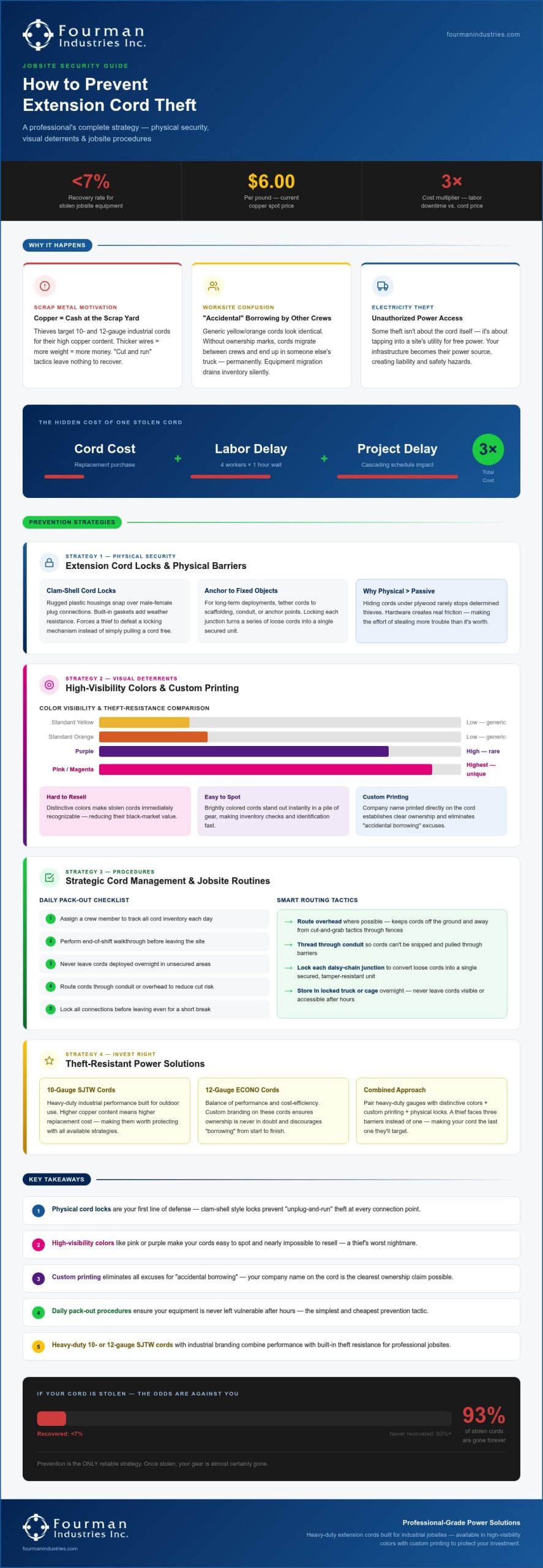
- Use professional hardware like extension cord locks to create physical barriers that prevent quick “grab and go” thefts.
- Learn how to prevent extension cord theft by choosing high-visibility colors like pink or purple that are easy to spot and hard to resell.
- Apply permanent custom printing to your cords to establish clear ownership and deter “accidental” borrowing by other crews.
- Establish daily pack-out procedures and strategic cord routing to ensure your equipment is never left vulnerable after hours.
- Invest in heavy-duty 10-gauge or 12-gauge SJTW cords that combine industrial performance with theft-resistant branding.
Why Extension Cord Theft is a Growing Jobsite Crisis
Walking onto a jobsite at dawn only to find your power lines gone is a gut punch. It isn’t just a minor annoyance. It’s a calculated hit to your project’s profitability. As copper prices continue to fluctuate, your heavy-duty 10-gauge and 12-gauge cords have become high-value targets for thieves looking for a quick payday. If you’re wondering how to prevent extension cord theft, you first need to understand the economic drivers behind the crime.
The loss of a single 100ft 10-gauge cord can cost you a significant amount in replacement fees alone. But the real damage is the downtime. When your crew can’t pull power, labor costs pile up while production stalls. If you have four workers waiting an hour for a replacement, you’ve effectively paid for that stolen cord three times over. It’s a professional crisis that requires a professional response.
The Scrap Metal Motivation
Thieves target industrial-grade cords because they contain a high volume of copper. As of July 2026, spot copper prices have exceeded $5 per pound, with some exchanges trading near $6.00. This makes your 10-gauge ECONO or 12-gauge SJTW cords more valuable than ever at the scrap yard. Thicker wires mean more weight and more cash for a thief.
Many criminals use a “cut and run” tactic. Instead of unplugging the cord, they simply snip the ends and pull the wire through fences or conduits. While some thieves want the raw metal, others are looking for a free way to tap into a site’s utility. Gaining a deeper perspective on understanding electricity theft reveals how unauthorized access to power often starts with stolen or “borrowed” infrastructure. With a recovery rate for single items like extension cords sitting at less than 7%, you can’t rely on getting your gear back once it leaves the site.
Worksite Confusion and ‘Borrowing’
Not all theft is a midnight break-in. Often, cords disappear during the day because they look exactly like every other generic yellow or orange cord on the site. When your gear lacks clear ownership marks, it’s easy for another crew to “borrow” it and forget to return it. This leads to a constant cycle of equipment migration that drains your inventory. Learning how to prevent extension cord theft requires a plan to stop this “accidental” loss before it happens.
Equipment migration is the unauthorized movement of tools and supplies between different trade crews on a shared jobsite, often resulting in permanent loss of inventory. Without a strategy for securing your equipment through visual identification, your investment is essentially up for grabs. If your cord looks like the one the guy next to you lost, don’t be surprised when it ends up in his truck at the end of the shift.
Using an Extension Cord Lock and Physical Barriers
Physical security is your first line of defense against both opportunistic thieves and over-eager coworkers. While visual branding helps with identification, mechanical barriers provide the literal friction needed to stop a theft in progress. If you’re serious about how to prevent extension cord theft, you need to transition from passive management to active physical security. Passive measures like hiding cords under plywood rarely stop a determined thief. You need hardware that makes the effort of stealing your gear more trouble than it’s worth.
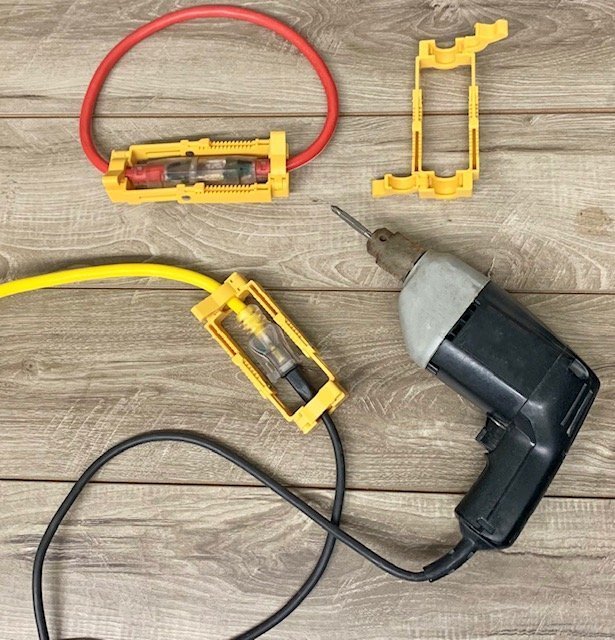
Professional extension cord locks are dedicated hardware solutions designed to keep your connections secure. Unlike electrical tape or simple knots, these devices are built to withstand the rigors of a jobsite. They create a physical enclosure around the plug-to-plug connection. This makes it impossible for someone to simply pull the cords apart and walk away with your lead. It also prevents the common “accidental” disconnection that happens when someone needs a quick outlet and chooses yours.
Mechanical Cord Locks for Plug Security
Clam-shell style locks are the gold standard for securing connections in public or high-traffic areas. These rugged plastic housings snap over the male and female ends of your cords. They often feature internal gaskets that provide an extra layer of weather resistance, which is vital for outdoor power safety. Using these locks prevents “unplug-and-run” theft, a common issue at campgrounds, public parks, and busy jobsites. It forces a thief to spend time defeating a locking mechanism rather than just grabbing a loose cord.
If you’re investing in heavy-duty power solutions, protecting them with physical locks ensures they stay on your payroll. These devices are especially effective when you have multiple leads daisy-chained across a large area. By locking each junction, you turn a series of loose cords into a single, secured unit that’s much harder to tamper with or remove quickly.
Anchoring Cords to Fixed Objects
For long-term deployments, tethering your cord to a permanent fixture is essential. Use a high-quality steel security cable to anchor your cord to a concrete pillar, a heavy generator, or a piece of heavy machinery. This makes it impossible for a thief to drag the entire line away without heavy-duty bolt cutters. Most thieves are looking for the path of least resistance. A steel cable is a clear sign that they should move on to an easier target.
The “figure-eight” knot technique is a common jobsite trick for securing cords, but you should use it sparingly. Tying tight knots can put stress on the internal copper strands of your wire. Instead, use a specialized cord anchor or a loose loop secured with a heavy-duty padlock. Ensure the padlock doesn’t pinch or crush the SJTW jacket of your cord. Damaging the insulation can lead to shorts or fire hazards, defeating the purpose of using professional gear. For overnight security, don’t leave your lines out if you can avoid it. Use industrial cord reels or lockable storage boxes to house your gear when the sun goes down. A locked job box is the ultimate deterrent, keeping your gear out of sight and out of reach.
Custom Printing and High-Visibility Colors as Deterrents
While physical barriers stop the “grab,” visual branding stops the “thought.” Thieves are looking for anonymous, high-value items that they can quickly offload for cash. If your equipment is instantly recognizable, it becomes a liability for the criminal. A primary strategy for how to prevent extension cord theft is to destroy the resale value of the product before it ever leaves your sight. When a thief sees a cord that is clearly marked, the risk of getting caught often outweighs the reward of the copper scrap.
Using personalized extension cords sends a clear message to both thieves and other crews. When your company name or phone number is printed every 12 inches along the jacket, the cord is no longer just a piece of scrap metal; it’s a piece of evidence. This level of identification is a management tool that keeps your inventory where it belongs. It eliminates the “I thought this was mine” excuse that leads to so much equipment migration between different trades on a shared site.
The Power of Personalized Branding
Factory-applied printing is far superior to DIY methods like spray paint or permanent markers. Spray paint can actually damage the SJTW insulation and flakes off over time, creating a professional mess rather than a security solution. Permanent ink survives the grinding wear of a concrete floor or the mud of a trench. Scrap yards are increasingly wary of taking in branded materials because it signals stolen property. If a thief sees your name permanently etched into the jacket, they know they’ll have a harder time turning that copper into cash; it’s a psychological barrier that works 24/7.
High-Visibility Pink and Purple Cords
In a sea of generic yellow and orange, pink extension cords provide a tactical advantage. Most thieves want to blend in. Carrying a bright pink or purple cord across a jobsite makes them a target for questions. These unique colors offer instant recognition from across the yard, making it easy for you to spot your gear in someone else’s pile. Purple cords are especially effective in low-light environments where standard colors might blend into the shadows.
Color-coding also streamlines jobsite management. You can assign purple cords to the electrical crew and pink to the drywallers. This creates an environment where everyone knows exactly who owns what. It turns a generic commodity into a specific asset that the crew takes pride in maintaining. Stop settling for the same gear everyone else has. Use visual deterrence to protect your bottom line and ensure your 10-gauge or 12-gauge investment stays in your own truck at the end of the day.
Strategic Cord Management and Jobsite Procedures
Prevention is as much about your daily routine as it is about the locks you use. If your crew treats cords like disposable items, thieves will too. Establishing a clear system for how to prevent extension cord theft ensures that every 10-gauge lead is accounted for at the end of the day. It starts with making your power lines less visible and more organized. A tidy jobsite is a secure jobsite.
Effective management requires a shift in how you view your power infrastructure. Cords shouldn’t just be strewn across the floor. They should be routed with purpose. By implementing a formal “pack-out” checklist, you turn security into a habit rather than an afterthought. This process creates a culture of accountability that stops both professional thieves and the “accidental” borrowing that plagues shared workspaces.
Concealment and Routing Tactics
Routing cords through PVC conduits or under heavy-duty temporary ramps serves a dual purpose. It protects the cord from vehicle traffic and hides it from plain sight. A cord that isn’t visible is a cord that isn’t targeted. Whenever possible, keep the “plug end” of your main runs inside a locked building or a secured gang box. If a thief can’t reach the outlet, they can’t easily pull the cord through a fence or around a corner. Using professional cord covers is another smart move. These protect your SJTW jacket from abrasion and eliminate tripping hazards while making the cord much harder to quickly yank away during a “cut and run” attempt.
The Daily Inventory Protocol
Accountability is your best defense against equipment migration. If a worker knows they are personally responsible for a specific cord, they’ll be more likely to coil it up and lock it away at the end of the shift. Follow these steps to tighten your inventory control:
- Step 1: Mark every cord with a unique ID number near both ends. Using permanent identification makes it easy to spot your gear from a distance.
- Step 2: Assign specific cords to individual workers or trucks. This creates a clear chain of custody and makes it obvious when a lead hasn’t been returned.
- Step 3: Conduct a visual sweep of all power lines before the site closes. Since over 40% of construction thefts occur on weekends and most jobsite break-ins happen between 11 p.m. and 3 a.m., leaving cords out overnight is an unnecessary risk.
To build a more professional inventory system, check out our personalized power solutions that make tracking your gear effortless. This simple protocol is a vital part of how to prevent extension cord theft, reducing your annual equipment loss by ensuring every asset is tracked from the moment it leaves the truck until it’s locked back up for the night. When your equipment is clearly marked and assigned, you spend less time searching for missing leads and more time getting the job done.
Investing in Theft-Resistant Power Solutions
High-quality equipment is more than just a line item on your budget; it’s the backbone of your productivity. If you’re buying cheap, generic cords, you might not feel the sting of a loss as much, but you’ll certainly feel the failure when they can’t handle the load. Investing in heavy duty outdoor extension cords is a strategic choice for professionals who value reliability. These cords are worth the extra security effort because they provide the consistent voltage your tools need to stay in peak condition. When you combine top-tier hardware with the security strategies we’ve discussed, you create a setup that’s both high-performing and highly protected.
The long-term ROI of custom-printed equipment far outweighs the initial cost. Generic cords are essentially anonymous commodities; they’re easy to steal and easy to replace with another anonymous cord. Custom-branded gear is an asset. It tells everyone on the site that you’re a professional who tracks your inventory. Understanding how to prevent extension cord theft starts with choosing gear that is difficult to misidentify or resell. This proactive approach saves you thousands in replacement costs and lost labor over the life of your equipment.
Selecting the Right Gauge for Your Job
Choosing the right gauge is about both performance and protection. For high-draw machinery like table saws, large compressors, or industrial heaters, our 10 Gauge ECONO Extension Cords are the professional standard. They minimize voltage drop and prevent motor burnout. For general tasks and hand tools, 12 Gauge SJTW Triple Tap Extension Cords offer excellent versatility and multiple outlets at the work point. Regardless of the gauge, ensure all your cords are UL certified. This isn’t just about safety; it’s often a requirement for insurance compliance and passing OSHA inspections on regulated sites.
The Fourman Industries Advantage
At Fourman Industries, we believe your gear should work as hard as you do. Our custom printing service is designed to stop theft before it starts by permanently marking your ownership directly on the cord jacket. This isn’t a surface-level mark that can be rubbed off; it’s a professional-grade identification that survives the toughest jobsite conditions. We combine heavy-duty power with the personalization you need to keep your gear in your truck. A complete jobsite protection plan also means being ready for any emergency, including a dead battery on a remote site — which is why pairing your power setup with a reliable truck & car battery jump starter ensures you’re never left stranded when it matters most. Protect your gear with custom-printed extension cords today.
Final Jobsite Security Checklist
Use this quick checklist to ensure you’ve mastered how to prevent extension cord theft on every project:
- Identify: Use custom-printed cords in high-visibility colors like pink or purple.
- Secure: Use mechanical extension cord locks for all outdoor or public connections.
- Anchor: Tether long runs to fixed objects using steel security cables.
- Manage: Assign specific cords to workers and track them with a daily inventory log.
- Store: Never leave cords out overnight; lock them in a gang box or truck.
Secure Your Power and Protect Your Profits
Protecting your equipment requires a layered approach that combines mechanical barriers with unmistakable visual branding. By using physical locks and establishing strict daily inventory protocols, you make your jobsite a difficult target for opportunistic thieves. Remember that a cord that is easy to identify is much harder to steal. Permanent identification doesn’t just stop theft; it also eliminates the “accidental” borrowing that can stall your project’s progress.
Learning how to prevent extension cord theft is a smart investment in your business’s long-term efficiency. Since 1997, we’ve helped professionals secure their sites with heavy-duty 10 and 12-gauge options that stand up to the toughest conditions. Whether you need high-visibility pink and purple solutions or industrial-grade personalization, we have the tools to keep your power where it belongs. Don’t let another lead vanish from your site. Build Your Theft-Proof Setup with Custom Printed Extension Cords. You’ve worked hard for your gear; it’s time to make sure it stays in your hands.
Frequently Asked Questions
Does spray painting an extension cord prevent theft?
Spray painting isn’t an effective way to secure your gear. The paint eventually flakes off and can degrade the SJTW jacket over time. It also looks unprofessional and messy on a serious jobsite. For a permanent solution, factory-applied custom printing is the industry standard. It stays legible through heavy wear and creates a lasting deterrent that can’t be easily scrubbed away.
What is the best extension cord lock for outdoor use?
A clam-shell style locking cover is the best choice for outdoor power connections. These devices enclose the plug ends and prevent them from being pulled apart by unauthorized users. They also offer an extra layer of weather protection. Look for industrial-grade plastic that can withstand heavy impacts and UV exposure to ensure the lock lasts as long as your cord.
Will a thief cut a locked extension cord just for the copper?
A determined thief might cut a cord for the copper, especially with scrap prices trading near $6.00 per pound. However, most thieves look for easy, resalable items. Learning how to prevent extension cord theft involves making the cord a liability. A branded cord is a red flag at scrap yards. This makes the risk of cutting and transporting it much less appealing to a criminal.
Are pink or purple extension cords really more theft-resistant?
Pink and purple cords are highly effective deterrents because they stand out in any environment. Most jobsite equipment is yellow or orange; a pink cord is impossible to hide or “accidentally” borrow. If a thief or another crew tries to walk off with it, they’re instantly spotted from across the site. This high-visibility factor significantly reduces the chance of your gear walking away.
How can I secure my RV power cord at a campground?
Secure your RV cord by using a locking cover at the power pedestal and a steel security cable. Loop the cable through the cord and lock it to the RV chassis or a fixed post. This prevents someone from simply unplugging and walking away with your expensive heavy-duty lead while you’re away from your vehicle or sleeping at night.
Is it legal for scrap yards to buy custom-printed extension cords?
While not strictly illegal in every jurisdiction, many scrap yards have policies against buying branded or marked materials. They don’t want the legal headache of handling clearly stolen property. Custom-printed cords act as a permanent receipt of ownership. This makes it much harder for a thief to turn your property into quick cash at a reputable recycling center.
Can I use a bike lock to secure my extension cord?
You can use a bike lock, but you must avoid crushing the cord’s insulation. Tight locks can damage the internal copper strands and create a fire hazard. A better option is to use a specialized cord anchor or a loose security cable loop. This provides the physical security you need without compromising the electrical integrity of your 10 or 12-gauge wire.
What should I do if my extension cord is stolen from a jobsite?
Immediately notify the site supervisor and document the incident for insurance purposes. Having unique ID numbers or custom printing makes it much easier to identify your property if it turns up at a local scrap yard. This is a key part of how to prevent extension cord theft; keeping detailed records and using branded gear helps in the recovery of your assets.




