
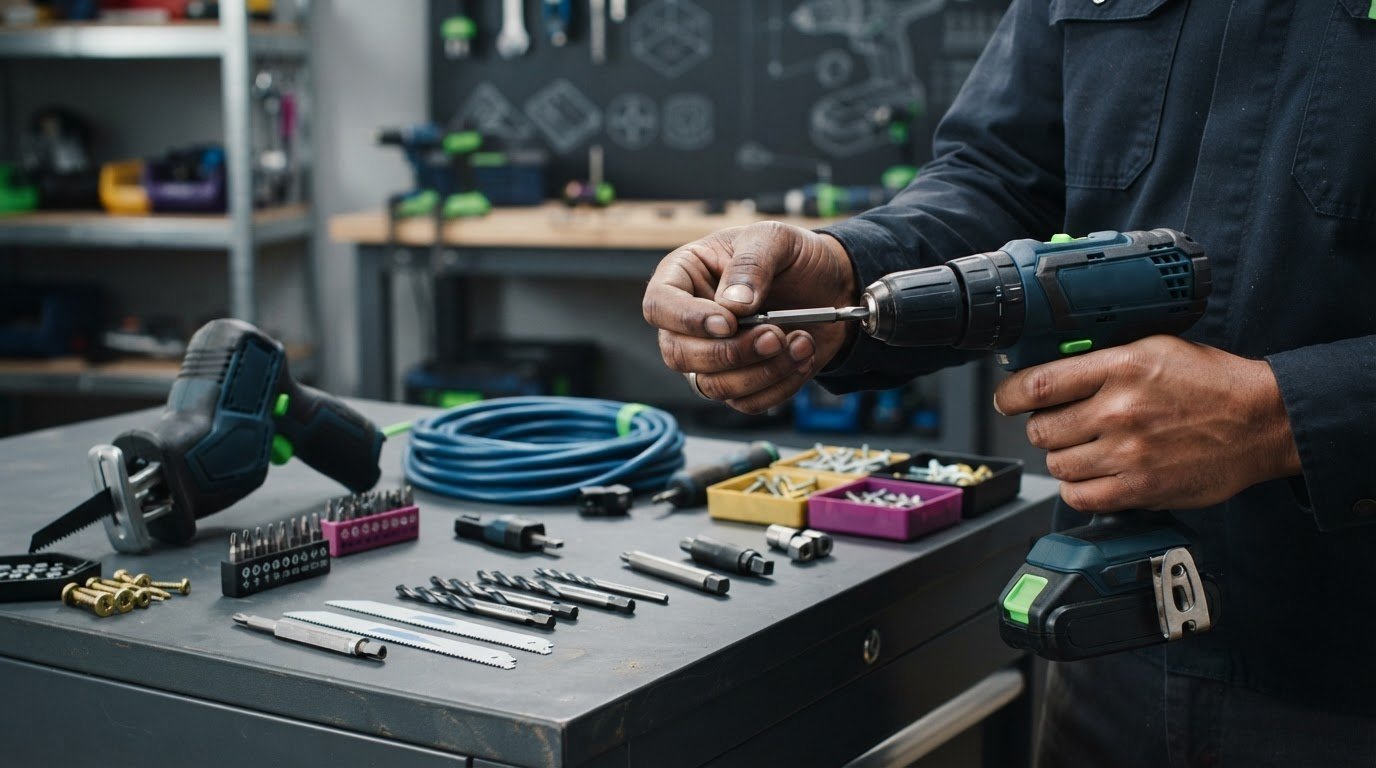
Could a bit or blade that looks right still be the wrong match for your tool? With portable power tools accessories, the category is only the starting point. The connection, stated specifications, material, and task all matter. It’s easy to get overwhelmed by options or worry that a mismatch will slow the job down.
Start with your tool’s interface and the work you need to do, then compare accessories against both. This guide shows you how to identify the accessory type your task calls for, check fit and relevant specifications before buying, and narrow your choices without guesswork. A few minutes with the tool manual and product details can help you avoid a poor match.
We’ll cover common accessory choices and what to verify for the material and application. You’ll also find examples of relevant options, including DeWALT FLEXTORQ bit sets and Bosch reciprocating saw blades sold by Fourman Industries. Check each product listing for current specifications and compatibility before you buy.
Key Takeaways
- Before buying, confirm your tool model, the accessory interface, the intended operation, and the product’s stated specifications.
- Compare driver bits and reciprocating saw blades by the job they’re designed for, then check the details that matter for your setup.
- Read the tool manual and accessory instructions before installation, and inspect accessories for visible damage or wear before use.
- Choose portable power tools accessories by narrowing options to the task first, then verifying fit before comparing products.
- Use Fourman Industries’ DeWALT FLEXTORQ bit sets and Bosch reciprocating saw blades as examples of accessory categories to evaluate against your tool and task.
Portable Power Tool Accessories: Functions and Basics
Portable power tool accessories are attachments or consumables selected to help a specific tool perform a particular task. A driver bit transfers the tool’s rotation to a fastener; a reciprocating saw blade moves through material to make a cut. The right choice depends on the tool, the accessory interface, the material, and the operation. A useful Power tool basics overview can clarify how power tools differ by type and energy source, but you still need to check fit for your individual tool.
Quick distinction: A tool accessory attaches to or is used by a power tool to drive, cut, or shape. A power cord supplies electricity, while other supporting equipment helps power or position the tool. Those items aren’t the working attachment itself. Keeping the categories separate helps you search for the part that actually does the job.
Which accessories attach to drills and drivers?
Driver bits fit a compatible drill or driver interface and engage the matching recess in a fastener. Match the bit profile to the fastener head. A mismatch can make it harder to keep the bit seated and control the drive. Bit sets collect commonly used profiles, which can make it easier to select a bit as jobs change. Still, don’t assume every bit fits every tool. Check the tool manual and product listing for the required interface and other fit details.
Fourman Industries sells DeWALT FLEXTORQ bit sets. Treat the product name as a starting point, then check the listing against your tool and task.
Which accessories are used with reciprocating saws?
Reciprocating saw blades are selected for the material and cut, so choosing one is different from choosing a drill or driver bit. Check the saw’s manual and blade listing for the interface and specifications relevant to your planned operation. Don’t select a blade by appearance alone. Fourman Industries also sells Bosch reciprocating saw blades; verify current product details and compatibility before buying. For more focused guidance, see Bosch reciprocating saw blade applications.
Keep the selection process practical: identify what the tool needs to do, then compare accessories designed for that kind of work. A bit drives a fastener; a blade makes a cut. This distinction helps you focus on fit and task requirements before comparing individual options.
Check Tool Compatibility Before Buying Power Tool Accessories
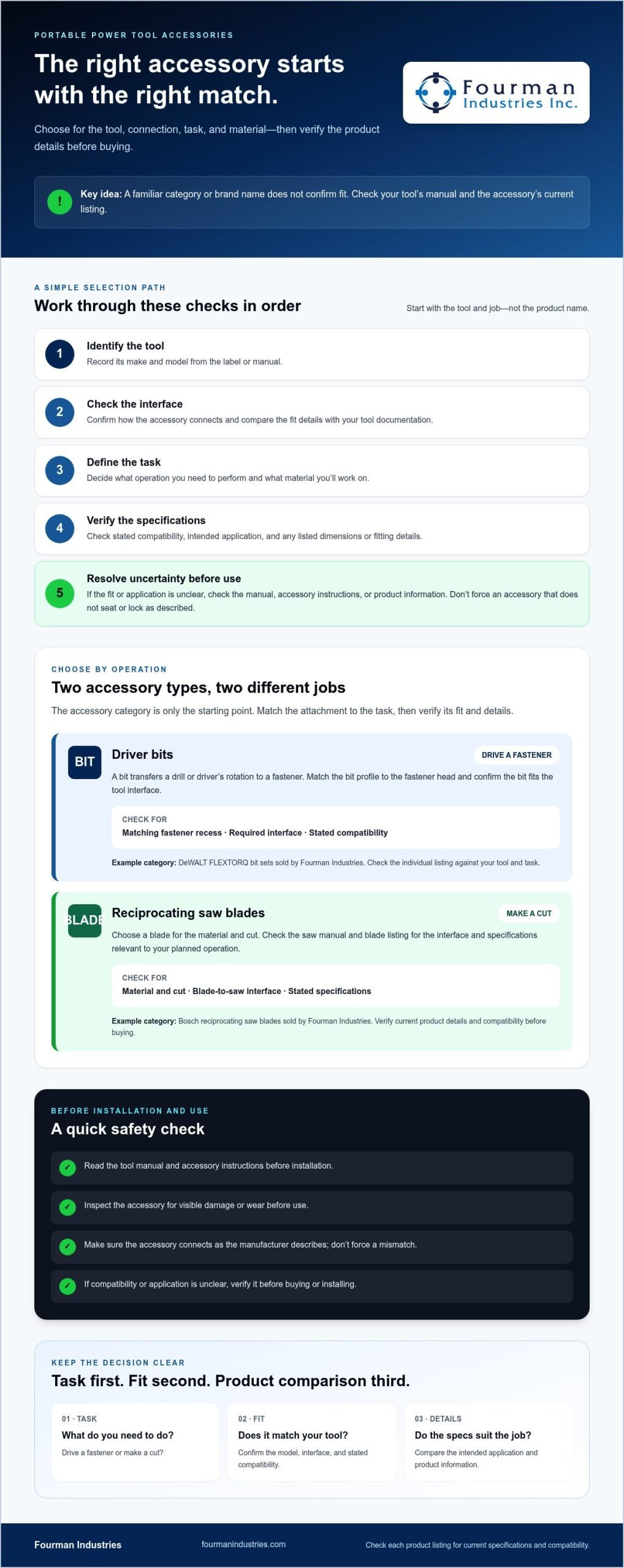
A familiar brand name doesn’t confirm that an accessory fits your tool. Compatibility depends on the tool model and connection, as well as the accessory’s stated fit and intended use. Before comparing brands or products, follow a simple order: identify the tool, check its interface, define the task, and verify the specifications. The Power Tool Institute’s Check tool compatibility guidance is a useful reference alongside your tool manual and the accessory listing.
How do you identify an accessory interface?
Compare the connection details in the manual with the accessory listing. If the accessory doesn’t seat or lock as the manufacturer describes, don’t force it. Stop and recheck the fit requirements before use.
Which specifications should shoppers verify?
Look for stated tool compatibility and intended application in the product listing. Compare any listed dimensions or fitting details with your tool documentation. Also make sure the application matches the job. An accessory that connects correctly may still be the wrong choice for the operation.
Quick compatibility checklist
- Record the tool’s make and model.
- Identify the accessory connection or interface.
- Define the task and intended application.
- Compare the listing’s stated compatibility and fitting details with the manual.
- Resolve any uncertainty before buying or installing the accessory.
Use the same checks for portable power tools accessories across brands. A DeWALT or Bosch name identifies a brand, but it doesn’t verify fit with a particular tool. Check the individual listing for current specifications before deciding. If you’re comparing bit sets or reciprocating saw blades, browse Fourman Industries’ power tool accessory options and check each item against your tool’s documentation.
Compare Portable Power Tool Accessories by Task and Material
Once you know an accessory fits the tool, narrow the choice by the work: what material are you working with, and what operation must the accessory perform? Driver bits engage fasteners. Reciprocating saw blades make cuts. These portable power tools accessories aren’t interchangeable, and the right type for one task may not suit another.
Check task and tool compatibility together; neither one alone is enough to choose the right accessory.
| Accessory | Tool and task | What to check |
|---|---|---|
| Driver bit | Drill or driver; turning a fastener | Match the bit profile to the fastener, then verify the bit’s interface and intended use. |
| Reciprocating saw blade | Reciprocating saw; making a cut | Start with the material and cut required. Check the listing for intended application, fit, and stated blade details. |
Use the table as a starting point, not a substitute for instructions. Material and operation guide your choice, while the tool manual and product listing help confirm fit. Don’t infer a blade’s intended use or a bit’s suitability from appearance. Compare details stated for the specific product you’re considering.
How should you choose a driver bit for a fastening task?
Match the bit profile to the fastener head, and follow the guidance for both the tool and fastener. A bit that fits the recess can help it stay engaged as you drive; a poor match can make controlled engagement harder. Fourman Industries sells DeWALT FLEXTORQ bit sets as one example of this accessory category, not as a universal choice. Check the current listing and your tool’s requirements before selecting a set. Additionally, if your project involves surface preparation or bonding solutions alongside mechanical fasteners, check out Fosseway Tapes & Fixings Limited for specialist adhesive primers and workshop supplies.
How should you compare reciprocating saw blades?
Start with the material and cut required. Then check the blade listing for its stated application and confirm its fit with the saw. If the listing provides blade details, compare them with your task and the tool documentation. Don’t assume a blade is suitable just because it attaches to the saw. Fourman Industries sells Bosch reciprocating saw blades; verify current product information before choosing one.
Replacing an accessory and changing accessory type are different decisions. If an appropriate accessory is worn or visibly damaged, check its instructions and listing before replacing it with the same type. If the task changes, reassess the accessory category and intended application instead of simply buying another version of the old one.
Use and Maintain Tool Accessories with a Simple Safety Checklist
A suitable accessory still needs to be installed and used correctly. Before fitting or operating one, read the tool manual and accessory instructions. Follow the manufacturer’s steps for turning off and disconnecting the tool from its power source before changing an accessory. The instructions for your specific tool take priority over general guidance.
What should you check before using an accessory?
Inspect the accessory before each use. Look for visible damage, unusual wear, or signs that it doesn’t fit the tool properly. Confirm it’s seated and secured as the tool instructions describe. If anything looks wrong or won’t fit as directed, stop. Don’t force the connection or continue with a questionable accessory.
- Review the tool manual and accessory instructions.
- Turn off and disconnect the tool before changing an accessory, following the manual’s procedure.
- Inspect the accessory for damage, unusual wear, and fit problems.
- Check that it’s seated and secured as instructed before operation.
- Use the protection and safe-work practices required for the tool and task.
When should you replace or reassess an accessory?
Stop using an accessory that’s damaged or unsuitable for the work. Follow the manufacturer’s guidance to determine whether it should be replaced, and don’t assume a similar-looking replacement is the right fit. Reassess your choice whenever the tool, task, or material changes. An accessory that suited one operation may not be appropriate for the next.
Keep power supply decisions separate from accessory selection. An extension cord supports a corded tool; it isn’t the working attachment. Choose a cord according to the tool manufacturer’s guidance and the job setup. For that separate decision, consult a complete guide to 12 gauge extension cords.
Good habits help you use portable power tools accessories with more confidence: inspect, verify, and follow the instructions before work begins. To compare relevant options, explore Fourman Industries’ tool accessories, including DeWALT FLEXTORQ bit sets and Bosch reciprocating saw blades, and check each listing’s current details.
Find the Right Power Tool Accessories at Fourman Industries
Make the job your starting point, not the product category. Identify the task, note your tool model, confirm its accessory interface, and verify the specifications before comparing products. This order helps narrow portable power tools accessories to options worth checking, instead of leaving you to guess from a product name or brand alone.
Which Fourman Industries products fit common tool-accessory needs?
Fourman Industries sells power tool accessories, including DeWALT FLEXTORQ bit sets and Bosch reciprocating saw blades. DeWALT and Bosch are the brands of those products, not Fourman’s own product brands.
- Driver-bit options: Compare the DeWALT FLEXTORQ bit sets if your task involves driving fasteners. Match the bit profiles to the fasteners you’ll use, and confirm the set’s interface and current specifications in the product listing.
- Saw-blade options: Consider the Bosch reciprocating saw blades when selecting a blade for a reciprocating saw. Start with the material and cut required, then verify the blade’s stated application and compatibility details.
These are different accessory types for different operations. Neither a brand name nor a broad category label confirms that an item suits your specific tool or task. Product specifications and availability can change, so use the current listing as your reference before choosing.
What should you do before choosing a product?
Have the tool model and job requirements ready as you compare listings. Use the tool manual to confirm the connection and requirements, then check that the product listing states a suitable application and provides matching fit details. If an important specification or compatibility point isn’t clear, pause and verify it rather than assuming.
Make a final check: does the accessory match the task, connect to the tool as instructed, and meet the product details you’ve verified? If not, keep comparing. This step helps you avoid buying an accessory based only on a familiar name.
Ready to compare relevant options? Browse Fourman Industries’ tool and accessory range, and check each listing for current product specifications and availability before ordering.
Choose Accessories with Confidence for Your Next Job
The right accessory starts with the job, not the brand name. Identify the task and tool model, check the interface, then verify the product specifications against the tool manual and listing. Match the accessory to the material and intended operation, and inspect it before use. If the fit or application isn’t clear, pause and confirm rather than guessing.
These checks make it easier to compare portable power tools accessories and avoid choosing by appearance alone. Fourman Industries offers relevant options, including DeWALT FLEXTORQ bit sets and Bosch reciprocating saw blades. They’re products from third-party brands, so confirm current specifications, compatibility, and availability on the individual listing before deciding.
Have your tool model and task in mind? Browse Fourman Industries power tool accessories and compare the available options with your requirements. A careful match is a solid start to getting the job done with confidence.
Frequently Asked Questions
What are portable power tool accessories?
Portable power tool accessories are attachments or consumables selected to help a power tool perform a specific task. Examples include driver bits for turning fasteners and reciprocating saw blades for making cuts. The right accessory depends on the tool, its connection interface, the material, and the intended operation. Power cords support a corded tool’s power supply, but they aren’t the working attachment.
How do I know if an accessory fits my power tool?
Check the tool’s make and model, then compare its accessory interface with the fit details in the accessory listing. Consult both the tool manual and accessory instructions for stated compatibility, dimensions, and intended application. A familiar brand name alone doesn’t confirm a match. If the accessory doesn’t seat or lock as directed, don’t force it. Verify the fit before buying or using it.
Can I use any drill bit with a power drill?
No. A drill bit must suit the drill’s interface and the task, and a driver bit must match the fastener head it’s intended to engage. Check the tool manual and bit listing for fitting details and stated applications. Don’t choose solely by appearance or assume a bit fits every drill. A suitable profile and secure fit help support controlled engagement during the work.
How do I choose the right reciprocating saw blade?
Start with the material you need to cut and the type of cut required. Then check the blade listing for its stated application and compare the fit details with your saw’s manual. Don’t assume a blade is suitable simply because it attaches to the tool. Follow the manufacturer’s instructions for selecting and installing the blade, and verify current product specifications before buying.
Are DeWALT FLEXTORQ bits compatible with every driver?
No bit set should be assumed to fit every driver. Confirm the driver’s model and accessory interface, then check the current DeWALT FLEXTORQ bit set listing for stated compatibility and fitting details. Fourman Industries sells DeWALT FLEXTORQ bit sets, but the brand name by itself doesn’t establish a match with a particular tool. Consult the tool manual and product information before choosing.
When should I replace a power tool accessory?
Stop using an accessory if you see damage, unusual wear, or a fit problem. Follow the manufacturer’s instructions to decide whether it needs replacement, and don’t keep using an accessory that’s damaged or unsuitable for the task. Reassess your choice if the tool, material, or operation changes. Before changing an accessory, turn off and disconnect the tool according to its manual.
Do extension cords count as power tool accessories?
Extension cords support the power supply for corded tools, but they aren’t the attachment or consumable that performs the task, such as a bit or blade. Choose a cord separately from the working accessory, using the tool manufacturer’s guidance and the requirements of your setup. Check the cord’s product information and specifications rather than assuming any cord is suitable for a particular tool.




