
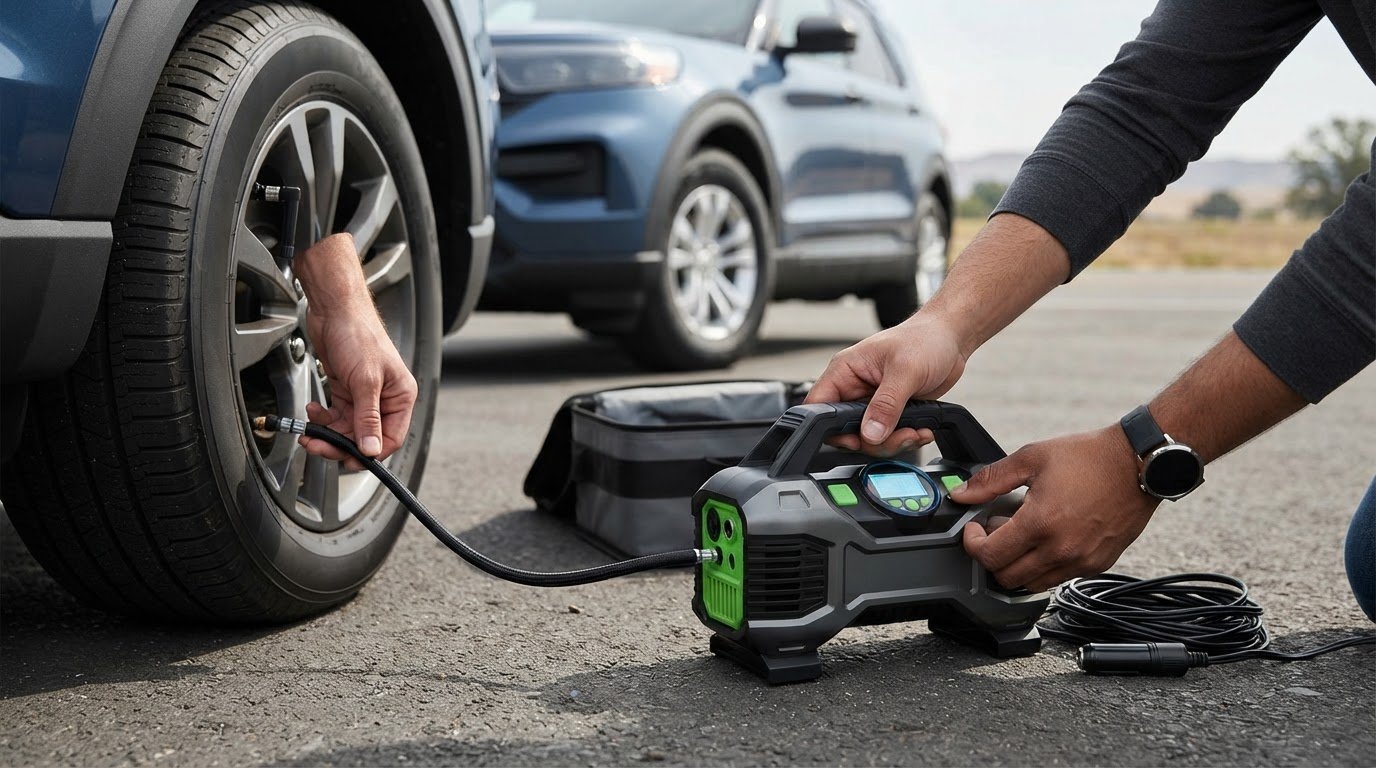
The most powerful-looking compressor isn’t automatically the right one for your car. A portable air compressor for car tires should match your tire size, vehicle, and power needs. Otherwise, a compact unit may be slow or unsuitable when you need it.
Product specifications can be confusing because maximum PSI, airflow, power source, and inflation time describe different aspects of performance. This guide explains how to compare battery-powered and 12-volt models, which details to prioritize, and how to choose equipment that fits your tires and driving routine.
You’ll also learn what to consider when comparing controls, storage, and operating limits. For a vehicle-ready option, Fourman Industries offers a Portable 12v Tire Inflator Kit as part of its automotive equipment range. Use the guidance below to decide whether it suits your vehicle and roadside routine.
Key Takeaways
- Find your recommended cold-tire pressure on the vehicle placard or in the owner’s manual. Use that target, not the tire’s maximum pressure.
- When comparing a portable air compressor for car tires, look beyond maximum PSI. Airflow and performance under comparable conditions help show how well a unit suits your tires.
- Match the power source, expected workload, controls, and storage to how you use your vehicle, whether for daily driving, road trips, or larger tires.
- Make a simple readiness plan: know your pressure target, learn the inflator’s controls, and keep the equipment accessible.
- Use the buyer checklist to assess Fourman Industries’ Portable 12v Tire Inflator Kit for your roadside preparedness needs.
Why Keep a Portable Air Compressor for Car Tires in Your Vehicle?
You’re away from home when a tire-pressure warning comes on. The tire looks low, but the nearest air pump may be out of service, difficult to reach, or inconvenient to use. A portable air compressor for car tires lets you add air where your vehicle is parked, as long as the tire is safe to inflate and the compressor suits your vehicle.
A portable tire compressor, also called an inflator, adds air through the tire’s valve stem. It can help correct low pressure during routine checks or top up a tire that has gradually lost air. It’s useful roadside equipment, but it doesn’t replace tire inspections or your vehicle’s recommended pressure guidance.
An inflator can correct low pressure, but it cannot repair tire damage or make an unsafe tire safe to drive on. Adding air may help with a minor pressure shortfall, but it won’t solve every tire problem. Know what the compressor can handle and when to stop and get help.
When a portable tire compressor earns its place
A compressor is useful if you check tire pressure regularly, take long drives, or want an option for gradual air loss. Rather than relying entirely on a public pump, you can add air at a suitable, safe stopping place. That’s especially convenient when you notice low pressure before a trip and need to make a routine correction.
Consider the workload, too. Occasional top-ups are different from inflating several tires repeatedly or working with larger tires. A compact unit designed for light, intermittent use may not suit frequent, demanding inflation. Choose for your vehicle and typical use, not size alone.
What a portable compressor cannot do
An inflator doesn’t repair punctures, damaged valves, cuts, or other tire damage. If a tire looks unsafe, or you’re unsure whether it can hold air, stop in a safe location and seek roadside assistance. Don’t keep driving on a visibly damaged or severely underinflated tire.
Have a completely flat tire assessed before trying to inflate it. Check for visible damage and whether the tire has come off its rim. Adding air may not fix the problem and could be unsafe. Use an inflator for a suitable pressure correction, not as a reason to keep driving on a tire that won’t hold air.
How to Read Portable Tire Compressor Specifications
A spec sheet is helpful when you know what each detail means. Start with your vehicle’s recommended tire pressure, then compare the compressor’s stated capabilities with your tires and intended use. Find the correct target on the vehicle placard or in the owner’s manual. The NHTSA tire safety guidelines also explain why proper tire pressure matters for tire maintenance and safety.
PSI, airflow, and tire size
PSI means pounds per square inch, a measure of air pressure. A compressor’s maximum PSI is the highest pressure it is rated to reach. It doesn’t tell you how quickly the compressor can add air. Maximum PSI alone can’t predict inflation speed; airflow, tire volume, and starting pressure all affect the time required.
Airflow describes how much air the compressor can deliver over time. A larger tire has more internal volume than a smaller one, and a tire starting well below its target needs more air. Temperature, power supply, and operating limits can also affect performance. Two compressors with similar maximum-pressure ratings may therefore perform differently on the same tire.
Use inflation-time claims for comparison only when the test conditions are clear. Look for results based on a similar tire size and pressure change, including the starting and ending PSI. Without those details, treat the time as a rough guide, not a promise for your vehicle.
Power source, controls, and duty cycle
A cordless compressor avoids a power cable during use, but its battery needs to be charged and ready. A 12-volt model draws power from the vehicle, which can be practical on the road, but it requires access to its specified power connection. Consider where you’ll store the unit, how you’ll power it during a roadside stop, and whether its instructions suit your usual needs.
Controls matter as well. A clear pressure display helps you monitor the reading. Preset controls and automatic shutoff, when included, can reduce the need to watch the gauge continuously, but you should still check the final pressure with a suitable gauge. Don’t assume these features are included with every compressor. Confirm specific features in the product information before relying on them.
Check the duty cycle, which describes how long a compressor can operate before it needs to rest. A model intended for brief top-ups may need breaks during longer jobs. Follow the manufacturer’s instructions, especially when inflating repeatedly, to avoid overheating or overworking the unit. For a 12-volt option, compare your needs with the Portable 12v Tire Inflator Kit.
Which Portable Air Compressor Fits Your Car and Driving Routine?
The right compressor depends on your tire size, how often you expect to inflate, the power source you can use, and where you’ll store the unit. Use this comparison to narrow your options, then check the product’s specifications against your vehicle and tires.
| Driving routine | Portability and storage | Power access | Expected workload and controls |
|---|---|---|---|
| Daily driving, occasional pressure checks | Choose a size and shape that fit your trunk or storage compartment without crowding other essentials. | Choose battery operation or a vehicle-powered connection based on what works for your routine. | Prioritize straightforward controls and compatibility with your tires for occasional top-ups. |
| Road trips and longer drives | Allow space for the compressor and its required connections alongside your other travel gear. | Plan where and how you’ll power it during a roadside stop. | Review the manufacturer’s performance details and operating limits, especially if you may need to top up more than one tire. |
| Larger tires or frequent inflation | Check that the unit is practical to carry while meeting your vehicle’s requirements. | Compare available power options with the compressor’s stated capabilities and instructions. | Review performance information for a comparable tire size and workload, along with the stated duty cycle. |
Use the table as a starting point, not a universal ranking. For an option in this category, explore Fourman Industries tire inflators and compare the available product information with your needs.
For everyday cars and occasional pressure checks
If you mainly drive a passenger car and check pressure now and then, a compressor that’s easy to store and operate may be more useful than a long list of extra features. Consider how often you’ll use it, whether its power source is accessible, and whether its stated compatibility matches your tires. A simple setup you can keep within reach may be more practical than controls you rarely use.
Think of the compressor as one part of a roadside setup. Your driving routine can also guide what else to keep in the vehicle. Review these emergency car kit essentials as you plan your storage.
For road trips, larger tires, and frequent use
For more demanding use, compare specifications closely. Check your tire size and the compressor’s performance details, including the conditions behind any stated inflation time. Repeated use can place different demands on a unit than an occasional top-up, so review its operating limits and rest periods. For larger tires, don’t assume a compact model will be suitable. Match its documented capabilities to your vehicle and intended workload.
A portable air compressor for car tires should suit the way you drive. Compare power access, controls, storage, tire compatibility, and workload together. No single feature determines the right choice for every driver.
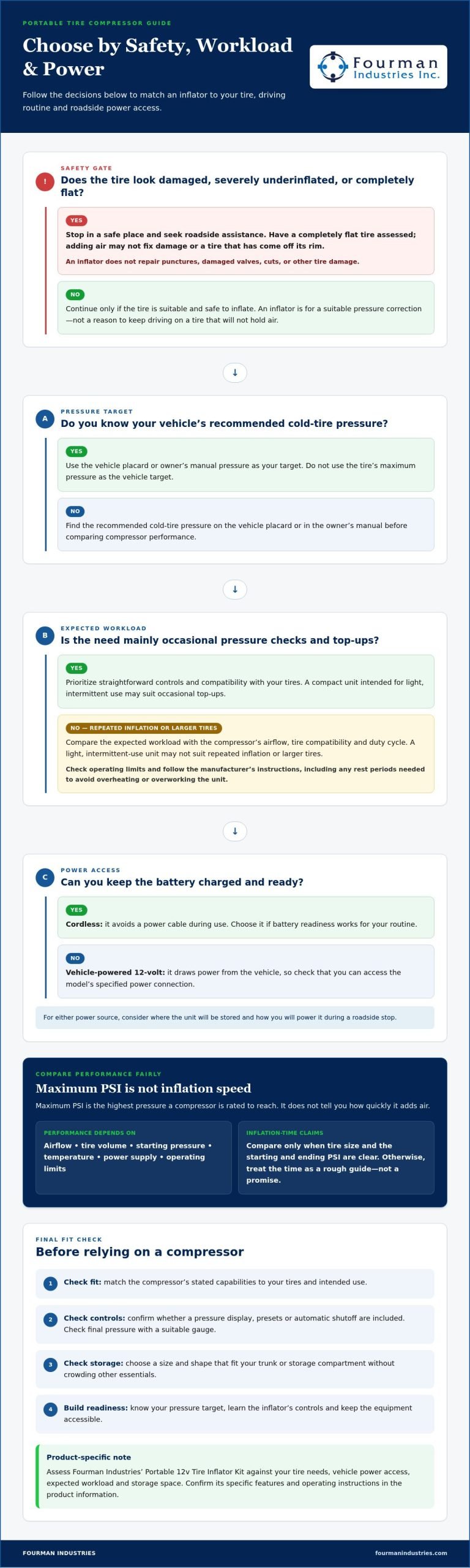
How to Use and Store a Portable Tire Compressor More Confidently
A compressor is most useful when you can find it, power it, and follow its instructions without guesswork. Prepare before a tire needs attention: keep the equipment accessible and learn how it works so there are fewer surprises during a roadside stop.
Prepare before the tire needs air
Store the compressor where you can reach it without unloading essential cargo. Keep its required components together, and review the product instructions to understand how it’s powered and which connections are included. A quick inspection can reveal a depleted battery, damaged hose, or missing part before you depend on the unit.
- Choose a safe storage spot. Secure the compressor and keep it accessible, rather than burying it beneath luggage or emergency supplies.
- Review its instructions. Learn the specified power arrangement, connection method, operating limits, and any rest periods.
- Inspect it periodically. Look for visible wear or damage to the housing, hose, plug, and connection points. For a battery-powered model, check its charge according to the manufacturer’s guidance.
- Keep pressure information handy. Locate the vehicle placard or owner’s manual so you can find the recommended cold-tire pressure when needed.
Round out your roadside plan with other equipment suited to your needs. A truck and car battery jump starter guide can help you consider another common part of vehicle preparedness.
Use pressure guidance and recognize warning signs
Use the pressure recommended on the vehicle placard or in the owner’s manual. Don’t treat the maximum pressure printed on a tire’s sidewall as the target for your vehicle. That figure doesn’t replace the vehicle manufacturer’s guidance.
Before operating a portable air compressor for car tires, move well away from traffic and choose stable, safe ground. Check the hose and power connection for visible damage, then follow the compressor’s instructions. Don’t exceed its operating limits or run it longer than its duty guidance allows. If it needs a rest, let it cool as directed.
Stop if the tire appears damaged, the compressor or connection shows a problem, or the tire won’t hold pressure. A compressor adds air, but it can’t fix a puncture, damaged valve, or sidewall problem. Avoid driving on a tire that seems unsafe. Seek roadside or professional help instead.
For a vehicle-ready tire-inflation option, view Fourman Industries’ Portable 12v Tire Inflator Kit and review its product instructions before use.
Choosing Fourman Industries’ Portable 12v Tire Inflator Kit
After weighing your vehicle, tires, power needs, and typical workload, compare those requirements with a specific option. Fourman Industries’ Portable 12v Tire Inflator Kit is an option for drivers preparing for routine pressure top-ups and roadside needs. Use its product information to decide whether it fits your intended use, and don’t assume features or performance levels that aren’t stated.
Run through a final pre-purchase checklist
Match the kit to your vehicle before making a decision. Popularity rankings can help you discover products, but they can’t tell you whether a compressor suits your tires or routine. Compare the relevant product details with your vehicle requirements and the inflation tasks you expect to handle.
- Vehicle requirements: Identify the tire types and sizes fitted to your vehicle, and note any manufacturer guidance that affects your choice.
- Power: Review how the unit connects to a power source and whether that arrangement works for where and how you expect to use it.
- Performance: Compare published pressure and inflation information with your tires and likely workload. Look for test conditions when inflation-time figures are provided.
- Controls: Read the product information and instructions to understand how pressure is monitored and which controls are included.
- Storage and components: Consider where you’ll keep the kit, and review the listed components and instructions to understand what comes with it and how it’s intended to be used.
This checklist helps you focus on practical fit rather than an impressive-sounding feature list. If you expect repeated inflation or have larger tires, pay close attention to the stated operating limits and performance details. For occasional checks, a practical power arrangement and storage plan may matter more than features you’re unlikely to use. The right portable air compressor for car tires is the one that suits your vehicle and driving routine.
Build a practical roadside readiness setup
An inflator can be a useful part of a roadside kit, but it doesn’t replace the rest of your preparation. Keep it accessible, understand its operating instructions, and pair it with other essentials suited to your travel habits. A compressor can add air when a tire is suitable for inflation. It can’t repair tire damage or replace roadside assistance when the situation is unsafe.
As you plan what belongs in your vehicle, consider how tire equipment fits with your other supplies. These emergency car kit essentials can help you plan a broader readiness setup.
To add a tire-inflation option to your setup, shop Fourman Industries automotive accessories and review the Portable 12v Tire Inflator Kit’s product information before choosing.
Make Tire Readiness Part of Your Roadside Plan
The best time to prepare for a low tire is before one catches you off guard. Choose a portable air compressor for car tires that suits your vehicle and routine, keep it accessible, and learn how to use it. It’s a practical way to feel better equipped for the road. Remember that tire damage or an unsafe situation calls for more than an inflator.
Fourman Industries offers automotive equipment that includes a Portable 12v Tire Inflator Kit and a truck and car battery jump starter. Consider these options as you build a roadside setup around your vehicle’s needs.
Ready to add tire-inflation equipment to your vehicle? Shop Fourman Industries’ Portable 12v Tire Inflator Kit and review its product details as you make your choice.
Frequently Asked Questions
Can a portable air compressor inflate a completely flat car tire?
Possibly, but first check whether the tire is still seated on the wheel and shows no visible damage. A completely flat tire may have a puncture, a leaking valve, or damage that makes inflation unsafe. If it appears separated from the rim, bulged, cut, or otherwise compromised, don’t try to inflate it. Get professional help, especially if it won’t hold air after inflation.
How often should I check my car tire pressure?
Check pressure at least monthly and before a long drive or road trip. Measure when the tires are cold, ideally before driving or after the vehicle has been parked for several hours. Recent driving warms the tires and can affect the reading. Check all tires, including the spare if your vehicle has one, and use a dependable gauge rather than waiting for a dashboard warning.
Can I use a portable tire compressor on a bicycle or sports ball?
Only if the compressor instructions allow it and you have the correct valve adapter. Bicycle tires and sports balls can require very different pressures, so don’t assume a car-tire setup is appropriate. Follow the pressure guidance printed on the item or provided by its manufacturer. Inflate in short checks, particularly for a ball, to avoid exceeding its recommended pressure.
Should the car be running while using a 12-volt tire inflator?
Follow the inflator’s instructions because power requirements and operating guidance vary by model. Some 12-volt units may direct you to run the engine to reduce battery drain; others may specify different conditions. If the instructions allow the engine to run, do so only outdoors, never in an enclosed garage. Keep the vehicle in Park, set the parking brake, and stay clear of moving traffic.
Is the pressure shown by a portable tire compressor accurate?
The display can help you monitor inflation, but its reading may differ from a separate tire-pressure gauge. For a closer check, stop the compressor and measure at the valve with a quality gauge, following its instructions. Make sure the gauge is seated properly, since a poor seal can affect the result. If readings disagree repeatedly, don’t rely on the compressor display alone.
What does the PSI number on a tire mean?
PSI stands for pounds per square inch, a unit used to describe air pressure. Numbers printed on a tire’s sidewall refer to the tire’s pressure limit under stated conditions, not a target that automatically fits every vehicle. For routine checks, use the pressure information provided by your vehicle maker. Keep the units consistent when comparing a gauge reading with that recommendation.
Can a portable tire compressor replace a spare tire or roadside assistance?
No. A compressor adds air, but it can’t fix a puncture, failed valve, or structural tire damage. It also can’t help if the tire is unsafe to drive on or won’t retain pressure. A spare, where supplied and safe to use, or roadside assistance may be needed instead. Treat an inflator as one preparedness tool, not a substitute for a safe repair or recovery plan.




