

What if the imprint is easy to read, but the cord still isn’t right for the job? Custom printed extension cords can help your crew identify equipment and keep your business visible, but the message is only one part of the choice. Gauge, length, electrical load, and working conditions matter just as much.
It’s easy to focus on what the cord should say and overlook what it needs to handle. Start by identifying the equipment and where you’ll use the cord. Compare the equipment requirements with the cord’s listed specifications, then choose a concise imprint that helps people recognize the cord, crew, or business.
This guide explains how to match cord specifications to the work, decide what information is useful to print, and weigh color and customization choices. Fourman Industries sells custom printed and personalized cords, along with separate pink, purple, and heavy-duty cord options. Use the project details to narrow down which category fits your needs.
Key Takeaways
- Choose the cord’s gauge, length, load capacity, and intended environment before deciding on customization.
- Use a brief, recognizable imprint to help identify ownership, a crew, or an asset.
- An imprint doesn’t determine electrical performance. Use the cord’s listed specifications and intended use to assess suitability.
- Before ordering, identify who needs to recognize the cord, where it will be used, and what it needs to power.
- Compare Fourman Industries’ custom printed and personalized cord options with its separate pink, purple, and heavy-duty cord categories.
Why Choose Custom Printed Extension Cords for Work or Events?
A cord pulled from shared storage can look like the next one. At a busy worksite or event, that makes it harder to tell which crew it belongs to, where it should go, or who should collect it at pack-up. A clear printed identifier gives people a quick visual cue when cords are stored together or spread across a work area.
An extension cord is useful only when it suits the task. Custom printing adds a different benefit: a business, crew, or asset name can make ownership easier to recognize and keep a business visible during everyday use. That’s more practical than branding alone. A mark that looks good but doesn’t help someone identify the cord may not serve its purpose.
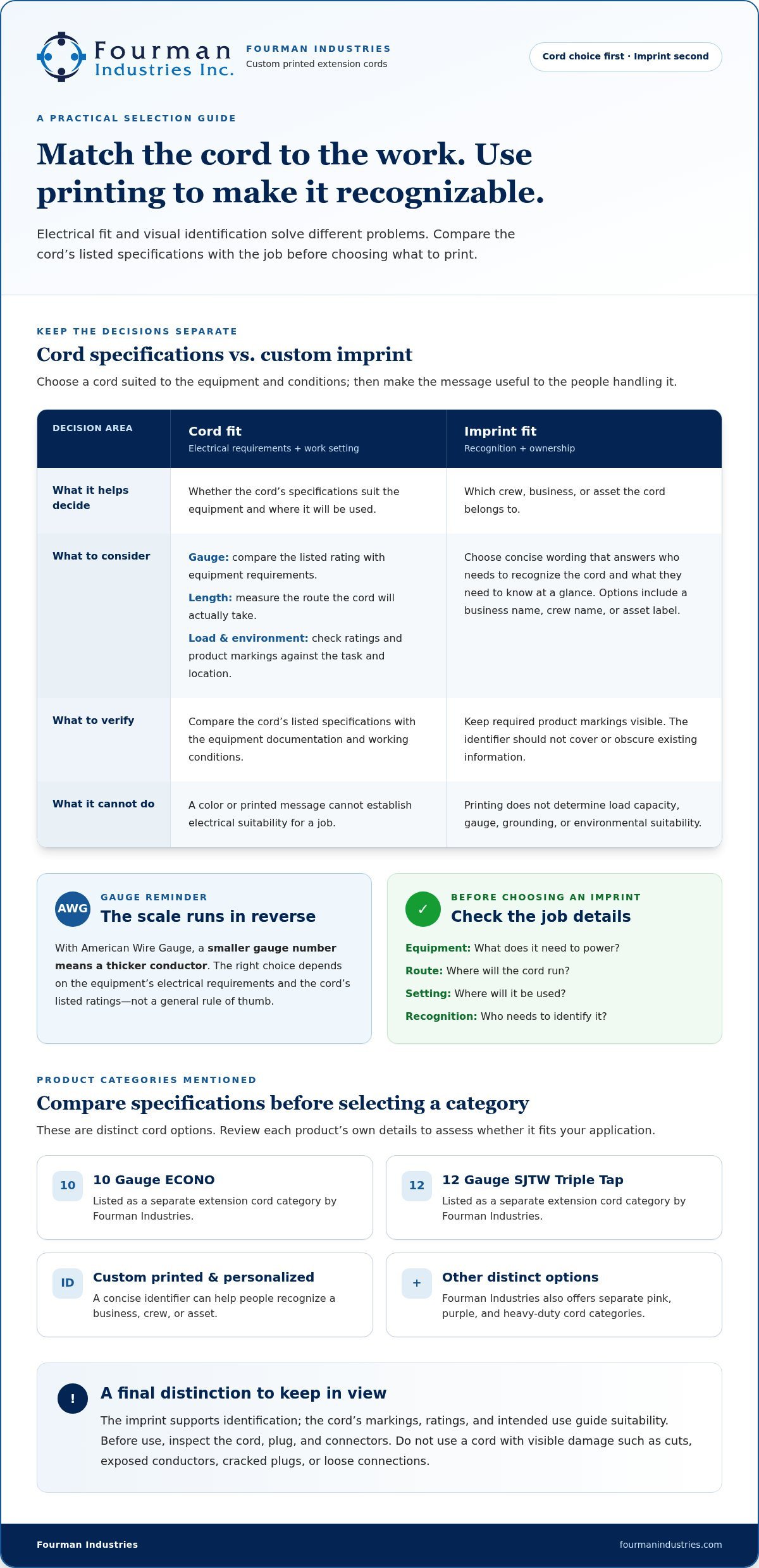
Make the decisions in order: choose a cord suited to the work, then make the imprint useful. The printed message supports recognition. It doesn’t replace the cord’s specifications or establish whether the cord is right for a particular job.
When does a printed cord make everyday work easier?
Consider where people handle cords, not just where they’re plugged in. In a shared work area, a crew name can distinguish one team’s equipment from another’s. On a storage rack, a business name or asset label can make sorting and returning cords more straightforward. During event setup, an identifier can help staff recognize their team’s equipment as it moves between work areas.
Markings can support organization and make ownership more apparent, but they can’t guarantee that a cord won’t be misplaced or taken. Use an identifier as a practical visual aid, not as a theft-prevention promise.
What information belongs on a custom cord?
Choose the shortest wording that gives the intended user a useful answer. Depending on your needs, that might be a business name, crew name, or asset label. Ask yourself who needs to recognize the cord and what they need to know at a glance. A concise identifier is easier to scan than a long slogan or crowded message, especially when cords are stored together.
Keep the imprint focused on identification or business visibility. Don’t use it in place of required product markings, and don’t cover or obscure existing information on the cord. The product markings and the custom identifier serve different purposes. Useful customization makes ownership or assignment clearer while leaving product information visible.
Which Extension Cord Specifications Should You Choose First?
Start with the job, not the imprint. Gauge, length, electrical load, and working environment help determine whether a cord fits the task. Once those choices are clear, consider how to personalize it. A custom message can help identify a cord, but it can’t make an unsuitable cord appropriate for the equipment or conditions.
How do gauge and electrical load affect cord selection?
Gauge describes the thickness of the conductors inside a cord. American Wire Gauge (AWG) works in reverse: a smaller gauge number means a thicker conductor. The right choice depends on the equipment’s electrical requirements and the cord’s listed ratings, not on a general rule of thumb. Check both before selecting a cord, and don’t assume one gauge suits every tool or appliance.
For a closer look at one common size, see The Complete Guide to 12 Gauge Extension Cords: Power, Safety, and Performance. Fourman Industries sells 10 Gauge ECONO and 12 Gauge SJTW Triple Tap extension cords as separate product categories. Review each cord’s specifications to decide whether it fits your application.
How should length and environment shape the choice?
Measure the route from the power source to the equipment, following the path the cord will actually take. This gives you a practical length to compare with the product details. Then consider where the cord will be used. Indoor and outdoor conditions can call for different cord characteristics, so use the product markings and ratings to guide your selection.
Color and printing are identification choices, not evidence of electrical suitability. A bright cord or clear company name doesn’t tell you its load rating or whether it’s intended for outdoor use. For workplace considerations, consult OSHA’s electrical safety information alongside the cord and equipment documentation.
- Gauge: Does the cord’s listed rating match the equipment requirements?
- Length: Have you measured the full route to the work area?
- Load: Are the cord rating and equipment needs compatible?
- Environment: Do the product markings suit the planned location?
Settle these specifications before choosing a message. Then explore custom printed extension cords with the task and conditions in mind.
Does Printing Change an Extension Cord’s Performance or Safety?
A printed name or logo doesn’t tell you what electrical load a cord can handle or where it’s suitable to use. Treat customization and cord performance as separate decisions. The imprint helps people identify equipment; the cord’s listed specifications and intended use determine whether it fits the job.
That distinction matters with custom printed extension cords. A message or color doesn’t confirm the cord’s gauge, rating, grounding, or suitability for a particular environment. Read the product information and follow the equipment instructions when choosing and using a cord.
What should buyers check before using a printed cord?
Before use, read the cord’s markings and ratings, then compare them with the equipment requirements and working conditions. Inspect the cord along its length, including the plug and connectors. Don’t use a cord that shows visible damage, such as cuts, exposed conductors, cracked plugs, or loose connections. Follow applicable workplace safety guidance and the product instructions for the specific cord and equipment.
Keep required labels and safety information readable. An imprint shouldn’t cover, replace, or make essential product markings difficult to see. If the cord’s information is worn or unclear, don’t rely on the custom message as a substitute for those details.
How can an imprint stay useful without adding confusion?
Keep the message brief and easy to recognize. A business name, crew identifier, or asset label can serve a clear purpose. A long slogan or several lines of text may be harder to read quickly. Think about who will see the cord and where they’ll encounter it, such as in storage, at a work area, or during event setup.
Keep the imprint visually distinct from essential product and safety information. Color can also help users distinguish equipment, but choose it for your actual setting. A bright color doesn’t guarantee visibility in every work area or prevent accidents. Dust, low light, clutter, and other equipment can affect how easily a cord is seen.
- Read: Check the cord’s listed ratings and markings.
- Inspect: Look over the cord and connectors before use.
- Keep clear: Preserve access to required product information.
- Simplify: Use a concise identifier that supports recognition without crowding the message.
Use the imprint to improve identification, not to make assumptions about performance. A practical custom cord pairs a readable identifier with specifications suited to its intended use.
How to Plan a Custom Printed Extension Cord Order
A short project brief helps keep cord selection and customization on track. Before choosing a product category, define who needs to recognize the cord, where it will be used, and what equipment it must serve. That way, appearance and imprint choices support the job instead of distracting from its requirements.
What should go into a simple cord project brief?
Write down the setting, equipment, approximate reach, and whether the cord will be used indoors or outdoors. Add the imprint’s purpose, such as identifying a crew, marking business ownership, or labeling an asset. Keep the preferred wording short. Decide on color or appearance separately from the electrical requirements, so a visual preference doesn’t drive the choice of cord.
- 1. Define the use: Note the work or event setting and who will handle or identify the cord.
- 2. Identify the equipment: Record what the cord will power and use the equipment instructions to understand its requirements.
- 3. Measure the reach: Estimate the route from the power source to the work area, allowing for the path the cord must follow.
- 4. Match the cord: Compare the intended use with the cord’s listed specifications, including gauge, length, and environmental suitability.
- 5. Choose the imprint: Select a concise business name, crew identifier, or asset label, then consider color as a separate recognition aid.
How can buyers review a custom imprint before ordering?
Read the proposed wording carefully. Check names, spelling, and identifiers, then consider whether someone can recognize the message quickly in the cord’s actual setting. A color that stands out in a clean storage area may be less distinct among similar equipment or against a busy background.
Keep the imprint focused. It should help people identify the cord without crowding essential product information. Before finalizing the selection, review the cord’s stated details and confirm they fit the intended task. The message supports identification; it doesn’t establish electrical suitability.
For broader category guidance, continue with The Ultimate Guide to Custom Printed Extension Cords. When your project details are ready, explore custom printed cord options and use your brief to guide the choice.
Find Custom Printed Extension Cords from Fourman Industries
A good choice starts with the work, not the artwork. Identify what the cord will power, how far it needs to reach, and where it will be used. Then match those needs to the cord’s listed specifications before settling on an imprint that helps the right people recognize it. Fourman Industries was founded in 1997 and sells custom printed and personalized extension cords.
Which Fourman cord categories may fit your project?
For a cord that carries a business, crew, or asset identifier, browse Fourman’s custom printed and personalized extension cord categories. Treat the imprint as an identification tool, and keep it concise so it’s easy to recognize. Use the product details to assess whether a specific cord suits its intended task.
Fourman also sells pink and purple extension cords as distinct color options. These colors can support visual organization. The company’s heavy-duty offerings include 10 Gauge ECONO and 12 Gauge SJTW Triple Tap extension cords. Review each product’s stated details when comparing cord categories.
If color is a priority, compare the pink extension cord option with the setting and recognition needs in your project brief. Choose a color that makes sense for the work area and crew. Electrical suitability comes from the cord’s specifications, not its appearance.
What is the next step for choosing a cord?
Keep your project notes close as you browse. A clear brief helps you compare cord categories without letting the imprint or color distract from the task. Check these details together:
- Use case: What equipment will the cord serve, and who needs to identify it?
- Electrical needs: What do the equipment requirements and cord specifications call for?
- Reach and environment: What length is needed, and will the cord be used indoors or outdoors?
- Identifier: What short business, crew, or asset message will be useful at a glance?
With those answers in hand, browse Fourman’s cord offerings and compare the product details with your intended use. Choose a cord for the job first, then select a practical identification option for your crew. That makes a custom cord useful from the first setup to the next time it’s pulled from storage.
Choose a Cord That’s Ready for the Work
The right cord starts with the task. Match its listed specifications to the equipment, required reach, and working environment first. Then choose a clear, practical imprint that helps your crew recognize the cord without obscuring important product information. This order keeps customization useful and grounds the buying decision in what the job requires.
Fourman Industries was founded in 1997 and sells custom printed and personalized extension cords. Its other offerings include pink and purple cords, plus 10 Gauge ECONO and 12 Gauge SJTW Triple Tap extension cords. Compare the product details for each category and choose according to your intended use.
Have your project notes ready: intended use, electrical needs, reach, environment, and the identifier you want people to recognize. Then shop custom printed extension cords at Fourman Industries and use those details to guide your choice. A well-matched cord and a useful imprint can make everyday equipment easier for your crew to identify.
Frequently Asked Questions
Can custom printed extension cords be used outdoors?
Yes, if the specific cord is rated for outdoor use and suits the equipment being powered. Check its product markings and instructions rather than relying on its imprint or color. Follow directions for protecting connections, and don’t use a cord with visible damage. If the product details don’t establish that the cord is appropriate for outdoor conditions, don’t assume it’s suitable.
Does custom printing affect an extension cord’s safety?
Printing alone doesn’t tell you whether a cord is suitable for a particular load or setting. Check its listed ratings, markings, and instructions against the equipment requirements and intended environment. Keep required product information readable, and inspect the cord and connectors before use. A printed name, logo, or bright color can help identify a cord, but it can’t replace electrical specifications or establish suitability.
What information should I put on a custom printed extension cord?
Choose a short identifier that helps the right person recognize the cord, such as a business name, crew label, or equipment ID. Keep the wording focused on one purpose and easy to read at a glance. Crowded text can be harder to recognize, especially when cords are stored or used together. Don’t use custom wording in place of required product markings or safety information.
How do I choose the right gauge for a custom extension cord?
Start with the equipment requirements and the cord’s listed ratings. Gauge describes conductor thickness, and a smaller American Wire Gauge number means a thicker conductor. Gauge must be considered alongside cord length and electrical load, so don’t choose by imprint, color, or a general label alone. Review the product details and equipment instructions. If the application is unclear, use qualified guidance before selecting a cord.
Can I get a pink or purple custom printed extension cord?
Fourman Industries offers custom printed and personalized extension cords, as well as pink and purple extension cord options. Consider the imprint and color as separate choices. Compare the relevant product details and choose the category and appearance that fit your project. The cord’s specifications, not its color, determine whether it suits the intended task.
How long should an extension cord be for my project?
Measure the actual route from the power source to the equipment, following the path the cord will take through the work area. Choose enough reach to avoid stretching the cord, and consider length alongside the equipment needs and cord ratings. Don’t connect cords together as a shortcut unless the product instructions and applicable safety guidance allow that use. The selected cord still needs to suit its setting and task.
Are personalized extension cords useful for crews and businesses?
Yes. A readable business name, crew label, or equipment identifier can help people distinguish a cord from similar items in shared storage or work areas. Keep the message brief so it’s easy to recognize. Printing can support identification, but it doesn’t guarantee a cord won’t be lost or taken. Treat the imprint as a practical ownership cue, not as a security measure.




