
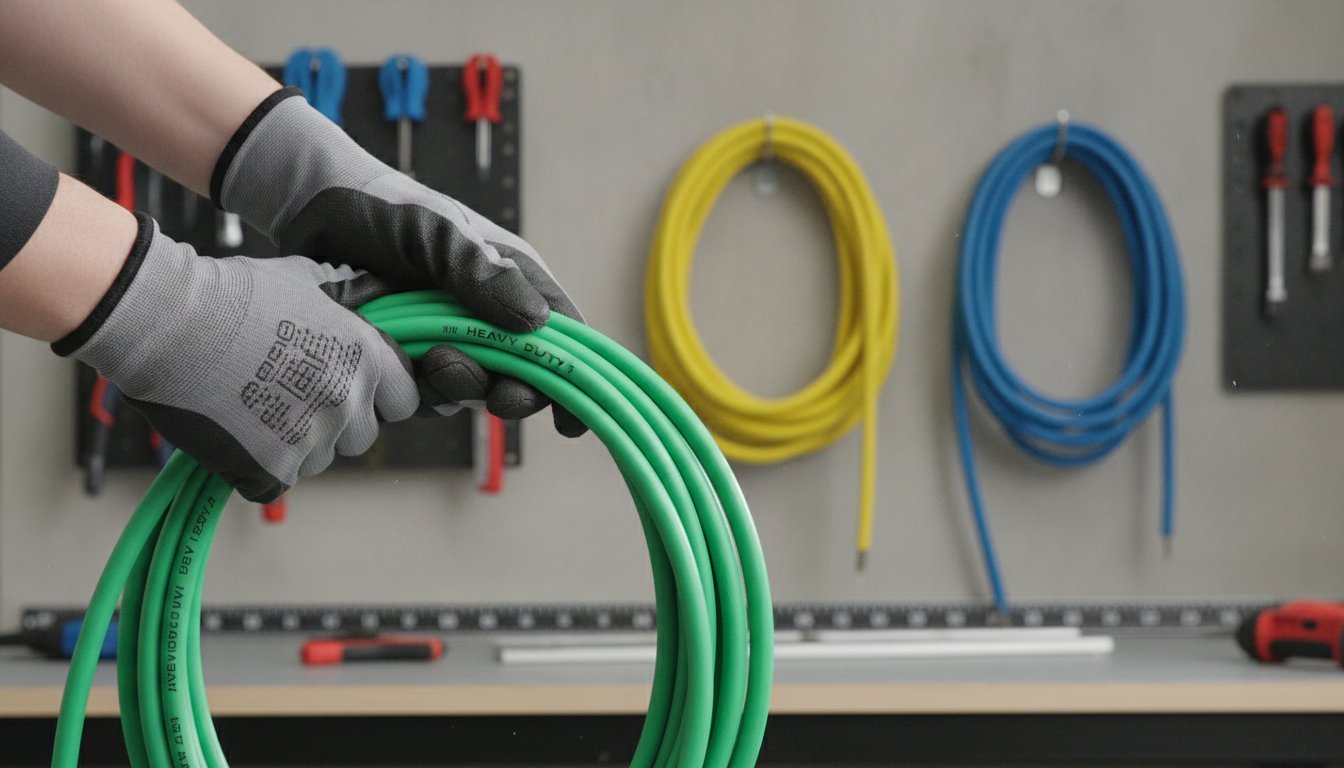
You arrive at the site ready to work, but instead of making progress, you spend twenty minutes untangling a “spaghetti pile” of cables or searching for a 12-gauge cord that mysteriously vanished over the weekend. It’s a common headache, but it’s more than just an annoyance. Between 2011 and 2024, there were 2,070 workplace fatalities involving electricity, and the construction industry faced the highest risks. Poor job site extension cord management doesn’t just slow you down; it invites OSHA fines and creates dangerous trip hazards that put your crew in harm’s way.
We know your gear is a serious investment. Seeing expensive 10-gauge cords damaged by foot traffic or “borrowed” permanently by another crew hurts your bottom line. You need a workspace that’s organized, efficient, and secure. This guide will teach you how to organize, protect, and identify your power cables to eliminate hazards and stop job site theft for good. We’ll look at the best ways to maintain durable SJTW jackets, use high-visibility colors for safety, and implement custom identification so your equipment stays exactly where it belongs.
Key Takeaways
- Prevent OSHA fines and injuries by learning to map site power runs and use protective cord bridges in high-traffic areas.
- Choose the right gear for the job, focusing on 12-gauge SJTW cords that handle industrial power needs without voltage drop.
- Implement effective job site extension cord management using the “Over-Under” coiling technique to prevent kinks and cable memory.
- Protect your bottom line with custom-printed cords and high-visibility colors that stop ownership disputes and deter theft.
- Reduce daily downtime by eliminating tangled “spaghetti” piles through systematic cable routing and storage.
Why Effective Job Site Extension Cord Management Matters
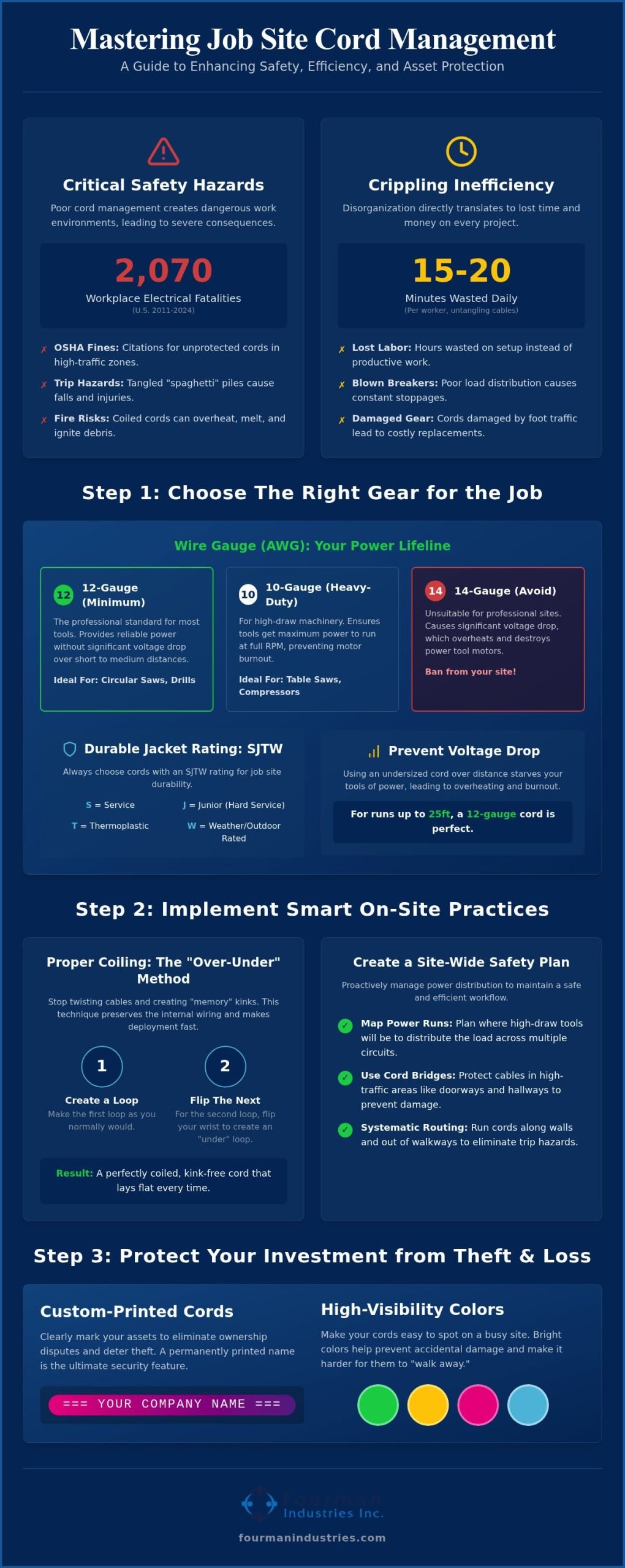
Effective job site extension cord management is the systematic process of routing, storing, and identifying your power assets. It is not just about keeping the trailer tidy; it’s a strategic approach to site operations. When you treat your cables as vital assets rather than disposable accessories, you protect your bottom line. Poorly managed sites suffer from “hidden costs” that many contractors ignore until it’s too late. These include expensive downtime, frequent equipment repairs, and the catastrophic cost of medical claims. By adhering to recognized extension cord standards, you establish a baseline for safety that keeps your project on track. A reliable power extension cord system is an investment in your crew’s productivity and long-term success.
The Safety Factor: Preventing Trip Hazards
High-traffic “danger zones” like doorways, stairwells, and narrow hallways are where cables naturally accumulate into hazardous nests. OSHA inspectors look for these citation triggers, specifically checking if cords are protected from accidental damage as required by regulation 1926.405(a)(2)(ii)(I). Between 2011 and 2024, there were 2,070 workplace fatalities involving electricity in the United States. Many of these tragedies start with damaged insulation or simple trip hazards. Falls on a job site can lead to massive workers’ compensation payouts and increased insurance rates that haunt your business for years. Additionally, “spaghetti” wiring is a major fire risk. When cords are piled together or buried under materials, they can’t dissipate heat properly. This leads to internal resistance and melted jackets that can ignite sawdust or construction debris in seconds.
The Efficiency Factor: Reducing Downtime
Every minute your crew spends untangling a knot of cables is a minute they aren’t making progress. On many sites, workers waste fifteen to twenty minutes every single morning just getting power to their stations. Over a typical work week, that adds up to hours of lost labor per person. Professional job site extension cord management streamlines your morning setup and your evening teardown. It also helps you plan your power distribution to avoid the headache of blown breakers. When you map out where your high-draw tools are located, you can distribute the load across multiple circuits effectively. This prevents the constant, frustrating work stoppages that happen when a single circuit is overloaded by multiple saws or chargers. Clean routing means your team stays focused on the build, not the power source.
Choosing the Right Power Extension Cord for Job Site Success
Picking the right gear is the first step in successful job site extension cord management. If you start with a flimsy cord, no amount of coiling or routing will save your tools from a slow death. You must understand wire gauge (AWG). A lower gauge number means a thicker copper wire with more capacity to carry current. For most pros, a 12 gauge extension cord is the absolute minimum requirement. It provides enough power for circular saws and drills without breaking a sweat. For high-draw machinery like table saws or large compressors, you should step up to 10-gauge cords. These heavy-duty cords ensure your equipment gets the juice it needs to run at full RPM.
Don’t settle for “household” jackets. Professional sites demand SJTW ratings. This stands for Service, Junior, Thermoplastic, and Weatherproof. These jackets are designed to withstand the abrasion and temperature swings common on a build. While SOOW cords are the “extra hard” standard, SJTW provides a great balance of durability and flexibility for temporary power. Following OSHA Guidelines for Flexible Cords is non-negotiable. This means using only three-wire grounded cords rated for hard or extra-hard usage. Using the right materials is the only way to avoid fines and ensure site-wide safety.
Gauge vs. Distance: Preventing Voltage Drop
Voltage drop is the hidden killer of power tools. It happens when electricity travels over a long distance through a wire that’s too thin. It’s like trying to push a fire hose worth of water through a straw. The motor works harder, generates more heat, and eventually burns out. You should effectively ban 14-gauge cords from your professional site. They simply aren’t built for the load. Use this quick-reference guide for your runs:
- 25ft: 12-gauge is perfect for all heavy-duty hand tools.
- 50ft: 12-gauge is the limit for high-draw saws before performance dips.
- 100ft: Step up to 10-gauge to prevent significant power loss over the distance.
Connector Types: Triple Taps and Lighted Ends
Efficiency increases when you stop hunting for outlets. Using 12 Gauge SJTW Triple Tap Extension Cords lets you run a charger, a light, and a tool from a single run. It keeps the site cleaner by reducing the total number of cables on the ground. Always look for lighted ends. They act as a mandatory diagnostic tool for site foremen. If the light’s on, you have power to the end of the run. If it’s off, you know the problem’s at the source or a tripped GFCI. This saves you from walking back and forth to the panel just to check a connection. Stick with molded plugs for better strain relief, as replacement ends often fail under heavy industrial use.
How to Coil and Store Cords Without Damaging Them
Proper coiling is the backbone of job site extension cord management. If you want your heavy-duty 10 or 12-gauge cords to last for years, stop wrapping them around your elbow immediately. This common habit is a gear-killer. It twists the internal copper strands against their natural lay, creating a permanent “memory” in the jacket. Once a cord develops this memory, it will kink, bird-nest, and fight you every time you try to lay it out. Professional coiling preserves the internal integrity of the wire and ensures the cord lies flat on the ground, which significantly reduces trip hazards.
Temperature also plays a major role in how you handle your gear. In extreme cold, thermoplastic jackets like those on SJTW cords become stiff and brittle. Forcing a frozen cord into a tight coil can cause the insulation to crack. Conversely, in high heat, jackets soften and can stretch if you pull them too hard around sharp corners. Always store your cords in a dedicated bag or on a large-diameter reel. Avoid small, cheap plastic reels that force the cord into tight, stressful bends. Using hooks in your trailer or shop is a great way to keep coils organized and off the floor where they can be crushed by heavy equipment.
Step-by-Step: The Over-Under Technique
The Over-Under method is the gold standard for anyone handling professional-grade cables. It neutralizes internal tension by alternating the direction of every loop you make. Follow these steps for a perfect coil every time:
- Wipe it down: As you pull the cord toward you, run it through a rag. Removing mud and grit prevents abrasions when the cord is coiled against itself.
- The Over: Make a standard loop in your hand.
- The Flip (The Under): For the next loop, rotate your wrist inward so the cable feeds into the coil from the opposite side. This “flip” cancels out the twist from the first loop.
- Secure it: Use a Velcro strap or a dedicated cord wrap. Never tie the cord in a knot to secure it. Knots create high-stress points that eventually lead to internal wire breakage.
Daily Inspection Checklist
Don’t wait for a spark to tell you a cord is bad. Perform a quick inspection every time you coil up at the end of the shift. Look for nicks, deep cuts, or any spots where the outer jacket is pinched. If you see exposed copper, the cord is a “red tag” item and must be removed from service immediately. Electrical tape is not a legal repair for a damaged jacket on a job site. Check the ground pin on the plug. A missing or loose ground pin is an automatic OSHA violation and a massive safety risk. Finally, check the connectors for any signs of arcing or carbon buildup. Keeping these ends clean ensures your tools get full power and prevents the heat buildup that leads to melted plugs.
Preventing Theft and Loss with Personalized Extension Cords
Standard yellow and orange cords are the most common gear on any project. Because they all look the same, they have a habit of “walking away” when multiple crews work in the same area. This isn’t always malicious theft; sometimes it’s just honest confusion. However, for a business owner, the result is the same: high replacement costs. Strategic job site extension cord management solves this by making ownership undeniable. When your gear is visually distinct, it’s much harder for someone else to claim it by mistake. You stop the cycle of constant replacement and keep your overhead low. Understanding why job site extension cord visibility suffers when every crew uses the same standard orange cord is the first step toward choosing alternatives that protect your gear and your team.
Investing in custom extension cords acts as a permanent insurance policy for your equipment. Unlike a Sharpie marker that wears off or can be cleaned with a bit of solvent, permanent ink imprinting is there for the life of the cord. Thieves and “borrowers” look for the path of least resistance. They avoid branded property because it’s easy to spot from across the site. Using unique colors like pink, purple, or green allows you to identify which crew or phase of the project a cord belongs to at a glance. It’s a simple system that pays for itself after the first prevented theft.
Custom Printing: The Ultimate Identification
Factory-printed text is the gold standard for asset tracking. We imprint your company name and phone number every 12 inches along the entire length of the jacket. This means even if a cord is cut into shorter leads, every piece still carries your brand. It’s a massive step up from messy spray paint or tape markers that look unprofessional and eventually peel off. Beyond theft prevention, this level of detail boosts your professional image. Clients notice when a contractor has a unified, branded system. It shows you’re organized, established, and take pride in your gear. If you’re ready to stop losing gear to other crews, learn how custom extension cords for construction can protect your investment and keep your power runs compliant. You can order personalized extension cords to protect your investment today.
High-Visibility Colors as Safety Gear
Visibility is just as important as identification. A pink extension cord isn’t just a style choice; it’s a safety tool. Standard colors often blend into the mud, dirt, and sawdust of a busy site. Pink and purple offer a high-contrast alternative that stays visible even in low-light conditions. This helps reduce trip hazards by clearly marking the power runs on the floor. For community-facing projects, many of our customers use pink cords to show support for breast cancer awareness. It’s a great way to start a conversation while keeping your site safe and secure. Using high-contrast colors is a proactive part of job site extension cord management that protects both your crew and your gear.
Creating a Site-Wide Cable Safety Plan
A successful project starts with a blueprint, and your power layout shouldn’t be any different. Effective job site extension cord management begins before the first tool is ever plugged in. Take ten minutes at the start of a new phase to map out your power runs. Identify where the main distribution boxes are and where the primary work zones will be located. By pre-planning the path of your 10 and 12-gauge cables, you avoid the chaotic “web” that usually develops by mid-afternoon. This proactive approach keeps walkways clear and ensures your team isn’t constantly stepping over live leads, which reduces the chance of accidental disconnects or trips.
Use the “rule of verticality” whenever possible to keep the floor clear. Routing cords overhead using temporary hooks, zip ties, or hangers is the best way to keep them out of the mud and away from heavy foot traffic. If you must cross a vehicle path, never leave a cord exposed on the bare ground. Heavy equipment like skid steers or forklifts will crush even industrial-grade jackets in a single pass, leading to internal shorts. Use dedicated cord bridges or ramps to protect your investment in these high-traffic areas. Finally, perform a daily walkthrough. A quick five-minute audit of your site’s power management every morning can catch a frayed jacket or a dangerous trip hazard before it turns into an expensive OSHA fine or a workplace injury.
Routing and Protection Strategies
Even if your cords have high-quality SJTW ratings, they aren’t meant to be submerged for long periods. Always route your cables away from damp areas or standing water to prevent short circuits and potential shocks. When managing your runs, keep these three protection rules in mind:
- Secure vertical runs: Use strain relief or cord supports to prevent a heavy 100-foot cord from pulling directly on the outlet, which can cause arcing.
- Guard the pinch points: Use blocks in doorways or window frames to maintain a gap. A closing door can easily pinch and sever insulation.
- Avoid heat sources: Keep cables away from temporary heaters or hot pipes that can melt the thermoplastic jacket.
Crew Training and Accountability
Your safety plan is only as good as the people following it every day. Establish a strict “no-knot” policy for all employees and subcontractors. Tying cords together or using knots for strain relief creates tight bends that ruin the internal copper over time. To increase care, try assigning specific, personalized cords to individual team members. When a worker knows a specific lead is their responsibility, they’re much more likely to keep it clean and report damage immediately. Implement a mandatory “End of Day” protocol:
- Inspect every foot of the cord for new nicks, cuts, or exposed copper.
- Coil the cord using the over-under method to neutralize internal tension.
- Store gear in a secure, dry gang box to prevent overnight theft and weather exposure.
This simple habit protects your expensive gear and ensures a fast, efficient start the next morning. When everyone knows the system, the site runs smoother and your bottom line stays protected.
Secure Your Site and Protect Your Bottom Line
Mastering job site extension cord management is about more than just keeping the trailer clean. It is a strategic commitment to safety and protecting your hard-earned assets. By selecting the right 10 or 12-gauge cords and training your crew in the “over-under” coiling method, you eliminate the kinks and downtime that eat into your daily profits. Implementing high-visibility colors and permanent identification ensures your gear stays on your site, not in someone else’s truck.
Since 1997, we have helped contractors take control of their power needs with heavy-duty solutions built for the real world. Our custom imprinting is designed for the long haul; it won’t rub off or fade under harsh job site conditions. Don’t let another expensive 12-gauge cord vanish from your project. Build your custom theft-proof cord system at Fourman Industries and secure your investment today. You have worked hard to build your business, so make sure your gear is working just as hard for you. Stay safe out there and keep your power runs clean.
Frequently Asked Questions
What is the best way to coil an extension cord for a job site?
The over-under technique is the only professional way to coil your cables. This method alternates the loop direction to cancel out internal wire twist. It ensures the cord lies flat when you unroll it, which is a major part of job site extension cord management. Avoid the “elbow wrap” as it ruins the copper lay and creates permanent kinks that make the cord impossible to manage.
Can I use an orange extension cord for professional construction work?
You can use orange cords if they are rated for “hard” or “extra-hard” usage, such as S, ST, or SO types. However, standard orange cords are often light-duty 14 or 16-gauge leads that can’t handle industrial tools. Always check the jacket for a three-wire grounded rating and ensure the gauge matches your tool’s amperage requirements. Most pros prefer high-visibility color alternatives to standard orange cords to prevent theft and improve trip hazard awareness across the site.
How do I stop people from stealing my extension cords on a job site?
Custom factory printing is the most effective way to prevent theft. Permanent ink that includes your company name and phone number every 12 inches makes the cord impossible to “borrow” without getting caught. Using unique colors like pink or purple also acts as a psychological deterrent. Thieves prefer standard orange or yellow cords because they are harder to identify from a distance and easier to resell.
Is a 12-gauge cord enough for a table saw on a 100-foot run?
No, a 12-gauge cord is not sufficient for a high-draw table saw on a 100-foot run. You will experience a significant voltage drop that can overheat and damage the tool’s motor. For any high-amperage equipment over 50 feet, you should switch to a 10-gauge cord. This ensures the motor receives full power and runs at its intended RPM without tripping breakers or burning out.
What does SJTW stand for on an extension cord jacket?
SJTW stands for Service, Junior, Thermoplastic, and Weatherproof. “Service” indicates it’s a hard-service cord, while “Junior” means it is rated for up to 300 volts. The “Thermoplastic” jacket is durable and oil-resistant, and the “Weatherproof” rating means it is designed for outdoor use. This combination makes it a reliable choice for the variety of conditions found on a typical construction site.
Can I tape a cut in an extension cord jacket and keep using it?
No, OSHA regulations strictly forbid repairing damaged extension cord jackets with electrical tape. If the outer insulation is cut, nicked, or showing copper, the cord must be removed from service immediately. Taping a cord doesn’t restore the structural integrity of the insulation and hides potential fire hazards. For safe job site extension cord management, replace the cord or have it professionally repaired if the damage is near the ends.
Why do my extension cords keep getting tangled even when I coil them?
Your cords tangle because they have developed “cable memory” from improper coiling. If you wrap a cord around your elbow, you are twisting the internal copper strands in a single direction. Over time, the thermoplastic jacket hardens into that twisted shape. Even when you try to coil it correctly later, the cord will naturally want to kink and loop back on itself until that memory is broken.
How often should I inspect my job site power cords for safety?
You should inspect your power cords daily before the start of each shift. Look for missing ground pins, cracked jackets, or signs of overheating on the plugs. OSHA’s top 10 most cited violations often include electrical issues, so a quick morning audit keeps you compliant. Regular checks ensure that small nicks don’t turn into dangerous shocks or site-wide power failures during a critical project phase.




