
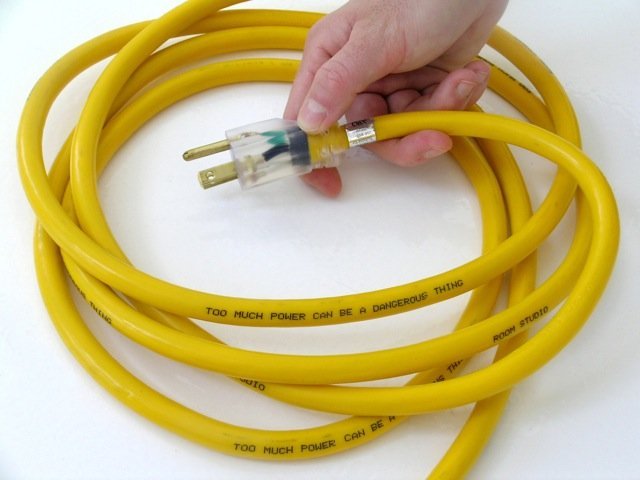
Length is the enemy of power. While it’s tempting to grab a 100-foot cord for every task, that extra distance creates voltage drop that can burn out your expensive tool motors. For most high-draw workshop tasks, a 12 gauge extension cord 25 ft is the optimal “zero-compromise” link. It provides the thick copper needed to handle a full 15-amp load without the bulk or power loss of longer, thinner cables.
You’ve likely dealt with cords that crack in the cold or “walk away” from the jobsite when you aren’t looking. We understand that your gear is an investment. It’s frustrating when a cord overheats during heavy use or when you’re forced to coil up 50 feet of heavy wire for a job that only requires 20 feet of reach. Choosing a cord with a rugged SJTW or SJEOW jacket is essential for staying compliant with 2026 OSHA regulations and protecting your equipment.
In this guide, you will discover how to identify the most durable power links for your high-performance tools. We’ll show you how to stop cord overheating, prevent theft with high-visibility colors, and ensure your equipment gets the steady voltage it needs to run at peak performance. Let’s get your shop powered up the right way.
Key Takeaways
- Decode technical acronyms like SJTW to understand exactly how your cord’s jacket handles oils, weather, and voltage.
- See why a 12 gauge extension cord 25 ft provides superior heat dissipation compared to thinner 14-gauge alternatives.
- Explore the benefits of the Triple Tap design for powering multiple tools from a single heavy-duty connection.
- Learn how personalized printing and unique colors like pink or purple serve as an effective deterrent against jobsite theft.
- Find out why the Junior service rating is the industry standard for 300-volt workshop applications.
Why the 25-Foot 12 Gauge Cord is the Workshop Gold Standard
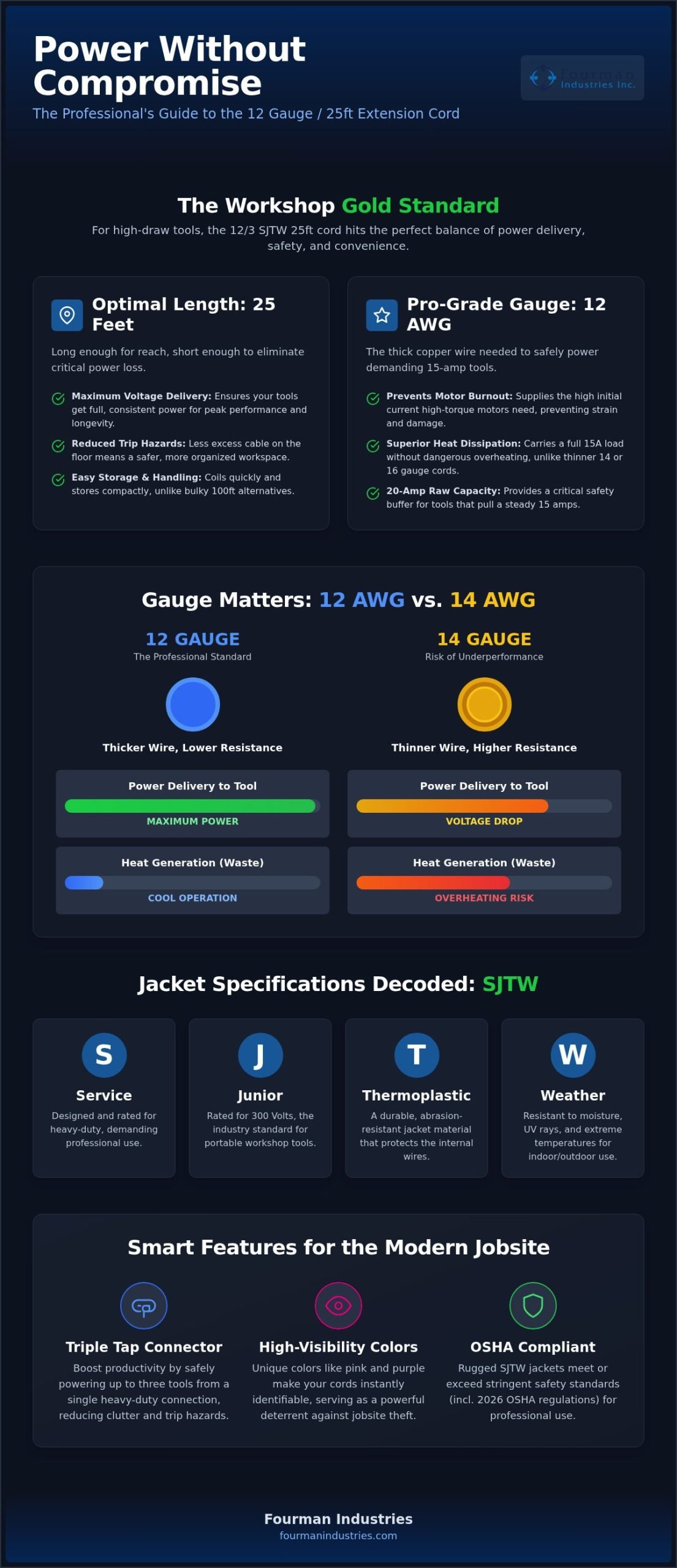
In a busy workshop, every volt counts. You might think a longer cord offers more flexibility, but for stationary tools, length is often your enemy. A 12 gauge extension cord 25 ft acts as a high-performance bridge between your wall outlet and your most demanding equipment. It’s thick enough to carry the current but short enough to keep electrical resistance at a minimum. This specific length is the “sweet spot” for most professional setups where the power source is just a few steps away.
The American Wire Gauge (AWG) system uses numbers to represent the diameter of the copper conductors; lower numbers indicate thicker wire and higher current capacity. A 12 AWG cord has a raw capacity of 20 amps. This provides a critical safety buffer for tools that pull a steady 15 amps, such as portable space heaters or heavy-duty table saws. When you use a cord that is too thin, the wire creates resistance, which turns valuable electrical energy into wasted heat.
Understanding Amperage and Wire Thickness
High-torque motors in table saws and air compressors don’t just need power. They need it instantly. When you use a thin 14 or 16 gauge cord, the wire cannot supply enough current fast enough to satisfy the initial draw. This causes the motor to strain and generate excessive internal heat. It isn’t just a performance issue; it’s a recipe for permanent motor damage. A 12 gauge cord is the minimum requirement for 15-amp continuous draw tools because it maintains the necessary wire diameter to handle high current without significant heat buildup.
The 25-Foot Advantage: Less Bulk, More Power
Electrical resistance increases with every foot of wire. When you stretch a 100-foot cord across a shop just to reach a tool 20 feet away, you’re fighting unnecessary voltage drop. This drop can lead to “brownout” conditions where your tools run slower and hotter than intended. Using a 25-foot run minimizes this resistance, ensuring your equipment receives the full voltage from the circuit.
- Reduced Trip Hazards: You won’t have piles of excess wire cluttering your floor space or tangling under your feet.
- Easier Storage: These cords coil up in seconds and take up minimal room on a wall hook compared to industrial 100-foot alternatives.
- Maximum Efficiency: Shorter runs mean less energy is lost as heat before it reaches your tool, saving your equipment from premature wear.
Choosing a shorter, thicker cord is a simple way to protect your investment in high-end machinery. It keeps your workspace organized and ensures your motors run cool and efficient during long work sessions.
Decoding the 12 Gauge SJTW Triple Tap Specification
When you look at the printing on a 12 gauge extension cord 25 ft, you will see a string of letters like SJTW. These characters aren’t just industry jargon; they tell you exactly what that cord is built to handle. “S” stands for Service, meaning it’s designed for heavy-duty use. The “J” represents Junior Service. This indicates a 300-volt rating, which is the standard for portable tools and shop equipment. While “Senior” cords handle 600 volts, they are often too thick and rigid for easy handling in a workshop. The “T” stands for Thermoplastic, the durable material used for the outer jacket. Finally, the “W” means it is Weather-resistant, protecting the internal copper from moisture and sunlight.
What Makes SJTW Professional-Grade?
A professional-grade jacket does more than just hold wires together. It acts as a shield against the harsh environment of a jobsite. Moisture and sunlight can degrade lower-quality plastics, leading to cracks and exposed wires. SJTW jackets are specifically treated to resist UV rays and water absorption. This makes them ideal for both indoor shop floors and outdoor projects. For more technical details, see our guide to SJTW extension cords. These cords are also built to withstand abrasion. When you’re dragging your power link across rough concrete or through sawdust, the thermoplastic layer prevents the insulation from wearing thin.
The Triple Tap: Multi-Tool Efficiency
The Triple Tap connector is a massive boost for workstation productivity. Instead of running three separate lines across the floor, you can power a drill, a work light, and a shop vacuum from a single drop. This design reduces clutter and keeps your workspace organized. However, you must always stay aware of extension cord safety standards to avoid overloading the circuit. Even though a 12 AWG wire can handle significant current, the total draw of all three tools shouldn’t exceed the cord’s 15-amp limit.
High-quality Triple Tap connectors feature reinforced molding. This helps prevent “plug pull,” a common frustration where a tool disconnects because of a loose fit or accidental tugging. The thermoplastic jacket remains pliable in cold weather, so you won’t have to fight a stiff, coiled mess when the temperature drops. If you need a reliable power solution that stands up to daily abuse, consider our 12 Gauge SJTW Triple Tap Extension Cords for your workshop setup. They provide the flexibility and multi-outlet convenience that professionals demand.
12 Gauge vs. 14 Gauge: When Does 25 Feet Matter?
Choosing between a 12 gauge and a 14 gauge wire might feel like splitting hairs at just 25 feet. Big-box retailers often claim that a 14 gauge cord is fine for general use. They aren’t the ones replacing your $500 miter saw when the motor burns out. A 12 gauge extension cord 25 ft provides the vital headroom your tools need to perform at their best. It isn’t just about safety; it’s about performance and tool longevity. Spending an extra ten dollars on a heavier cord is a cheap insurance policy for your most expensive equipment.
Heat is the primary enemy of electrical components. A 14 gauge cord is technically rated for 15 amps, but running a high-draw tool at that limit for an hour makes the cord hot to the touch. This heat represents energy that never reached your tool. Because 12 gauge copper is thicker, it handles that same 15-amp load with ease. It stays cool, ensuring that every bit of power from your outlet goes into the motor rather than heating up your workshop floor.
The Hidden Cost of Under-Gauged Cords
Low voltage is a silent killer for induction motors. When a tool doesn’t get the full 120 volts it expects, it compensates by drawing more current. This creates a cycle of heat that degrades internal windings and leads to premature failure. You will notice it first in your cutting accuracy. A saw blade that bogs down or loses RPM mid-cut is often starving for power. It’s a physical reality that 12 gauge wire has roughly 60% more copper than 14 gauge. That extra metal keeps your voltage stable and your tools running at their intended speed. For the most demanding applications, understanding the full 10 gauge vs 12 gauge extension cord comparison can help you determine when even heavier copper is the right call for your equipment.
Length and Gauge Synergy
Distance changes the electrical math. While a 12 gauge extension cord 100 ft is necessary for reaching across a jobsite, it suffers from more voltage drop than a shorter run. At 25 feet, 12 AWG wire is the most efficient link for household circuits. It allows your 120V system to deliver nearly its full potential to the tool. You can manage your total circuit load more effectively when you aren’t fighting the resistance of a 100-foot cable. Keep your heavy hitters on these shorter 12-gauge runs to ensure they get the cleanest power possible. This setup minimizes the risk of tripping breakers when your tools under load demand a sudden burst of current.
Customization and Visibility: Beyond Standard Yellow
Standard safety yellow has been the industry norm for decades. It’s better than black. However, yellow is now so common that it blends into the background of a crowded jobsite. When everyone has the same yellow cord, “accidental” theft becomes a daily headache. Upgrading your 12 gauge extension cord 25 ft with a high-visibility color or custom branding isn’t just about looks. It’s a strategic move to protect your inventory and keep your crew safe.
Unique colors like pink or purple serve a dual purpose. They slash the risk of tripping accidents. A bright pink cord stands out clearly against grey concrete, brown dirt, or tan sawdust. A trip and fall on a jobsite can lead to expensive medical bills and downtime. High-visibility cords are a low-cost way to improve your safety record. These colors are also a psychological deterrent. Most people won’t “accidentally” pick up a neon purple cord and put it in their truck if they’ve only been using yellow ones. It makes your gear instantly recognizable from across the room.
High-Visibility Power Solutions
High-visibility gear is no longer just for vests and hats. Many professionals are switching to pink extension cords because they are the hardest to lose in a pile of construction debris. You can even use color-coding to organize your shop. For example, assign specific colors to your high-draw 12 AWG lines and different colors to lighter 14 AWG cords. This simple visual cue ensures that your team always grabs the right tool for the job. You don’t have to check the jacket printing every single time.
Personalized Printing: The Ultimate Security
If you want to stop theft permanently, markers and electrical tape won’t cut it. They rub off. They get peeled away. Personalized printing allows you to add your company name or phone number directly onto the SJTW jacket. This identification is permanent. It is part of the cord’s construction. When your name is printed every 12 inches along the cable, there is no mistaking whose property it is. It makes your 12 gauge extension cord 25 ft nearly impossible to resell or claim as “found” equipment. To see how this process works, check out our guide to custom extension cords.
Ready to secure your equipment? You can browse our full range of Personalized Extension cords to find the perfect fit for your brand and your workshop needs.
Why Fourman Industries Leads in Heavy-Duty Power
Fourman Industries isn’t just another warehouse. We’re a team of practical experts who know exactly what happens to a cord on a real jobsite. When we design a 12 gauge extension cord 25 ft, we don’t cut corners on the copper or the jacket. We focus on industrial-grade performance because we know your livelihood depends on your tools staying powered. Our commitment to the 12 Gauge SJTW Triple Tap standard means you get a cord that meets OSHA requirements while offering the customization you need to stay organized.
Built for Professionals, Priced for Everyone
Generic retail cords often fail at the plug. The connection points pull loose; the jacket starts to crack after one season of use. Our 12 Gauge SJTW construction features reinforced ends that are molded to withstand thousands of plug-and-unplug cycles. The thermoplastic jacket is specifically formulated to remain moisture-resistant, so you can work in damp conditions without worry. We’ve balanced this ruggedness with a price point that makes sense for both large contractor fleets and solo DIYers. It’s about getting the best value for your hard-earned dollar.
Complete Your Gear Kit
A great cord is only the beginning of a productive day. We’ve curated our inventory to include the exact accessories that professionals use alongside our power solutions. Our 12 Gauge SJTW Triple Tap Extension Cords are the perfect companion for a DeWALT FLEXTORQ Bit Set or a pack of Bosch Reciprocating Saw Blades. By providing three outlets at the end of a single 25-foot run, we allow you to set up a mobile workstation that handles your drill, your saw, and your work light simultaneously. This efficiency keeps your project moving without the constant need to swap plugs.
We also support your team on the road. Beyond the workshop, we offer essential automotive gear like our Truck & Car Battery Jump Starter and Portable 12v Tire Inflator Kit. Whether you’re managing a single shop or a national fleet of trucks, our fast shipping ensures your 12 gauge extension cord 25 ft arrives ready for the next project. We pride ourselves on being a reliable partner for those who build, repair, and maintain. You can count on us for the gear that works as hard as you do.
Ready to upgrade your power setup? Shop our full selection of 12 gauge cords today and experience the Fourman difference in quality and performance.
Secure Your Shop with Professional-Grade Power
Your workshop deserves power that doesn’t quit. We’ve seen how a 12 gauge extension cord 25 ft provides the steady voltage your high-draw tools require while keeping your floor clear of unnecessary bulk. By choosing a cord with a rugged SJTW jacket and a Triple Tap connector, you’re investing in a setup that is built for efficiency and long-term durability. It’s about protecting your motor and your productivity.
Don’t let gear theft or voltage drop slow down your progress. Since 1997, Fourman Industries has specialized in professional-grade SJTW rated equipment and custom printed power solutions that help you keep track of your tools. Whether you need high-visibility pink or a personalized cord with your company name, we have the industrial-strength options you need to get the job done right. We understand the demands of a busy jobsite because we’re specialists in the gear that keeps them running.
Ready to take your power management to the next level? Shop Heavy-Duty 12 Gauge SJTW Extension Cords at Fourman Industries and see the difference that quality copper makes. We’re here to help you build something great with gear you can trust. Stay powered, stay safe, and keep working hard.
Frequently Asked Questions
Can I use a 12 gauge 25 ft extension cord with a space heater?
Yes, you can. Most portable space heaters draw 1,500 watts, which is approximately 12.5 amps. A 12 gauge extension cord 25 ft is rated for up to 20 amps, providing a substantial safety buffer that prevents the wire from overheating. Using a thinner 14 or 16 gauge cord for a heater is dangerous because the resistance can melt the insulation and start a fire.
What does the SJTW rating on a 12 gauge cord mean?
This rating describes the cord’s physical build and durability. The “S” stands for Service, “J” means Junior Service (rated for 300 volts), “T” identifies the Thermoplastic jacket, and “W” confirms it’s Weather-resistant. This combination makes the cord tough enough for jobsite abuse while remaining flexible enough for daily workshop tasks. It’s the standard for professional-grade portable power.
Is a 25-foot cord better than a 50-foot cord for a table saw?
Yes, shorter is always better when you’re powering high-draw motors. A 25-foot cord has less electrical resistance than a 50-foot cord, which means less voltage drop. Your table saw needs full voltage to maintain its RPM and cutting torque. Using the shortest cord possible protects the motor from straining and ensures you get cleaner, more accurate cuts every time.
Can I plug two 12 gauge cords together to make 50 feet?
No, you should never plug extension cords into one another. This practice, known as “daisy-chaining,” is a violation of OSHA 1910.303(b)(2) and creates a significant fire hazard. The connection point between the two cords adds resistance and can overheat under load. If you need 50 feet of reach, buy a single 50-foot cord instead of risking a failure at the plug.
Are 12 gauge extension cords safe to use in the rain?
They are safe only if they have a “W” rating and you protect the connections. While an SJTW jacket is moisture-resistant, the plug ends are not waterproof. If the connection point between your tool and the cord gets wet, it can short out or cause a shock. Always use a cord cover or keep the plugs in a dry, elevated area when working in damp conditions.
Why should I choose a Triple Tap cord over a single outlet?
A Triple Tap cord turns a single power drop into a versatile workstation. It allows you to keep a work light, a vacuum, and a power tool plugged in simultaneously. This saves time because you don’t have to stop working to swap plugs. It also reduces the mechanical wear and tear on the cord’s female connector since you aren’t constantly pulling and inserting different plugs.
How do I prevent my extension cords from being stolen on a jobsite?
The best way to stop theft is through high-visibility colors and permanent identification. Cords in pink or purple are easily spotted and don’t blend in with the standard yellow cords used by other crews. For ultimate security, use cords with your company name permanently printed on the jacket. Most people won’t steal a cord that is clearly marked with someone else’s business name and contact information.
Is 12 AWG the same as 12 gauge?
Yes, these terms mean the exact same thing. AWG stands for American Wire Gauge, which is the standard system used in North America to measure the diameter of electrical conductors. When you see a 12 gauge extension cord 25 ft, it’s the same as a 12 AWG cord. The lower the number, the thicker the wire and the more current it can safely carry without overheating.




