
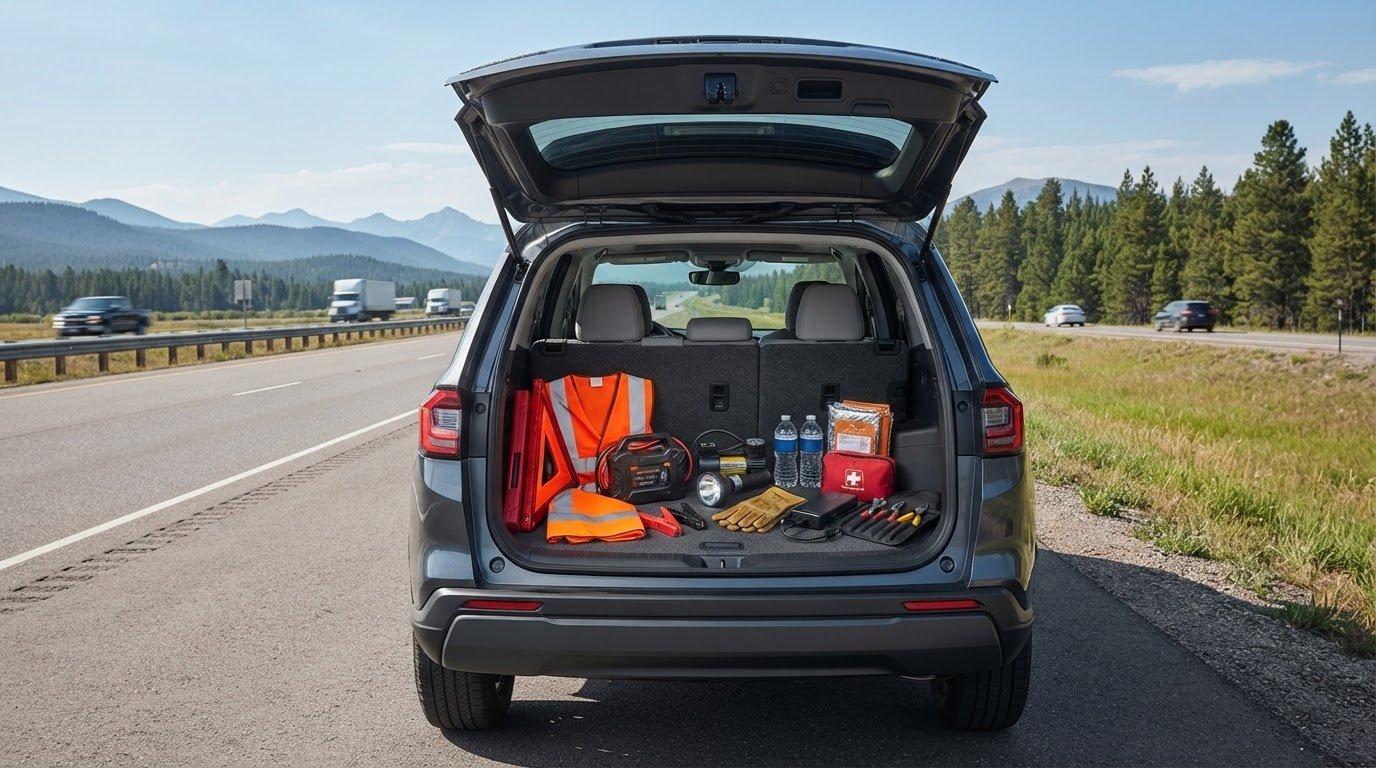
What if the roadside emergency kit in your trunk is there, but its flashlight won’t turn on and its battery gear is useless? A few well-chosen supplies can make a breakdown safer and easier to manage, but only if they’re ready when you need them. Knowing what to keep in your car for roadside emergencies means planning for common problems without assuming you can fix every issue yourself.
Prepare for a weak battery, a tire that needs air, or a longer wait for help. A truck and car battery jump starter may help with some discharged batteries, while a portable 12V tire inflator kit can address low tire pressure. Neither is a cure-all: an inflator doesn’t repair tire damage, and some battery or tire problems need professional assistance.
This checklist groups supplies by priority, explains what each item is for, and covers safe basics for battery and tire trouble. It also includes a simple routine for checking expiration dates, charge levels, and storage so your gear stays usable and easy to reach.
Key Takeaways
- Use a prioritized checklist to decide what to keep in your car for roadside emergencies, from visibility and communication gear to basic comfort supplies.
- Match roadside equipment to the problem: a jump starter may help with some discharged batteries, while an inflator can address low tire pressure but cannot repair tire damage.
- Store essentials where they’re easy to reach, then add seasonal or trip-specific items based on your passengers and travel plans.
- Check your supplies regularly so they stay in usable condition and ready when you need them.
- Know when a roadside issue is beyond a basic response, and put safety first while waiting for help.
What to Keep in Your Car for Roadside Emergencies, and Why Preparation Matters
A roadside kit is a collection of supplies that helps you wait more safely and respond to basic vehicle problems. A breakdown can happen far from home, on an unfamiliar road, or when help is less convenient to reach. A kit won’t prevent every delay or make every repair safe to attempt. It gives you useful options while you assess the situation and arrange assistance.
Plan for two things: staying safer while you wait and having suitable gear for a simple problem. An emergency kit can include general supplies, but your needs depend on your vehicle and the trips you take. A jump starter or tire inflator, for example, may help with certain issues, but neither can diagnose or resolve every fault.
Safety supplies help protect and support you while you wait; problem-specific tools are optional additions for issues you can address safely. This distinction keeps your kit practical instead of turning it into a heavy collection of gear you may not know how to use.
Which roadside emergencies should your car kit cover?
Start with situations that affect safety and basic mobility: vehicle trouble that leaves you stopped, a flat or low tire, poor visibility, and minor first-aid needs. A breakdown in daylight on a familiar road is different from a long drive after dark with passengers. Weather, trip length, passenger needs, and vehicle type all affect which supplies make sense.
Build around likely conditions rather than every possible emergency. Don’t attempt a roadside repair if traffic, weather, location, or your experience makes it unsafe. A kit supports sound judgment; it doesn’t replace it.
How should you prioritize emergency supplies?
Put personal safety first. Prioritize visibility, communication, and warmth before convenience items. Then separate supplies for waiting from tools intended for a basic vehicle issue. Organizing items by purpose makes them easier to find when you’re stressed or visibility is poor.
- For safer waiting: Keep visibility and warmth in mind, along with a way to communicate and basic first-aid supplies.
- For a basic vehicle issue: Consider tools suited to your vehicle and your ability to use them safely.
- For your specific trips: Add items based on passengers, weather, travel distance, and road conditions.
Use this as a flexible starting point, not a universal packing rule. A driver who regularly travels in remote areas may plan for a longer wait than someone who mostly takes short trips. Families may also need to account for children or passengers with specific needs. Keep the core kit manageable, then add supplies that fit your circumstances.
Before relying on a tool, learn its purpose and limitations. If the situation is unsafe or beyond your training, focus on getting assistance rather than trying to solve the mechanical problem yourself. The following checklist groups supplies by function so you can choose deliberately.
Roadside Emergency Kit Essentials: Safety, Communication, and Comfort
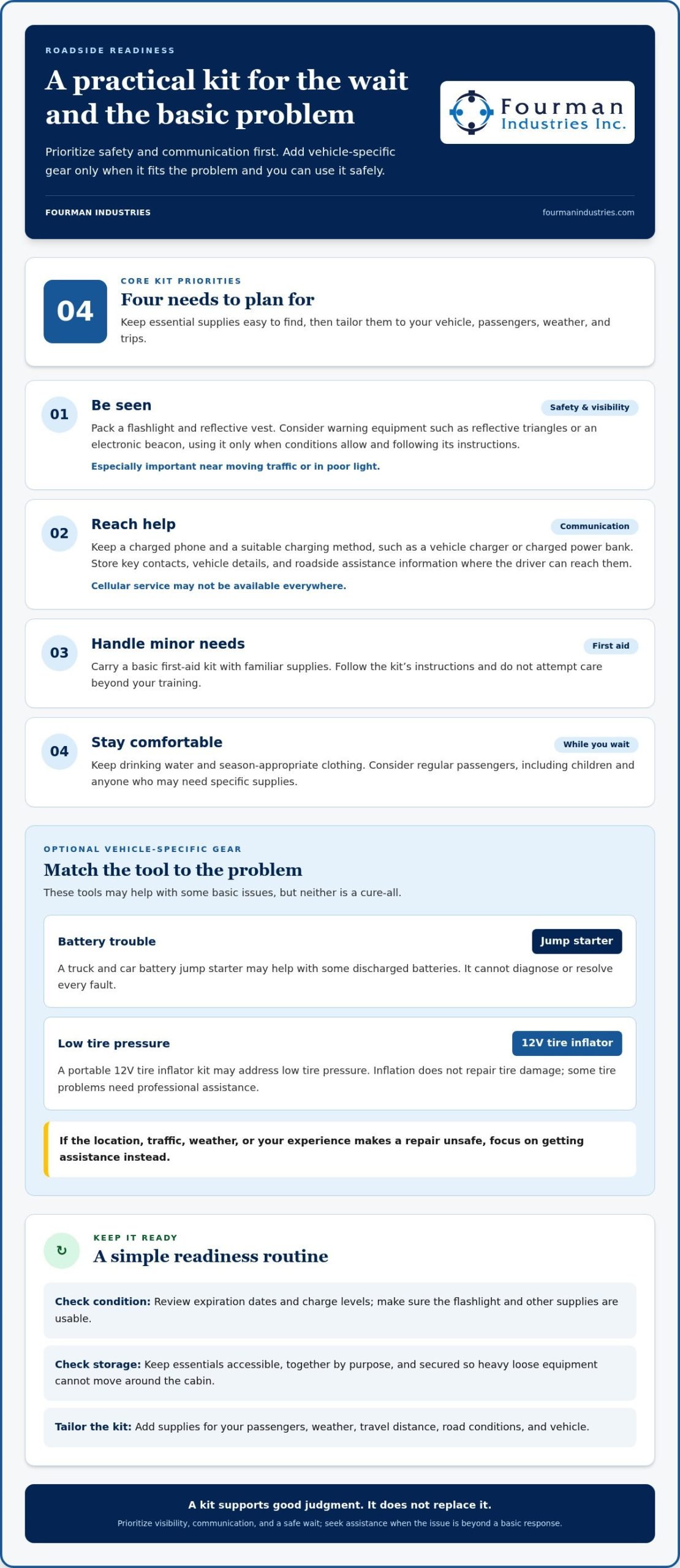
Build your general-purpose kit around four needs: being seen, contacting help, handling minor first-aid needs, and staying comfortable while you wait. As a starting point, pack reflective visibility gear and a flashlight, a charged phone and charger, a basic first-aid kit, water, and suitable clothing.
Choose items you can find quickly. Keep the flashlight, reflective gear, and first-aid kit together in an accessible compartment or secured storage area. Don’t bury them under luggage or leave heavy, loose equipment where it could move around the cabin. Check supplies periodically so a dead flashlight or empty water bottle doesn’t leave a gap in your plan.
- Safety and visibility: Carry a flashlight and reflective vest, plus warning equipment suited to your vehicle and circumstances. Visibility matters most when you’re stopped near moving traffic or in poor light.
- Communication: Keep your phone charged and carry a suitable charging method, such as a vehicle charger or a charged power bank. Save key contacts and roadside assistance details where you can reach them.
- First aid: Keep a basic first-aid kit for minor needs. Choose familiar supplies and follow the kit’s instructions; don’t attempt care beyond your training.
- Comfort: Store drinking water and clothing suited to the season. Consider the needs of regular passengers, including children or anyone who may need specific supplies.
Which safety and visibility items belong in the car?
A flashlight helps you see around the vehicle and find items in low light. A reflective vest can make you more visible if you need to leave the car. Warning equipment, such as reflective triangles or an electronic beacon, may also alert approaching drivers. Use it only when conditions allow, and follow current official guidance and the equipment’s instructions for placement.
What helps while you wait for assistance?
A phone charger, drinking water, and season-appropriate clothing can make a delay easier to manage. Add supplies that fit your passengers and typical trips rather than packing for every possibility. Keep vehicle details, emergency contacts, and roadside assistance information where the driver can reach them quickly. A charged phone is useful, but cellular service may not be available everywhere.
Match vehicle-specific gear to the job. A portable 12V tire inflator kit may help address low tire pressure, but inflation won’t repair tire damage. A truck and car battery jump starter may help with some discharged-battery situations, but it won’t diagnose every cause of a no-start. Read and follow the equipment instructions, and don’t use either tool in conditions you consider unsafe.
If you’re adding gear for a battery concern, explore truck and car battery jump starters as one part of a broader roadside plan. Keep safety, visibility, and communication supplies at the center of your kit.
Battery or Tire Trouble? Match Roadside Gear to the Problem
Tools are useful only when they fit the problem and you can use them safely. A jump starter may help with some discharged-battery situations. A portable tire inflator may help restore air when a tire is suitable for inflation. Neither tool guarantees the vehicle is safe to drive or fixes every cause of trouble.
Use this comparison to match a common issue with a reasonable next step. Treat it as general guidance, not a substitute for your vehicle and equipment instructions.
| Problem | Potentially useful gear | Safe limitation | When to get help |
|---|---|---|---|
| Vehicle won’t start and the battery may be discharged | Truck and car battery jump starter | May assist with some discharged batteries; it won’t diagnose every no-start cause. | If the cause is uncertain, the vehicle still won’t start, or using the equipment feels unsafe. |
| Tire pressure is low and the tire appears intact | Portable 12V tire inflator kit | Can add air when appropriate, but it doesn’t repair a puncture or other damage. | If the tire is damaged, loses air, or won’t hold pressure. |
| Tire looks damaged or the vehicle feels unsafe to move | Visibility supplies and a phone to arrange assistance | A tool in the trunk doesn’t make roadside work safe or make a damaged tire roadworthy. | Stop driving and seek roadside or professional assistance. |
What can a jump starter do during a battery problem?
A jump starter provides a way to attempt to start a vehicle when its battery is discharged. It may be useful preparation, but a no-start can have other causes, and a jump attempt won’t identify them. Before use, read the instructions for both the vehicle and the jump starter. Don’t improvise connections or continue if the process feels unsafe; get roadside or professional help instead.
When is a portable tire inflator useful?
An inflator may help add air when a tire is low and appears suitable for inflation. First consider the tire’s condition, then follow the vehicle guidance and inflator instructions. Adding air is not puncture repair, and a tire that won’t hold pressure or shows damage shouldn’t be treated as ready for the road. Stop and arrange help if you’re unsure.
The distinction is simple: inflation adds air, while repair addresses damage. A compressor can’t make every tire safe to drive. Likewise, a jump starter can’t fix every battery or electrical fault. If the situation is unclear, don’t let the presence of gear pressure you into attempting a repair.
This is a practical way to think about what to keep in your car for roadside emergencies: choose tools for common issues, learn their limits before you need them, and be ready to call for help. Preparation means having options, not taking risks you wouldn’t take without the tool.
Build and Maintain a Car Emergency Kit with This Practical Checklist
A useful kit is easy to carry, suited to your regular trips, and ready to use. Follow this four-step process to decide what to keep in your car for roadside emergencies without filling the trunk with gear you don’t need.
- Assess passengers and trips. Think about who rides with you, how often and how far you drive, and the weather you’re likely to face. A family vehicle may need supplies for children, while frequent long-distance travel may call for more provisions for waiting. Consider your vehicle’s storage space, too.
- Choose core supplies first. Start with safety, visibility, communication, first aid, and comfort supplies. Add tools for basic vehicle issues only if they suit your vehicle and you’re comfortable using them safely. A truck and car battery jump starter or portable 12V tire inflator kit can be a problem-specific addition, not a replacement for core supplies or roadside assistance.
- Pack for access and safety. Put critical items where the driver can reach them without unloading the car. Secure heavier gear so it can’t slide or become a hazard. Keep supplies away from anything that could damage them, and don’t block windows, controls, or access to other essential equipment.
- Set a recurring inspection reminder. Choose a routine you’ll remember, such as a seasonal vehicle check. Inspect batteries and power levels, expiration dates, sealed packaging, and equipment condition. Replace anything depleted, damaged, or expired, then return each item to its assigned place.
How do you tailor the checklist to your car and passengers?
Let your actual driving habits guide the extras. Regular cold-weather travel calls for different preparations than short trips in mild conditions. Frequent passengers may have needs that a solo driver doesn’t. Also consider cargo space and the tasks you know how to handle. Don’t pack gear that interferes with controls, blocks visibility, or shifts freely when the vehicle moves. A compact, organized kit is easier to use than an oversized one.
Keep the kit flexible. Core supplies stay in the vehicle, while seasonal or trip-specific additions can come and go as conditions change. For a broader packing reference, use this emergency car kit essentials guide to compare your setup with other useful categories.
How often should you inspect roadside supplies?
Check supplies regularly and after using anything. Confirm that lights work, rechargeable equipment has power, packaging is intact, and items that can expire are still within date. Review seasonal gear before the weather changes, not after a forecast catches you unprepared. If you’re planning for colder conditions, this winter car safety checklist can help you plan relevant additions.
Finish each inspection by putting everything back in its designated spot. If a battery or tire tool is part of your plan, consider choosing a truck and car battery jump starter suited to that role. The best kit is one you can find, understand, and keep ready.
What to Do If You Are Stranded: Use Your Kit Safely
A roadside kit supports a safe response; it doesn’t make every repair your responsibility. First, judge your surroundings. A vehicle stopped in a live lane, on a narrow shoulder, or in poor weather calls for a different response than one parked well away from traffic. Focus on reducing immediate risk, making the vehicle visible when safe, and getting the right help.
What should you do first after a breakdown?
- Assess immediate danger. If the vehicle can be moved safely, steer it out of traffic to a safer location. Turn on the hazard lights if they work. Don’t keep driving if the vehicle’s condition makes that unsafe.
- Alert others when it’s safe. Use reflective equipment or warning devices only if you can place them without putting yourself in danger. Follow official roadside safety guidance and the equipment instructions. Don’t step into traffic to set out a warning device.
- Request appropriate assistance. Call emergency services for an immediate threat, injury, or dangerous situation. For a mechanical breakdown without an immediate emergency, contact roadside assistance. Share your location and follow the instructions you receive.
Whether you remain inside or exit depends on the vehicle’s position, traffic, weather, and other hazards. If you’re safely away from traffic, staying inside with your seat belt on may be the safer choice. If the vehicle is exposed to immediate danger and you can leave safely, exit away from traffic and move to a protected location. Conditions differ, so use your judgment and follow emergency-service directions.
Use tools only when you have a safe place to work, understand the task, and can follow the vehicle and equipment manufacturers’ instructions. A dark roadside, fast-moving traffic, or uncertainty about the procedure is a good reason to wait for assistance. Choose the response that protects you and your passengers.
Which vehicle tools can support basic readiness?
A truck and car battery jump starter may help with some discharged-battery situations, but it can’t diagnose every no-start problem. Review this truck and car battery jump starter guide to understand what to consider before adding one to your kit.
A portable 12V tire inflator may help add air when a tire is appropriate for inflation. It doesn’t repair a puncture or make a damaged tire safe to drive. This portable 12V tire inflator guide covers its role in basic tire-pressure readiness.
Preparedness means knowing what your gear can do and when to leave the job to trained help. If you’re building out your kit, consider a truck and car battery jump starter or portable 12V tire inflator kit as an optional addition for the specific issues each may support.
Make Roadside Readiness Part of Your Next Drive
Turn your checklist into a plan you and your passengers can use. Make sure someone else knows where key supplies are stored and how to find your roadside assistance information. A quick conversation before a long trip can prevent confusion when you’re stressed or plans change. You don’t need to prepare for every possible breakdown. Focus on what to keep in your car for roadside emergencies based on your vehicle, passengers, and usual trips, then keep those essentials ready.
Fourman Industries offers truck and car battery jump starters and portable 12V tire inflator kits. Each can support preparation for certain battery or tire-pressure situations, but neither replaces safe judgment or help when a problem is beyond your ability to handle. Explore roadside preparedness gear from Fourman Industries and choose additions that fit your needs. A little planning now can help you feel more prepared for the miles ahead.
Frequently Asked Questions
What are the most important things to keep in your car for emergencies?
Start with gear that helps you stay visible, communicate, and handle basic personal needs. For what to keep in your car for roadside emergencies, consider a flashlight, reflective vest, charged phone with a charging method, basic first-aid kit, drinking water, and weather-appropriate clothing. Add vehicle tools based on your car and your experience using them. Store key emergency contacts and assistance details where you can access them quickly.
Should I keep a jump starter in my car?
A jump starter can be a useful optional tool if you want to prepare for some discharged-battery situations. It won’t identify the cause of every no-start problem, so don’t assume it will get the vehicle running. Before an emergency, read the instructions for the jump starter and your vehicle. Store the unit as directed and check its charge during your regular kit inspection. If use feels unsafe or doesn’t help, arrange assistance.
Can a portable tire inflator fix a flat tire?
No. A portable tire inflator adds air; it doesn’t repair a puncture, sidewall damage, or other tire failure. It may be useful when a tire is low on pressure and appears intact, but adding air doesn’t automatically make it safe to drive. Check the tire and follow your vehicle’s guidance and the inflator instructions. If the tire is damaged, loses air, or won’t hold pressure, stop and seek help.
How often should I check my car emergency kit?
Set a recurring reminder and inspect the kit before trips where a missing item could matter, such as a long drive or a change in season. Check that the flashlight works, rechargeable gear has power, packaging is intact, and supplies with expiration dates are still usable. After using anything, replace it and return the remaining items to their assigned spots. A short inspection is more useful than discovering a problem during a breakdown.
What should I keep in my car for a winter emergency?
Add supplies that help you manage cold, snow, and delays. A warm blanket, gloves, hand warmers, an ice scraper, and a shovel can be useful additions, depending on your route and vehicle. Pack them so they don’t obstruct your view or move around while driving. Keep water and any passenger-specific essentials in mind, too. Review the kit before winter travel and adjust it to the conditions you expect.
Is it safe to change a tire on the side of the road?
Only attempt a tire change if the location and conditions are safe and you know how to use your vehicle’s equipment. A narrow shoulder, unstable ground, poor visibility, or traffic passing close by can make the task too risky. Follow the vehicle manual and use the correct equipment. If you can’t work well away from traffic or feel uncertain about any step, stay clear of the roadway and request roadside help.
What should I do if my car breaks down in an unsafe location?
Put people’s safety ahead of the vehicle. If you can move the car to a safer place without creating more danger, do so; otherwise, avoid attempting a risky maneuver. Turn on hazard lights if available and call emergency services if there’s immediate danger. Follow their directions, share your location as clearly as possible, and don’t exit into moving traffic to place warning equipment or inspect the vehicle.




