
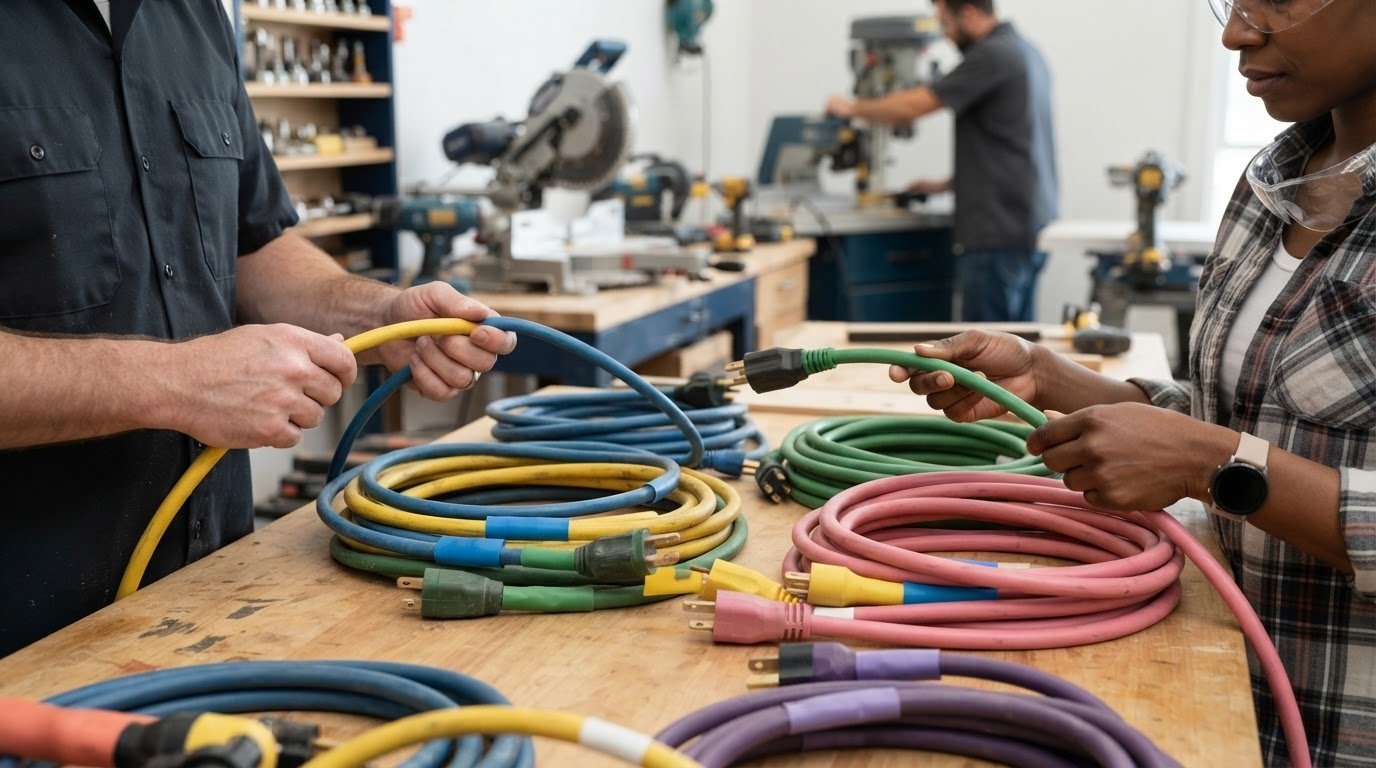
What good is a cord you can recognize if it isn’t suited to the equipment you’re powering? In a shared work area, similar cords can be easy to mix up. A name, printed identifier, or distinctive color can make yours easier to spot, but personalized extension cords still need to match the job first.
Personalization is most useful when it solves a practical identification problem. It can help organize a crew’s equipment, distinguish gear assigned to different areas, or make cords easier to sort before and after an event. Start by deciding who needs to recognize the cord and what information will help them do that.
This guide explains what to check before choosing a cord, including equipment requirements, intended setting, length, and gauge. It also covers how printed details and color can support a simple identification system, so your choice is practical as well as personal.
Key Takeaways
- Use a printed identifier or distinctive color to make cords easier to recognize in shared spaces.
- Choose personalized extension cords for a clear purpose, such as distinguishing team gear or organizing event equipment.
- Start with the equipment and setting, then consider cord length and gauge before choosing a color or identifier.
- Build a simple identification system with consistent visual cues, and pair color with another identifier so cords are easier to tell apart.
- Explore Fourman Industries’ personalized and custom-printed extension cords to create a more recognizable setup.
Why Choose Personalized Extension Cords for Work, Shared Gear, or Events?
When several cords are laid out in the same work area, they can be hard to tell apart. A distinctive color or printed identifier gives people a quick visual cue for recognizing a cord assigned to a person, team, or setup. That can make equipment easier to sort before work and return to its usual storage place afterward.
An extension cord carries power from an outlet to equipment at a distance. Personalization adds a visible identifier, but it doesn’t change what the cord is designed to handle. For more on print options and use cases, see the guide to custom-printed extension cords.
Where personalized extension cords are useful
On a crew, a printed name or team identifier can distinguish assigned cords from shared equipment. In a workshop or other shared space, color can help people return a cord to its usual station or group. At a temporary event setup, recognizable cords can help staff sort power gear used in different areas. These cues are especially useful when several people handle the same equipment.
Keep the system straightforward. Use a consistent color or identifier for a crew, department, or task, and choose cues people can recognize at a glance. If the system will be used by people who weren’t involved in setting it up, make sure its meaning is easy to understand. Personalized extension cords can also give a business’s equipment a recognizable appearance, without making branding the only reason to customize. If your organization also wants to coordinate gear across events or job sites, explore Per-unit sales of custom-branded apparel and promotional products to help reinforce a unified look.
What personalization does, and does not, change
Color and printed details help with identification. They don’t determine a cord’s gauge, electrical capacity, length, or suitability for indoor or outdoor use. Those specifications must match the equipment and conditions. Select the cord for the job first, then choose an identifier that helps people manage it.
Personalization alone can’t promise to prevent theft or reduce accidents. It’s a visual aid, not a substitute for suitable cord selection, careful setup, inspection, or safe work practices. A printed identifier may help people spot the right cord, but users still need to recognize hazards and handle equipment responsibly.
Personalization makes a cord easier to recognize; the cord’s specifications determine whether it fits the job. Keep those roles separate when planning a recognizable setup for work, shared gear, or an event.
How Personalization Makes Extension Cords Easier to Identify
A personalized extension cord has distinguishing visual details, such as a distinctive color or printed identifying information. These cues give users something beyond a familiar plug or jacket shape to look for when several cords are stored or used together. Color can be easy to notice at a glance, while printed text can add context about ownership or team assignment.
Color, printed details, and recognizable gear
Color can separate cords that would otherwise look alike. Pink and purple extension cords, for example, offer recognizable alternatives to more common-looking gear. Color is a quick visual cue, but lighting, surrounding equipment, and individual color perception can affect how easy it is to distinguish. Pairing color with a printed identifier can make the system clearer.
Printed details can identify a business or team. Keep the information concise and readable for the people who need to use it. For another look at color as an identification choice, explore the best pink extension cords.
Personalization for teams, businesses, and events
A consistent system makes visual details more useful. A crew might use one identifier for assigned gear and another for shared equipment. An event team could mark cords by department or setup area. Choose cues people can understand quickly, and pair color with printed details when color alone won’t clearly distinguish equipment. Branded gear can also make a business’s setup more recognizable across shared workspaces or event areas. To explore additional options for custom corporate merchandise, learn more about SwagStore.NET.
Personalization identifies a cord; its electrical rating describes its power capabilities. Treat these as separate decisions. A printed name or distinctive color doesn’t establish a cord’s gauge, capacity, or suitability for a particular environment. Those details depend on the cord’s specifications, not its appearance.
To choose an identifier, consider what users need to recognize and where they’ll see it. A short team name may be more useful than a long message. A distinct color may work well for a simple system that separates equipment. Neither option guarantees visibility, security, or compliance. Use personalization to support organization, not as a substitute for checking specifications or following appropriate work practices.
For a recognizable setup, browse personalized and custom-printed extension cords and choose an identification approach that fits how your team manages its gear.
How to Choose Personalized Extension Cords Without Overlooking the Specs
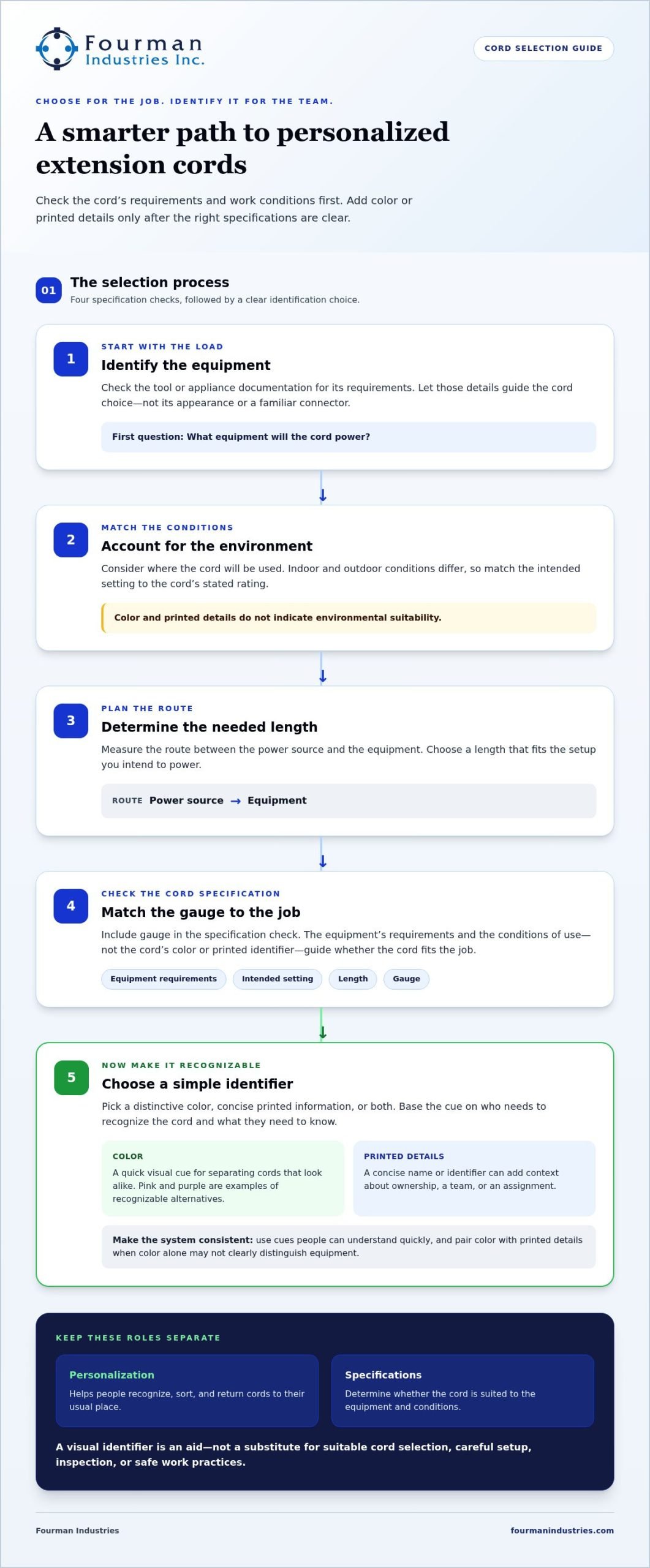
Choose the cord for the equipment and work conditions first. Color and printed details can help identify it, but they can’t tell you whether its specifications suit the job. Use this four-step framework before deciding how you want the cord to look.
- Identify the equipment. Check the tool or appliance documentation for its requirements. Use those details to guide your cord choice rather than assuming a cord will work based on appearance or a familiar connector.
- Account for the environment. Consider where the cord will be used. Indoor and outdoor conditions differ, so match the intended setting to the cord’s stated rating. Color and printed information don’t show whether a cord is suitable for a particular environment.
- Determine the needed length. Measure the route from the power source to the work area, including the path the cord will follow. Allow enough reach for the setup, but avoid choosing length by guesswork. Compare the cord’s listed specifications with the equipment requirements.
- Choose the gauge. Compare the gauge with the equipment’s requirements and the cord’s listed information. Don’t assume that a lower or higher number is automatically right for your setup. If you’re unfamiliar with gauge, review the complete guide to 12 gauge extension cords for more background.
Match the cord to the equipment and setting
Use the tool or appliance requirements as your starting point, then compare them with the cord’s listed specifications. Fourman Industries offers categories such as 10 Gauge ECONO extension cords and 12 Gauge SJTW Triple Tap extension cords. These names identify product categories, not a universal recommendation for every tool or environment. Check the applicable listing and equipment documentation for the details you need to make your selection.
Pay particular attention to the stated environment. If a cord is intended for a specific setting, use its rating to guide your choice rather than its color or print. Gauge, length, and other electrical details can affect suitability, so verify the relevant specifications before use.
Choose personalization after the practical requirements
Once you’ve considered the equipment, setting, length, and gauge, decide how the cord should be identified. Think about who needs to recognize it and under what conditions. A crew member sorting shared gear may benefit from a clear printed identifier, while a distinctive color may help separate cords during setup. Choose details that are readable and useful to the people handling the equipment.
With personalized extension cords, appearance is the final selection step, not a substitute for checking specifications. Confirm the cord’s listed details against the job, then choose visual details that support your team’s organization.
How to Plan and Use Personalized Extension Cords in a Clear System
A simple identification system follows the way your crew uses its equipment. Start with the person, team, or task that needs to recognize the cord. Select a cord suited to that use, then choose a clear identifier. This keeps personalization practical instead of adding visual details with no clear purpose.
Build a simple cord identification system
Set a rule your team can remember. For example, assign a printed identifier to a crew or department, or use a consistent visual cue for cords serving a particular task. Add a second cue, such as a short label alongside color, so people aren’t relying on color alone. Keep identifiers brief and distinct in the actual work area, where lighting, distance, and surrounding equipment can affect readability.
Make the system consistent across storage and setup. If a cord is marked for a particular user or task, explain what the identifier means and where the cord belongs when it’s not in use. The system only helps when everyone understands it and can follow it without guesswork.
Keep electrical suitability and safe use in view
Identification doesn’t replace suitable cord selection or safe handling. Use each cord within its listed ratings and intended conditions. Before use, inspect it for visible damage, and follow the product instructions and current safety guidance that applies to the work. If a cord appears damaged, don’t rely on its identifier as a reason to keep using it.
Keep the system grounded in product information. Printed details and color help with recognition, but they don’t establish electrical suitability or prove compliance with a standard. Verify standards or regulatory statements against authoritative, current sources before including them in workplace procedures or published guidance.
Checklist: Identify the user or task, choose a cord suited to its requirements, then define a clear identifier.
Review the system as crews and work areas change. A label that made sense for one setup may become unclear when equipment is shared across teams. Keep identifiers straightforward, make sure users know what they mean, and continue to check each cord’s listed information and condition as part of normal equipment use.
Build a more recognizable setup with personalized extension cords that support your team’s identification system.
Find Personalized Extension Cords for a More Recognizable Setup
A recognizable cord setup starts with the work, not the decoration. Identify the equipment and where it will be used, then match the cord’s listed specifications to the job. Consider length and gauge before choosing personalization that helps the right people recognize the cord. Color and printed details are useful cues, but they don’t replace correct cord selection.
Which personalized cord direction fits your use?
Fourman Industries sells personalized and custom-printed extension cords, including pink and purple options. A distinctive color can help separate cords visually, while a printed identifier can make it clearer which team or business the gear belongs to. For a contractor managing shared equipment, that recognition can support a more organized setup. For an event team, it can help staff distinguish power gear used in different areas.
Choose an approach based on who needs to identify the cord and where they’ll see it. Color can be a quick visual cue; printed information can add context. Keep the identifier easy for users to understand. Don’t assume a particular color or marking guarantees visibility in every setting or changes the cord’s electrical performance.
Fourman Industries was founded in 1997. Your selection should still be guided by the cord specifications and intended use.
Make a confident selection
Before browsing, keep the key checks together. Confirm the equipment’s requirements, the intended setting, the length you need, and the gauge specified for the job. Then decide whether a color, printed identifier, or both would help users recognize and manage the cord. This order keeps appearance in its proper place: useful for identification, but secondary to suitability.
Personalized extension cords can make work gear easier to distinguish and support a consistent setup for crews, shared spaces, or events. They aren’t a substitute for checking product information or choosing a cord that fits the equipment and conditions. Make the practical decision first, then select visual details that make the cord recognizable to your team.
Ready to build a setup that’s easier to identify? Explore personalized extension cords from Fourman Industries.
Make Your Cord Setup Easier to Recognize
Choose the cord for its job first. Check the equipment requirements, intended setting, length, and gauge, then select personalization that helps your team identify and manage it. Color or printed details can make equipment easier to recognize, but they don’t replace the right specifications or safe use.
Fourman Industries offers personalized and custom-printed extension cords, including pink and purple options for a recognizable setup. Keep your selection practical, and choose visual details that suit the people using the cord.
Ready to put that plan into action? Explore personalized extension cords and find a recognizable fit for your setup. A clear system starts with a suitable cord and makes everyday work easier to organize.
Frequently Asked Questions
Is a personalized extension cord different from a standard extension cord?
Not necessarily in its electrical function. “Personalized” refers to distinguishing visual or printed details that help identify a cord. Its gauge, capacity, and approved use depend on its specifications, not its appearance. Before choosing personalized extension cords, check the cord’s listed rating and instructions against the equipment you’ll power and the setting where you’ll use it. A printed identifier or distinctive color can aid recognition, but it can’t confirm suitability.
Can I use a personalized extension cord outdoors?
Outdoor use depends on the specific cord’s stated rating and instructions, not its color or printed details. Check the product information to see whether the cord is intended for the environment where you plan to use it, then follow its directions. Don’t assume every personalized cord is suitable outdoors. Match the listed specifications to the conditions and equipment, and use the cord only as directed.
How much does a personalized extension cord cost?
There isn’t one useful price for every personalized extension cord configuration. The selected cord type and product options affect the listed price, so compare the specific product details for the cord you’re considering. Focus first on finding a cord that fits the equipment and setting, then review the listed options. This helps you assess the actual configuration rather than relying on a broad estimate that may not apply.
What should I look for when choosing personalized extension cords?
Start with the equipment’s requirements and the environment where the cord will be used. Then determine the needed length and gauge by checking the cord’s product specifications and instructions. Once those practical requirements are settled, choose personalization that helps the intended users recognize the cord, such as a distinctive color or printed identifier. Color alone can’t establish a cord’s rating or suitability, so check the specifications before use.
Can personalized extension cords help organize shared equipment?
Yes. Distinctive colors or printed details can make cords easier to recognize in a shared setup. Create a consistent system, such as identifiers for a team, task, or equipment owner, and make sure the people using it understand what each cue means. The system works best when identifiers are readable and easy to follow in the work setting. Personalization can support organization, but it can’t guarantee that equipment won’t be lost, stolen, or involved in an accident.
Does a cord color tell me its gauge or electrical rating?
No. Color alone doesn’t establish a cord’s gauge, electrical capacity, certification, or suitability for a particular use. Check the product information and cord markings for the details that apply to your equipment and setting. There isn’t a universal color code that tells you a cord’s rating. Treat visual personalization as an identification aid, and rely on listed specifications and instructions to guide how the cord should be used.
Are pink and purple extension cords available as personalized options?
Fourman Industries offers pink and purple extension cord options, alongside personalized and custom-printed extension cords. Color can help make a setup more recognizable, while printed details can help identify equipment. Consider the job and the cord’s specifications as well as its appearance. Review the product information to select a cord suited to your equipment and intended setting, then choose a recognizable option that fits how your team manages its gear.




